


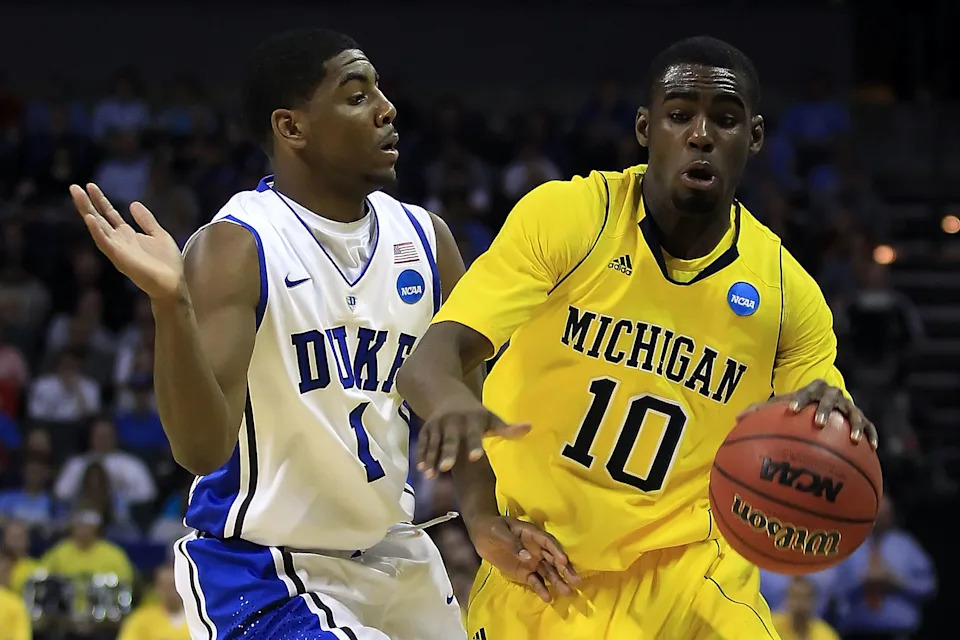
The stage is set for one of the most electrifying matchups of the college basketball season. Under the bright lights in Washington, D.C., the No. 1-ranked Michigan Wolverines men’s basketball square off against the No. 3-ranked Duke Blue Devils men’s basketball in a neutral-site battle that has fans buzzing across the country. Led by head coach Dusty May, Michigan has surged to the top of the rankings, while Jon Scheyer has Duke playing elite basketball at precisely the right time.
But here’s the real question: How important is this game — truly?
From a pure excitement standpoint, it feels massive. This is Michigan versus Duke — two powerhouse programs with proud traditions, national titles, and a history of high-stakes battles. Duke has long been viewed as one of the most polarizing brands in college basketball. Fans either admire the excellence or love to root against them. Michigan, meanwhile, has rebuilt itself into a dominant force, carrying both swagger and substance into every arena.
For Michigan, this game is about more than just maintaining a No. 1 ranking. A win would validate everything about this season’s dominance. It would strengthen the narrative that this Wolverines squad is not just good — but historically great. The conversation would shift dramatically. Instead of asking whether Michigan is the favorite to win the national championship, analysts would begin debating whether this team belongs among the greatest college teams ever assembled.
Momentum matters in late February. Confidence matters. And beating a blue-blood program like Duke on a national stage would fuel both.
However, when we look beyond the emotional and narrative angles, the practical impact becomes more nuanced.
If Michigan loses, the consequences appear minimal. The Wolverines would likely slip to No. 2 or No. 3 in the AP Poll, but their résumé would remain elite. A single loss to a top-three opponent would not jeopardize their standing as a projected No. 1 seed in the NCAA Tournament. They would still control their destiny in conference play and remain firmly in the driver’s seat for a Big Ten title.
In other words, a loss would dent pride more than positioning.
Now consider Duke’s perspective.
For the Blue Devils, this matchup may carry slightly more urgency. A win over the No. 1 team in the country would likely vault them to the top of the polls. Voters rarely hesitate to reward a head-to-head victory of that magnitude. Depending on how other top teams fare, Duke could wake up Monday morning as the new No. 1 team in America.
More importantly, a victory would all but cement Duke’s position as a No. 1 seed in the NCAA Tournament. While they would still have opportunities to strengthen their résumé elsewhere, this would be the kind of signature win that selection committees value heavily.
But what if Duke loses?
Like Michigan, the long-term damage would probably be limited. Losing to the top-ranked team on a neutral floor is hardly disqualifying. The Blue Devils would remain firmly in contention for a No. 1 seed, especially if they finish strong in conference play. The committee evaluates the total body of work — not one isolated result.
So does that mean this game doesn’t matter?
Not quite.
While the tangible bracket implications may be modest, the psychological and narrative impact is enormous. College basketball is as much about perception as it is about record. A dominant performance by either side could shift national sentiment in a way that lingers through March.
There’s also the matter of potential tournament seeding geography. If Michigan holds the overall No. 1 seed, it could influence regional placement. The same applies to Duke. Location can matter when tournament time arrives, affecting travel, crowd support, and comfort levels.
Then there’s the competitive pride element. Elite programs measure themselves against other elite programs. This isn’t just another non-conference game — it’s a benchmark. Coaches want to know how their systems hold up against championship-caliber opponents. Players want to test themselves against future NBA talent. Fans want bragging rights.
And let’s be honest — momentum heading into postseason play can be priceless.
If Michigan wins convincingly, it reinforces the belief that they are the team to beat. It tightens their grip on the psychological edge over the field. If Duke wins, it sends a message that the Blue Devils are peaking at the perfect moment and ready to seize control of the national conversation.
So perhaps the importance of this matchup isn’t strictly about rankings or seed lines.
Perhaps it’s about identity.
It’s about proving that dominance is real.
It’s about silencing doubters.
It’s about planting a flag before the madness begins.
In the grand scheme of tournament math, the loser will survive. Their championship hopes will remain intact. But in the emotional landscape of college basketball — where confidence, swagger, and belief shape March outcomes — this game absolutely carries weight.
So how important is it?
It may not determine a No. 1 seed with certainty. It may not decide a conference title. But it will shape narratives, influence momentum, and potentially foreshadow a Final Four clash.
And sometimes, that’s more powerful than the standings themselves.
One thing is certain: when the ball tips in Washington, D.C., it won’t feel like “just another game.” It will feel like a statement opportunity — and both Michigan and Duke know it




