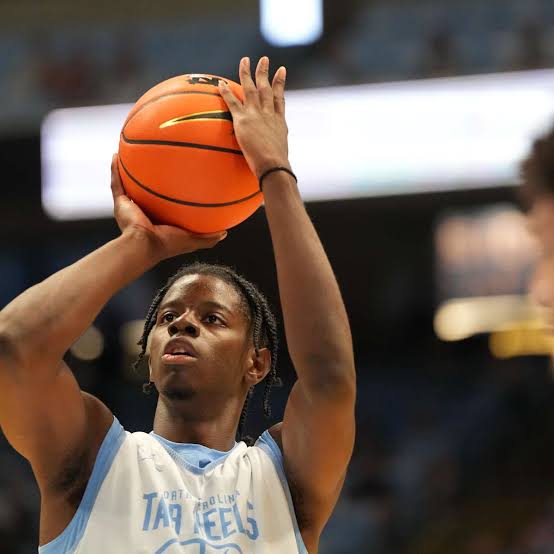
For months, the loudest conversation around Chapel Hill was simple but unsettling: Has the true essence of Carolina Basketball faded in the new era of college sports? In an age of relentless transfer portal movement, one-year rentals, NIL reshuffling, and rosters that seem to flip overnight, many wondered whether the unique, unmistakable identity of UNC basketball — the rhythm, the culture, the unselfishness, the family — could survive the sport’s rapid transformation.
But something unexpected happened the moment the 2025–2026 Tar Heels took the floor.
Something no one — not even the most optimistic fans — saw coming.
This team, a roster stitched together from Arizona, Alabama, Colorado State, Montenegro, and a single returning UNC impact player in Seth Trimble, began playing with a spirit that felt oddly familiar. A team of strangers began moving like a unit. A group of players with different pasts began fighting for the same present. And slowly, almost quietly at first, this patchwork roster began reviving an old truth: Carolina Basketball isn’t about who you are — it’s about how you play.
And this team?
They’re playing like North Carolina.
A Team of Strangers That Feels More Like a Family
Every offseason brings change, but this one felt seismic. With nearly the entire core gone from last year’s roster, fans braced themselves for a rebuilding year defined by unfamiliarity. No continuity. No chemistry. No tradition-carriers. Just new faces, new habits, and new uncertainties.
And yet, from the very first open practice, one thing caught the attention of longtime UNC observers: engagement.
These new players weren’t quietly blending into the background, trying to learn the culture from a distance. They leaned in. They connected with fans. They asked questions. They wore the Carolina brand with intensity and pride. They embraced the standard, not as outsiders but as new caretakers.
The most surprising part wasn’t their willingness — it was their eagerness.
Carolina’s basketball culture, built across decades of Dean Smith’s discipline, Roy Williams’ tempo, and Hubert Davis’ modern evolution, has always relied on shared ownership. This year’s team, though made up of transfers and newcomers, has treated that legacy not as a burden but as a challenge. And they’ve accepted it fully.
It’s in the way they sprint the floor after every turnover.
It’s in the way they help the helper defensively.
It’s in the way they’ve learned to value the extra pass.
It’s in the way they huddle without being told.
It’s in the way they celebrate each other.
Those traits aren’t taught. They’re absorbed.
And these players have absorbed them fast.
The Patchwork Quilt Metaphor — and Why It’s Perfect
The term “patchwork quilt” can sound like a criticism — a reminder that the roster is assembled from mismatched parts. But in Chapel Hill, the metaphor hits differently. Carolina basketball history is filled with teams built from a blend of veterans, freshmen, transfers, and role players who embraced their moment and formed something beautiful.
This team fits that lineage more than meets the eye.
A patchwork quilt is crafted with intention. Every piece matters. Every piece has a place. And while each fabric square comes from somewhere different, it becomes meaningful because of how it connects to the next.
That is exactly what’s happening in the Smith Center.
Players from five states and two continents came together to create something coherent — not perfect, not polished, but purposeful. And in the transfer-heavy era of modern college basketball, that is becoming exceedingly rare.
Hubert Davis’ Quietest Strength Has Become His Loudest Impact
Hubert Davis has been doubted, supported, criticized, praised, and analyzed in every way possible since stepping into the role. But one skill often overlooked — and now impossible to ignore — is his ability to build culture fast.
This roster had every excuse to be disconnected.
Instead, they became invested.
They had every reason to play selfishly while learning to coexist.
Instead, they leaned into cohesion.
They had every reason to struggle with trust.
Instead, they trusted immediately.
Davis didn’t just teach them Carolina Basketball — he demanded that they live it.
And they did.
He challenged them to honor the UNC standard even if they never experienced the program’s older moments themselves. He asked them to care deeply about a system they didn’t grow up watching. He encouraged them to become part of something bigger than individual resumes or portal histories.
This team hasn’t just listened.
They’ve responded.
The Only Returning Impact Player — and His Undeniable Influence
Seth Trimble is the lone returning impact player, and that matters more than most fans realize.
Trimble lived the Carolina expectations.
He experienced deep March runs.
He felt the weight of wearing that jersey when the world was watching.
Now, he’s the bridge between then and now.
What he brought back wasn’t just experience — it was identity. His defensive intensity, leadership, and understanding of the Carolina way became a foundation for the new pieces to build on. Trimble gave this roster its compass, and that compass pointed toward tradition.
Every great team has a “core voice.”
This one has Seth Trimble.
And the new transfers followed his lead immediately.
Why This Year Feels Different From Other Transfer-Heavy UNC Teams
UNC has leaned on transfers before — but never like this. The difference is not in the number of new players, but in their attitude toward Carolina’s legacy.
They’re not here as solo acts.
They’re not here to simply “get theirs.”
They’re not here to rewrite what UNC is.
They’re here to join it.
Their appreciation for UNC is refreshing in an era when many transfer players treat college basketball as a stepping stone. These players treat it as an honor. And when newcomers respect the program, the program grows stronger.
The Nostalgia Factor — and Why Fans Are Feeling It
The early-season response from fans has been overwhelmingly warm. Not just because the team is winning, but because the team is connecting. There’s a spark, a joy, a hunger — qualities that mirror some of the most beloved Carolina teams of the past.
It’s not nostalgia for the names.
It’s nostalgia for the feeling.
Watching this team play feels familiar in the best way. The ball movement resembles the old Carolina secondary break. The communication echoes the discipline of the early 2000s Roy Williams teams. The enthusiasm resembles the fire of the 2009 squad.
You don’t need returning stars to feel like Carolina.
You need returning values.
This team has them.
A New Truth in the Modern Era: Retention Isn’t Everything
For decades, UNC thrived because rosters stayed intact. Juniors and seniors anchored the lineup. Freshmen learned patiently. Chemistry grew gradually.
That era is gone.
What this season is proving, though, is that retention isn’t the only path to identity. You can teach culture. You can build trust. You can create family even when the pieces come from everywhere.
This roster made that clear from the start:
The fabric may be new, but the pattern is the same.
And that is what brings Carolina Basketball back to the forefront.
What This Team Means for UNC’s Future
This season stands as a turning point. It signals that UNC can not only survive the portal era — it can thrive in it. It shows that culture is stronger than roster turnover. It proves that tradition is resilient, even in a constantly changing landscape.
Most importantly, it shows that the program’s identity is not tied to who stays or who leaves.
It’s tied to how players embrace the jersey once they arrive.
This patchwork team has embraced it fully.
And suddenly, Carolina Basketball feels alive again.
The Final Word: The Soul of Carolina Is Not Lost — It’s Renewed
Maybe this was the way the story had to unfold.
Maybe Carolina Basketball needed a roster built from everywhere to remind everyone what makes the program special. Maybe it took a patchwork quilt to reveal the strength of its foundation. And maybe, just maybe, this team of newcomers — eager, hungry, and unburdened — was exactly the spark UNC needed.
Because when the ball moves the way it has been moving…
When the players celebrate each other the way they have been celebrating…
When the culture feels revived rather than replaced…
You remember what Carolina Basketball is.
Not a name.
Not a lineup.
Not a recruiting class.
A standard.
And this unlikely roster is meeting it.
This isn’t just a patchwork team.
This is a rebirth.
A reminder that no matter how college basketball evolves, the soul of UNC runs deeper than the era, the roster, or the turnover.
And for the first time in years, the spirit of classic Carolina Basketball is not just visible — it’s loud, proud, and shining through every new face wearing that blue and white.