


For a game decided by a single point, Tuesday night inside Cameron Indoor felt like an archaeological dig — every possession revealing another buried clue about who this Duke team is becoming. Yes, the highlight packages will replay Jared McCain’s dagger three and Tyrese Proctor’s final-seconds heroics. But look closer, and the real story lies in the subtler moments: a sophomore center stepping into unexpected stardom, a young rotation battling nerves, and a head coach drawing up a game-winner with icy conviction. Duke didn’t just survive Florida’s furious second-half comeback — the Blue Devils uncovered something far more valuable: proof that this team is steadily learning how to win the kinds of games that define March.
In a thriller that gripped Cameron Indoor from the opening tip to the final deflected pass, Duke men’s basketball escaped No. 15 Florida with a tense 67–66 victory, a win that said as much about this team’s growing identity as it did about the scoreboard. The Blue Devils led by as many as 12 and later found themselves staring down the wrong end of a late-game momentum shift — the exact type of pressure that haunted last year’s squad.
But unlike last season, Duke didn’t flinch.
And the biggest reason? The emergence of a player few expected to be the central figure of the night.
One Player: Patrick Ngongba II — The Most Important Performance Nobody Saw Coming
Before Cameron Boozer’s late-game three.
Before Jared McCain broke the arena open.
Before the final steal and the last deflection…
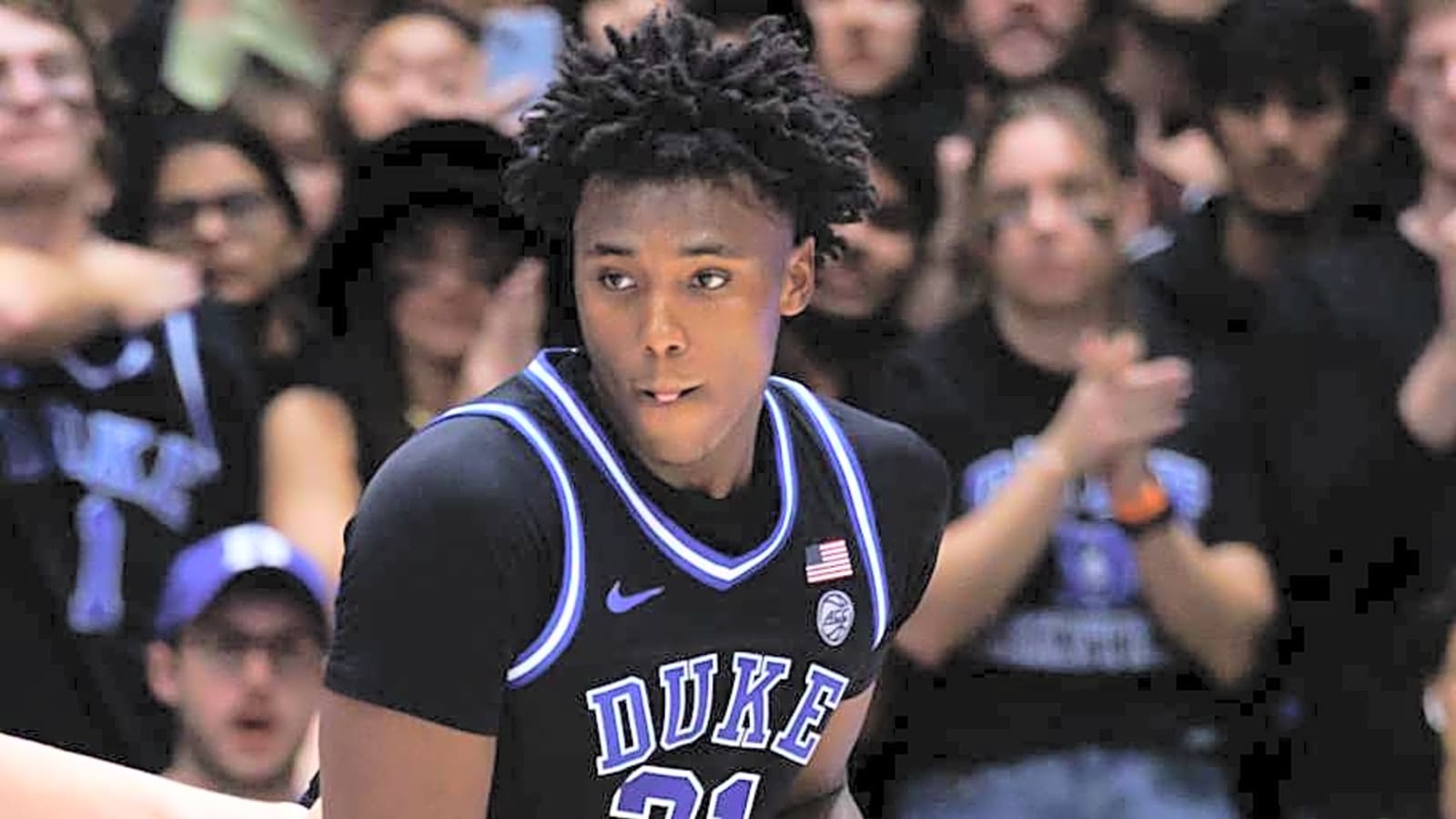
…the tone of the night was set by one man: Patrick Ngongba II.
From the first possession, it was clear that Duke’s sophomore center had stepped into a different version of himself. His opening bucket — a confident three-pointer from above the break — wasn’t a fluke, and it wasn’t a heat-check. It was a message.
A message Florida didn’t read early enough.
Ngongba closed the night with two made threes, a pair of momentum-killing blocks, and the best playmaking stretch of his Duke career. In a season where the Blue Devils’ offensive identity has been built around versatility, his performance provided something even more valuable: stability.
It’s not just what Ngongba did — it’s when he did it.
The First-Half Foundation
Duke’s 12-point halftime lead didn’t come from an offensive explosion. It came from Ngongba’s two-way control.
His combination of a made triple and two blocks forced the Gators into three straight empty possessions.
Duke capitalized with a nine-point burst.
Momentum swung, and Duke looked like the more mature team.
For a player who entered the season still carving out his offensive role, this half was a declaration: he isn’t just a complementary piece — he’s an emerging pillar.
The Second-Half Evolution
Then, as Florida began to climb back into the game, Ngongba shifted again — this time into a facilitator.
His four second-half assists (five total, a career high) weren’t basic handoffs. They were decisive, well-timed, high-pressure passes, including the single most important setup of the night:
With just over two minutes remaining in the game, tied 59–59, Ngongba delivered a clean feed from the top of the key to Cameron Boozer, who rose up for the three that broke the tie and changed the game’s trajectory.
Boozer got the headline play.
Ngongba got the moment right.
His fingerprints were everywhere — not loud, not flashy, but essential.
This is what Duke needs if it intends to survive the ACC grind and make a deep March run: role players who can become stars on the nights the game demands it.
One Word: Clutch — The New Identity Duke Has Been Searching For
There is no better word to summarize the final 21 seconds.
Duke entered the game labeled by critics as talented but unproven in tight moments. After the heartbreaking Final Four collapse and several close losses last year, the question lingered:
Can this team execute late?
Against Florida, they didn’t just answer the question — they reshaped the narrative.
The Shot
Duke was 0-for-7 from three in the second half before the possession that changed everything.
Trailing by two.
The season’s biggest game so far.
Cameron Indoor holding its breath.
The ball found Tyrese Evans, who buried the go-ahead three with machine-like calm.
The beauty of the moment?
Jon Scheyer revealed afterward that this exact play was drawn up during the timeout.
They didn’t stumble into the shot.
They created it.
This wasn’t luck.
It was preparation crystallizing under pressure.
The Stops
Two defensive plays sealed the deal:
Caleb Foster’s steal, a lightning-fast read with 14 seconds to go.
Maliq Brown’s deflection on Florida’s inbound, a subtle but pivotal moment of discipline and anticipation.
Those weren’t accidents.
Those were signs of a program tightening its edges.
Duke showed a level of late-game intentionality that last year’s team rarely produced. If anything travels on the road to March, it’s composure.
One Stat: 37.9% Second-Half Shooting — A Warning Sign or a Growing Pain?
The number is ugly.
There’s no way around it.
Duke shot just 37.9% in the second half, by far its worst performance of the season after intermission — the first time all year the Blue Devils dipped under 45%.
The shots didn’t fall.
The spacing tightened.
The offense stalled.
Yet this is where the story gets interesting.
Youth Shows Itself
Freshmen Nikolas Khamenia and Dame Sarr — normally reliable sparks — posted the first scoreless games of their Duke careers. In a matchup packed with physicality, whistles, and adrenaline spikes, their confidence wavered.
Cameron Boozer, despite his clutch three, struggled from the field overall (4-for-12), showing rare signs of freshman nerves in his first ranked home game.
The building was loud.
The opponent was hungry.
The pace was discordant.
Duke looked young — and that’s okay.
Why This Number Might Actually Be Encouraging
Great teams aren’t defined by how they play when everything goes right.
They’re defined by how they survive when things go wrong.
Duke faced:
Its worst shooting half of the season
A collapsing lead
A wave of Florida momentum
A shaky performance from three key freshmen
…and still won.
Winning ugly is its own skill.
And it’s often a championship one.
The Road Ahead: Michigan State and the Test of Growth
Duke now travels to face No. 7 Michigan State in one of the most hostile environments in college basketball.
If there was ever a game to learn from, it was this one.
The Blue Devils will need:
Cooler nerves from their freshmen
More balanced second-half scoring
Continued defensive edge
Ngongba’s steady inside presence
Boozer’s willingness to take — and make — big shots
But more than anything, Duke will need the trait that defined the Florida win:
Belief under pressure.
Scheyer has spoken repeatedly about building a team that executes in late moments, not merely survives them. Against Florida, Duke saw what that looks like.
The road to March is long.
But for the first time this season, the Blue Devils showed that they have the DNA to win the kinds of games that become part of tournament folklore.
Final Takeaway
Duke didn’t just win a game.
They found a clutch identity.
They discovered a new star in Ngongba.
They proved they can weather storms.
They learned how to close a ranked opponent.
They turned shaky moments into defining ones.
Most of all, they showed the country that the 2024–25 Blue Devils aren’t last year’s Blue Devils.
This team knows how to finish.




