


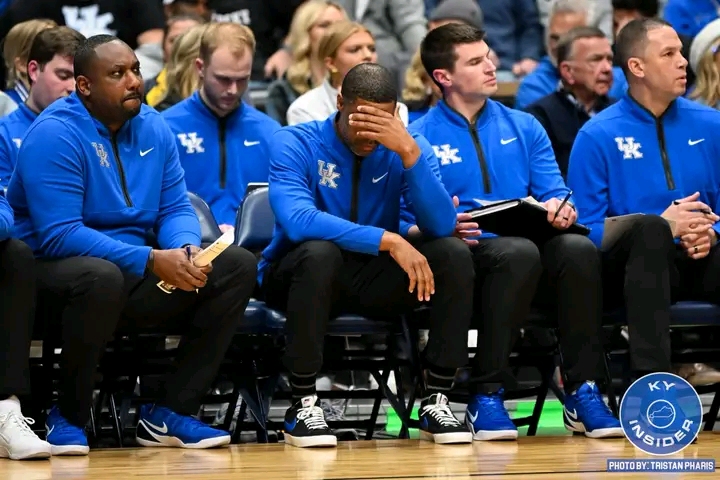
Something felt different in Nashville on Friday night—an uneasiness hanging in the air before Kentucky even missed its tenth straight shot. This wasn’t just another early-season test. This wasn’t just another loss to a top-15 opponent. As the Wildcats stumbled through one of the ugliest starts in program history, a single question echoed louder than anything happening on the court: Is the Mark Pope era slipping into danger far sooner than anyone expected?
The Crisis No One Saw Coming: How Kentucky’s Blowout Loss to Gonzaga Exposed a Deeper Problem
For weeks, Kentucky fans had been searching for a spark—something, anything—to suggest that Year 2 of the Mark Pope era was beginning to take shape. Instead, what unfolded in Nashville against No. 11 Gonzaga may go down as one of the most jarring, uncomfortable chapters of the early season. A 94–59 dismantling, a shooting performance that bordered on unexplainable, and a lingering sense that this once-proud program is drifting toward dangerous territory.
The scoreboard told its own unforgiving story. The eye test told something worse.
And for the first time, fans, analysts, and even Pope himself seemed aligned on one thing:
Kentucky is in trouble—real trouble.
A Résumé With No Foundation
Entering the week, Kentucky’s situation was already fragile. Their best win—a home victory over Valparaiso—didn’t inspire confidence, especially with the Beacons sitting at No. 221 in the NET Rankings. The Wildcats’ five wins all came against teams in the bottom half of Division I metrics, and their four losses weren’t inherently alarming: Louisville, Michigan State, North Carolina and Gonzaga are, after all, major players in the national-title picture.
But the “who” wasn’t the problem.
It was the “how.”
Look closely enough, and the early signs of concern were right there:
Inconsistent shooting.
Unsteady leadership.
A roster full of talent but lacking identity.
Little production from players expected to be program-changers.
So when Kentucky walked into Bridgestone Arena, the stakes were far bigger than a December non-conference matchup.
They needed proof they were making progress.
What they got was confirmation of their worst fears.
A Nightmare Start That Set the Tone
Kentucky didn’t just struggle in the first half—they delivered a statistical catastrophe.
Before the game reached the nine-minute mark, the Wildcats hadn’t scored a single field goal. They opened the night shooting 0-for-10, their longest stretch without a make to start a game in eight seasons. By halftime, Kentucky had:
shot 5 of 31 from the field
gone 3 of 20 from deep
made more free throws (7) than field goals (5)
looked completely overwhelmed by Gonzaga’s physicality, pace, and discipline
ESPN’s broadcast couldn’t believe what they were reporting.
Fans in blue sat stunned.
And Gonzaga—poised, experienced, and ruthlessly efficient—took complete control.
The first half was a message.
The second half was a verdict.
A Performance That Hit Rock Bottom
Kentucky finished the night 16 of 60 from the floor—just 26.7%, their worst shooting display since 2006. For a program known for elite guard play, NBA-level talent, and offensive fireworks, the numbers painted a picture of a team without rhythm, without confidence, and at times without answers.
The Wildcats did shoot marginally better from three than they had against North Carolina (when they went 1 for 13), but that small improvement did nothing to lift the gloom surrounding this performance.
It wasn’t just that they missed shots.
It was that they looked lost while missing them.
Gonzaga, meanwhile, executed like a seasoned tournament team—because that’s exactly what they are.
The Bulldogs, led by dominant big man Graham Ike, exposed Kentucky’s lack of interior strength, perimeter decision-making, and transition organization. By the time the final horn sounded, Kentucky wasn’t simply beaten.
They were exposed.
A Start Not Seen in Over a Decade
With the loss, Kentucky dropped to their worst start since the pandemic-affected 2020–21 season, when they began 1–6. Before that, you’d need to go back to 2007–08 to find a Kentucky team that lost four or more games before SEC play.
For a school measured by Final Fours, banners, and NBA Draft nights, these aren’t just concerning numbers—
they’re unacceptable ones.
And it’s forcing everyone around the program to ask the same question:
How did Kentucky get here so quickly under Mark Pope?
The Shadow of Last Season’s Magic
Year 1 of the Mark Pope era wasn’t perfect, but it was full of exhilarating moments:
The upset over Duke in the Champions Classic
The dramatic comeback win over Gonzaga in Seattle
The emotional victory over Louisville
The 106–100 shootout win against Florida in Pope’s very first SEC game
All of this happened with zero returning scholarship players, making the run even more remarkable.
But the magic faded.
Excitement turned into expectation.
Expectation turned into pressure.
Pressure is turning into frustration.
Suddenly, the honeymoon is over.
And fans are starting to wonder if last year was the exception—not the foundation.
The Missing Pieces and the Unanswered Questions
Part of Kentucky’s struggle is tied to circumstances. Their most talented player—star transfer Jayden Quaintance, a projected 2026 NBA lottery pick—still hasn’t played a minute this season while recovering from ACL surgery. His return date remains unclear.
Without him, Kentucky lacks:
a true dominant rim protector
a physical interior threat
a stabilizing defensive presence
a go-to scorer when the offense stalls
But the injuries alone don’t explain the Wildcat collapse. The issues run deeper:
Why is a roster full of elite recruits and high-end transfers producing so little?
Why is the shooting so historically poor?
Why does the offense look disorganized and stiff?
Why hasn’t Kentucky found a reliable rotation or identity through eight games?
These are questions that will define the rest of the season—
and perhaps Pope’s tenure.
A Crucial Stretch That Will Decide the Narrative
Kentucky doesn’t have time to sulk.
Their schedule is about to sharpen, and two opportunities for redemption are looming:
No. 22 Indiana
No. 23 St. John’s
If Kentucky responds with energy, discipline, and urgency, the Gonzaga loss may end up being the wake-up call this young team needed.
If not?
Things could unravel quickly.
Where Kentucky Goes From Here
Mark Pope didn’t sugarcoat the situation:
“We have great young men and we’re in a bad spot right now.”
It was honest.
It was necessary.
But it was also concerning.
Kentucky basketball does not tolerate extended rebuilding phases. Not with this brand. Not with these facilities. Not with this recruiting power. Not with this fanbase.
As the noise grows louder, the expectations remain unchanged:
Kentucky must compete.
Kentucky must win.
Kentucky must look like Kentucky.
Right now, they don’t.
The Bottom Line: A Season on the Edge of a Turning Point
The Gonzaga loss didn’t just sting—it revealed something deeper:
This Kentucky team is at a crossroads.
They can respond, regroup, and salvage their season…
or continue to slide toward a level of mediocrity that the fanbase refuses to tolerate.
The answer may define the entire Mark Pope era.
And after Friday night, one thing is certain:
Everyone is watching now.




