


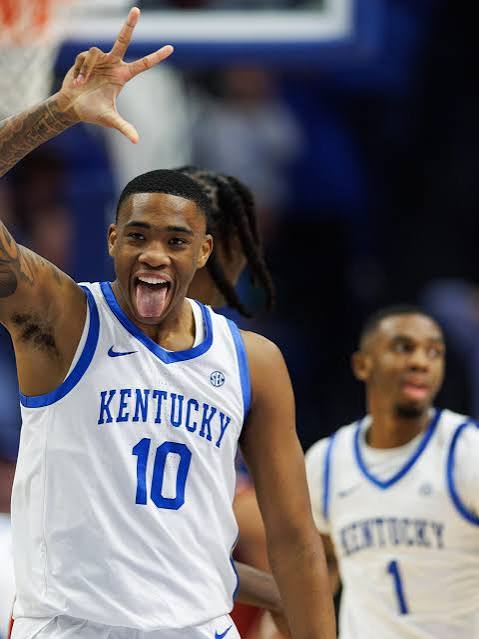
In the hours after the 35-point drubbing by Gonzaga Bulldogs, Kentucky was already swirling in anger, disappointment and doubt. But nothing stirred the blue-blood rumor mill quite like a sudden, explosive claim: a “secret investigation” into Brandon Garrison — a star on the roster — that allegedly tied him to pay-for-poor-performance in the Gonzaga game. Social media erupted. Fans screamed betrayal. And for a moment, the season didn’t just feel lost — it felt tainted. But when the dust settled, one unsettling fact remained: no credible source stepped forward. No official document was released. And the most urgent question echoed across Big Blue Nation: Is any of this real — or just another internet ghost story?
What We Know For Sure About the Gonzaga Loss
Before diving into wild claims, it’s worth painting the real picture of what happened — and why it matters. On December 5, 2025, the Kentucky Wildcats took the floor against Gonzaga and didn’t just lose. They were dominated. The final score: 94–59, a 35-point blowout that ranks among the worst losses in program history.
NCAA.com
+2
WSLS
+2
Kentucky missed its first 10 shots and its first seven triples.
WSLS
+1
The Wildcats shot only 26.7% overall and 20.6% from three — clearly not the effort expected of a program with their pedigree.
WSLS
+1
They were beaten to the glass, outscored in the paint, and repeatedly exploited defensively.
NCAA.com
+1
During the game, frustration reached a tipping point: fans booed their own team, many left early, and longtime supporters publicly questioned whether the current roster even had the heart to wear the jersey with pride.
A Sea Of Blue
+3
WSLS
+3
WJXT
+3
This wasn’t a fluke or a bad shooting night. For many observers, it exposed deep cracks — in leadership, in morale, and in identity.
That’s why, on its own, the loss is painful. But painful losses happen. What followed in the rumor mill… is something else entirely.
The Rumor: A “Secret Investigation” Into Brandon Garrison
Within hours of the final buzzer, a story began circulating on obscure web forums and social-media outlets claiming:
The National Collegiate Athletic Association (NCAA) and internal Kentucky administrators had quietly opened an investigation into Brandon Garrison.
The allegation: Garrison was paid US$50,000 (or similar amounts) to intentionally “play poor defense” during the Gonzaga game — effectively a form of point-shaving or fixed-performance.
The leak asserted the “proof” was in game footage, betting patterns, and an internal compliance tip — but claimed the school and NCAA wanted to keep the probe under wraps to avoid a full scandal.
The rumor spread fast. Social media went wild. Fans, angry and hurt by the loss, clung to the rumor as an explanation for the collapse. The word “betrayal” surfaced. Calls for transparency, bigger probes, and total roster clean-ups echoed online.
If true, it would rank among the most shocking scandals in recent college basketball history — potentially tarnishing a program built on tradition, pride, and decades of elite reputation.
But… neither the NCAA nor Kentucky has said a word.
What We Found — And What Is Not Verified
We attempted to trace the leak: public records, enforcement databases, betting-monitor documents, credible news outlets. Here’s what we discovered — and what remains missing.
✅ What is true and verifiable:
The NCAA and federal authorities are investigating a series of sports-betting violations and suspicious betting patterns connected to multiple Division I schools this season.
CBS Sports
+1
Recent reporting shows sportsbooks flagged unusual wagering activity — like large bets on first-half spreads — across a handful of small- and mid-major programs, suggesting that gambling-related corruption remains a serious concern in college hoops.
ESPN.com
+1
Historically, point-shaving scandals have indeed impacted college basketball — including high-profile cases involving teams like Kentucky, which suffered a major scandal back in 1951 when players were accused of taking bribes to manipulate game scores.
Wikipedia
+1
So yes — the backdrop of gambling, corruption, and past scandals in college basketball is real. The concern that something similar could be happening again is not inherently unreasonable.
❓ What is not proven about the Garrison rumor:
There is no public or verified document from the NCAA indicating an investigation into Brandon Garrison or the 94–59 Gonzaga game. No compliance letter, no official statement, nothing.
None of the major, reputable sports-media outlets (ESPN, CBS Sports, SI, etc.) — which routinely cover NCAA investigations — have reported any formal probe or credible insider leak tied to Garrison.
There are no betting-market anomalies publicly linked to that specific game that would correspond to typical point-shaving patterns (e.g. large bets on the spread, strange line movement, unusual first-half wagers). Although recent reports flagged suspicious bets in other games and leagues, none mention Kentucky or Garrison.
ESPN.com
+1
There are no corroborated whistle-blower accounts, audio/video evidence, or compliance-office leaks — the types of evidence that historically accompany real scandals.
In short: the rumor reads like a tabloid headline — drama, shock, betrayal — but it lacks every critical requirement that defines a credible investigation.
Why This Rumor Is Dangerous — Even If It’s False
Even unproven, rumors like this can inflict serious damage:
Player reputation: For Garrison, mere association with such a rumor can tarnish his future — draft stock, NIL deals, public image — regardless of truth or consequence.
Program image: For the school and its fans, rumors undermine trust and add fuel to an already volatile environment. Public confidence in coaching, recruiting, and institutional integrity takes a hit.
Fan toxicity: When fans believe corruption, the reaction can be explosive — harassment of players, divisions among supporters, and long-term damage to what should be support and unity.
False precedent: Encouraging unverified rumors normalizes suspicion — making every loss, slump, or error a potential scandal instead of a challenge to fix.
Until proven, such rumors do more harm than any potential truth might reveal.
What Experts Say About Point-Shaving and Betting in College Basketball Today
Research and recent history show that while college basketball remains vulnerable to gambling corruption, widespread point-shaving — especially at high-profile programs — is far less common than fans might assume.
A 2018 study published in the Journal of Economic Behavior & Organization found that monitoring of betting-market behavior and efficient line-setting by sportsbooks made large-scale point-shaving schemes difficult to execute undetected.
ScienceDirect
+1
The ongoing 2025 NCAA investigations primarily involve mid- to lower-major schools — not marquee programs like Kentucky.
CBS Sports
+1
Experts warn that desperation-driven assumptions — e.g. a shocking loss equals corruption — often lead fans to draw false conclusions. Poor performance, bad chemistry, injuries, mental pressure — these remain far more common reasons for blowouts than bribery or point-shaving.
While corruption remains a concern and vigilance is necessary, most analysts emphasize relying on facts, not fear, when discussing alleged scandals.
So — Could the Rumor Still Be True?
Technically — yes.
None of the publicly available evidence rules it out.
But — and this is critical — there is no verified evidence to support it.
For a scandal of this magnitude, you would expect to see one or more of the following publicly:
An NCAA compliance letter or charge
A sportsbook line anomaly documented by experts
A credible whistle-blower speaking to major media
An internal Kentucky or NCAA audit leak
None have surfaced.
That doesn’t mean investigators — if they exist — aren’t working quietly behind closed doors. But it does mean that, for now, this remains a rumor — not a scandal.
What Kentucky Fans (And Neutral Observers) Should Do — And Avoid
If you care about fairness, about truth, about respect — here’s a reasonable playbook for fans amid all the noise:
✅ Do:
Demand credible journalism. Wait for verifiable sources before accepting wild claims.
Support transparency. Encourage the school to respond if there’s any real investigation.
Focus on real issues: poor chemistry, roster fit, coaching adjustments, accountability.
Protect players’ reputations. Mistakes happen. Blowouts happen. But that does not automatically equal corruption.
❌ Don’t:
Share or repeat the rumor as fact. That spreads potentially false accusations.
Harass or target players — public or private. No one deserves that without proof.
Let every bad loss become a conspiracy theory. That erodes fandom and trust, not builds it.
The Bigger Context: Why This Rumor Resonates — Even If It’s False
Kentucky’s history is scarred by scandal. The program’s worst days include the point-shaving scandal of 1951, when players were arrested for taking bribes to influence game outcomes.
Wikipedia
+1
That legacy still casts a shadow — especially when current teams underperform.
Add in the rise of NIL money, skyrocketing pressure, social media scrutiny, and high-stakes betting markets — and you create an environment where suspicion spreads like wildfire after every big loss.
When a blowout happens, when young athletes seem to struggle under pressure, when fans feel betrayed… it becomes tempting to believe the worst. That’s why rumors like the Garrison leak spread so fast: they offer a “reason,” a villain, a scapegoat.
But sports — especially college sports — are messy. Sometimes the answer isn’t a scandal. Sometimes it’s just bad nights. Bad chemistry. Bad luck.
Final Thoughts: What We Should Do While We Wait
Right now: we wait.
We watch.
We listen.
And we remain skeptical.
If there is a real investigation, it will come from credible sources — forensic audits, sportsbook logs, NCAA compliance letters, or a whistle-blower with evidence, not rumor websites.
Until then, this story belongs in the realm of speculation, not headlines. It belongs to caution, not conviction.
Because in a world fueled by clicks and chaos, innocence deserves respect — even for teams under pressure.
Kentucky fans deserve the truth.
Brandon Garrison deserves a fair shake.
And Big Blue Nation deserves honesty, not hysteria.




