


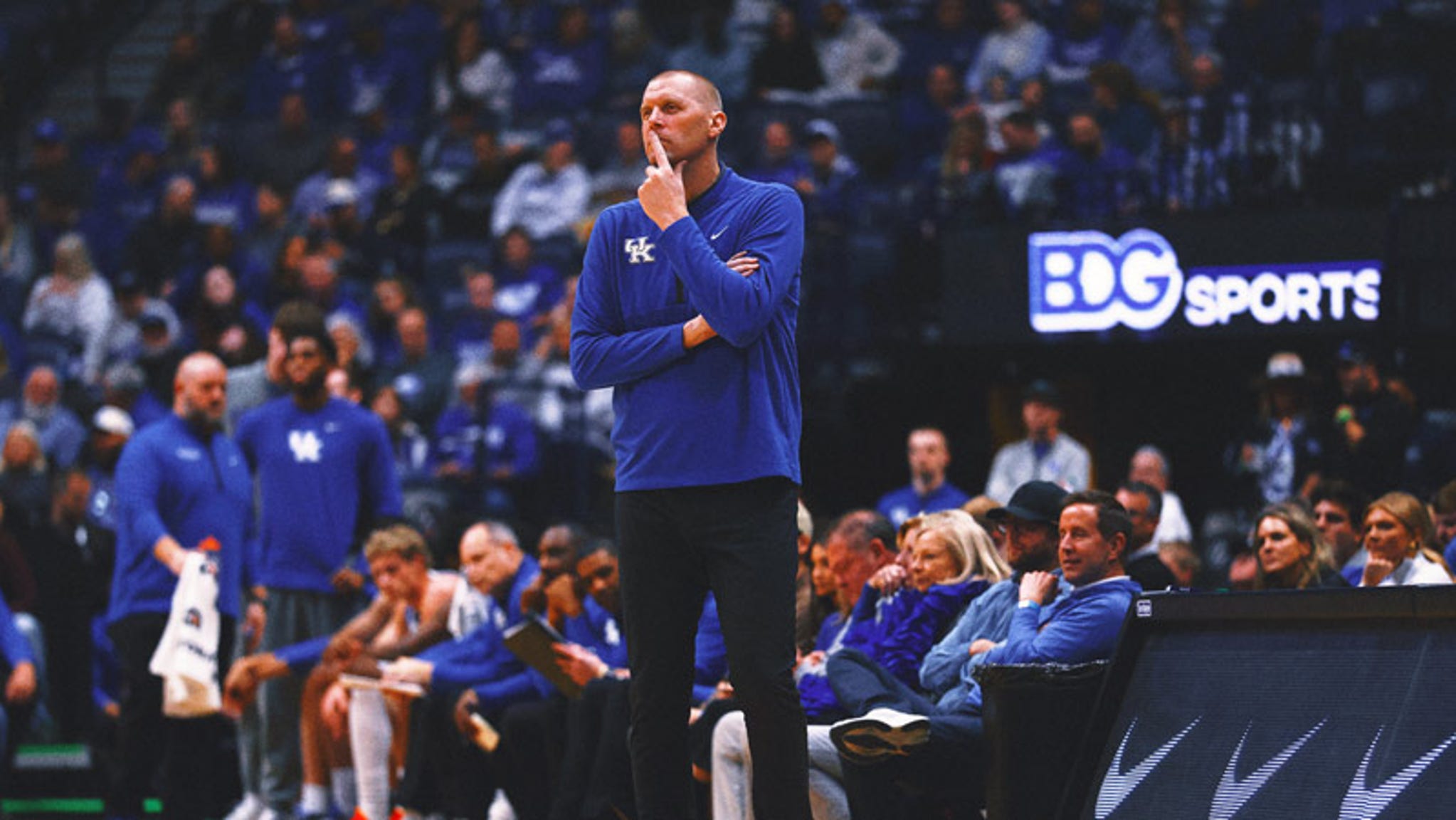
Kentucky basketball is no stranger to pressure, expectations, or the unblinking spotlight of one of college sports’ most passionate fan bases. But on Friday night, inside the storied walls of Rupp Arena, that intensity reached a boiling point. The No. 18 Kentucky Wildcats were stunned, outplayed, and ultimately overwhelmed in a 94–59 dismantling at the hands of No. 11 Gonzaga. As the Bulldogs piled on points and Kentucky’s offense sputtered possession after possession, a cascade of boos rained down from a frustrated crowd unaccustomed to such lopsided outcomes.
And in the aftermath of one of the program’s roughest home losses in recent memory, second-year head coach Mark Pope didn’t deflect, deny, or downplay. Instead, he leaned directly into the criticism with a level of honesty that immediately set the tone for what comes next.
All the boos that we heard tonight were incredibly well-deserved—mostly for me,” Pope said, speaking candidly after the blowout defeat. “We have to fix it. We’ve diminished ourselves into a bad spot right now, and we have to dig ourselves out of it. It’s going to be an internal group thing, and we feel the responsibility we have to this university and to this fan base.”
Those words weren’t spoken lightly. Kentucky shot an abysmal 26.7% from the field, including just 20.6% from three-point range. The Wildcats looked disjointed, struggling to generate quality shots while failing to find answers on the defensive end. Gonzaga, meanwhile, executed with precision, shooting 57.1% from the floor and 50% from deep. Gonzaga forwards Graham Ike and Braden Huff combined for a staggering 48 points, consistently exploiting mismatches and outmuscling Kentucky inside.
To make matters worse, the Bulldogs entered the matchup fresh off a 101–61 loss to Michigan just days earlier—something Kentucky fans were keenly aware of. The expectation was that the Wildcats would respond with urgency and discipline. Instead, Gonzaga controlled the game from start to finish, dominating the glass 40–27 and silencing the home crowd early.
The loss dropped Kentucky to 5–4 on the season, with all four defeats coming against ranked opponents: Louisville (96–88), Michigan State (83–66), North Carolina (67–64), and now Gonzaga (94–59). While the schedule has been daunting, the fan base’s concern stems less from the record itself and more from how the Wildcats have looked in those losses—out-of-sync, inconsistent, and often overwhelmed by physicality and experience.
For Pope, acknowledging the issue is step one. “As you roll through life, you just have your response,” he said. “And our response so far has not been adequate, and we have to fix it.”
This moment could become a defining crossroads for Kentucky’s season. Pope’s first year at the helm produced a 24–12 record, a No. 3 seed in the NCAA Tournament, and a Sweet 16 appearance before falling to Tennessee. That success built optimism and belief, but the early stages of Year Two have presented a steeper climb.
Still, the season is far from lost. Kentucky has two more crucial opportunities to right the ship before SEC play begins. The Wildcats host No. 22 Indiana on December 13 and No. 23 St. John’s on December 20—two ranked matchups that could serve as a springboard or deepen the team’s struggles depending on their response.
For a program built on pride, tradition, and championship aspirations, the path forward will demand resilience, accountability, and renewed commitment—qualities Pope emphasized after the loss. His message wasn’t one of resignation or defeat, but one of ownership and determination.
The players will need to rediscover their identity—whether it’s through tougher defense, better shot selection, or greater cohesion on both ends of the court. The staff will need to recalibrate rotations and game plans to maximize the roster’s strengths. And the fan base, while rightfully demanding, will be watching closely to see whether this team can evolve from adversity rather than be consumed by it.
Kentucky basketball has weathered storms before. This program has endured upsets, slumps, and stretches that seemed to defy its high standards, only to surge back with force. The question now is whether this group, under Pope’s leadership, can use this humbling moment as motivation rather than discouragement.
The boos may have echoed loudly through Rupp Arena on Friday night, but so did Pope’s response—a direct acknowledgment that the performance wasn’t good enough, paired with a commitment to doing better. In an era when many coaches pivot to excuses or evasion, his transparency stands out.
Kentucky’s journey through the remainder of the season will reveal the true impact of that mindset. The talent is present, the opportunities remain, and the stakes are clear. Now, it’s about action—responding with fight, unity, and purpose.
For a team that’s taken several hits early, the next stretch will determine whether those blows break them or build them.
And if Pope’s message resonated the way he intends, Kentucky fans may soon find themselves cheering again—not because the boos weren’t deserved, but because the team grew from them.




