


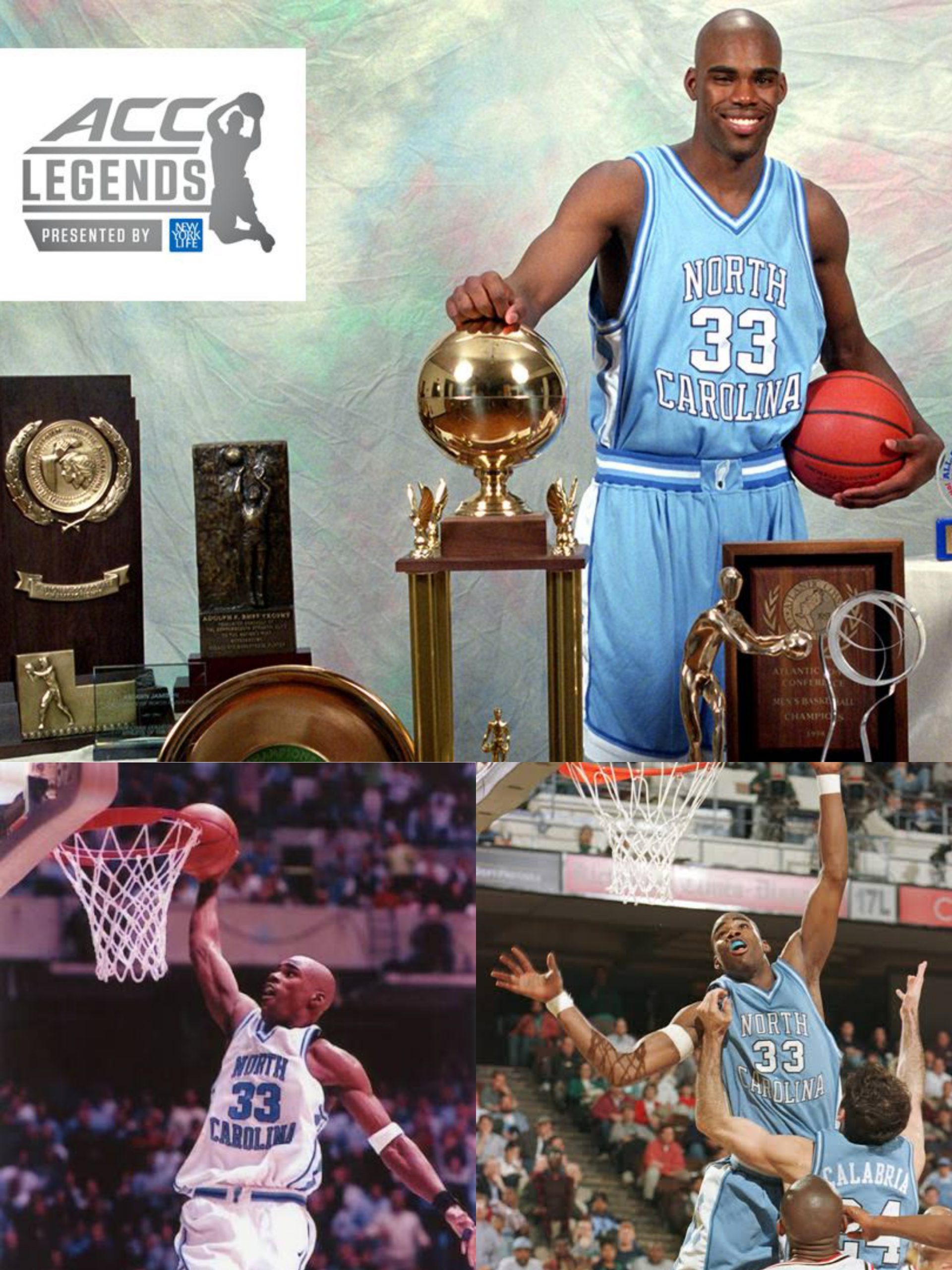
THE REAL STAR OF ’98: Traded For His Own Teammate? The Wild Draft Night Twist That Split Two UNC Icons Forever—And Why The Man Who Won National Player Of The Year Is Still The Most Underrated Scorer Of His Era… But Wait Until You Hear What Happened Next…
In the long and decorated history of North Carolina basketball, certain storylines become folklore—Dean Smith’s disciplined dynasties, Michael Jordan’s jumper in 1982, and the countless ACC wars that shaped the program’s identity. But few stories remain as strangely misunderstood, underappreciated, and quietly astonishing as the tale of Antawn Jamison: the silent superstar of 1998 whose legacy remains overshadowed not by lack of talent, but by one of the most unusual draft-night trades in NBA history.
The irony? He wasn’t traded for just anyone.
He was traded for his own UNC teammate.
The Night That Shocked the League
On June 24, 1998, Jamison—fresh off winning the Wooden Award, the Naismith Trophy, and leading UNC to the Final Four—was selected fourth overall by the Toronto Raptors. His selection was no surprise. The surprise came minutes later.
Toronto traded Jamison for the man picked right after him: Vince Carter, his close friend and fellow Tar Heel standout.
Two Tar Heels.
Two back-to-back lottery picks.
Traded for each other before their jerseys were even printed.
The move remains one of the wildest draft-night twists in NBA history. For years, fans have debated: Did the trade overshadow Jamison’s greatness? Did Carter’s explosive highlight-reel style eclipse Jamison’s quieter dominance?
And yet, in 1998, the college basketball world wasn’t even conflicted. It was clear who the true star was.
Jamison was the nation’s best player—and it wasn’t close.
The Quiet Dominance the NBA Never Fully Understood
Before the NBA labels and the draft-night confusion, Antawn Jamison was a cheat code at UNC.
• 35 points vs. No. 1 Duke to win the ACC Tournament
• Averaged 22.2 points and 10.5 rebounds
• National Player of the Year
• ACC Player of the Year
• Consensus First-Team All-American
And he did it all with a style unlike anything college basketball had seen: lightning-quick shots, impossible angles, and a touch around the rim that made him virtually unguardable. Opposing coaches still say they had no scouting report that worked against him.
His teammate Vince Carter grabbed the headlines. Jamison grabbed the games.
The Underrated Pro Career That Almost Everyone Forgot
Once traded to Golden State, Jamison did something even fewer players from his era could claim:
He quietly balled out.
• 24.9 points per game in his third season
• Back-to-back 50-point games in 2000
• Sixth Man of the Year in Dallas
• Two-time NBA All-Star
• More career points than Tracy McGrady, Chris Webber, Kawhi Leonard, and Kyrie Irving (to date)
Yet somehow, his legacy—overshadowed by flashier stars and louder narratives—never received full credit.
He wasn’t loud.
He wasn’t controversial.
He wasn’t a human dunk contest.
He just scored. And scored. And scored.
The Twist Nobody Talks About
But here’s what most fans never hear: the bond between Jamison and Vince Carter wasn’t broken by that draft-night trade. It shaped both careers.
Carter has repeatedly said he would never have developed into the player he became without the battles, competition, and respect he built with Jamison in Chapel Hill.
Jamison, in turn, has insisted he always believed Carter was destined for stardom—though many around the program thought Jamison, not Carter, would be a future Hall of Famer.
Now, decades later, as Carter stands on the brink of Hall of Fame induction, the conversation has shifted back to Jamison. Analysts and former players are revisiting his numbers, his efficiency, and his unmatched college résumé.
And suddenly, the narrative is changing.
The Most Underrated Scorer of His Era?
Many now argue that Antawn Jamison—not Carter, not McGrady, not Webber—was the quiet engine of his era’s scoring forwards. He outperformed expectations, reinvented roles, and produced at a level that modern analytics finally understand.
His draft-night trade was shocking.
His scoring was undeniable.
His legacy? Still being rewritten.
Because as more fans revisit his era, one question keeps resurfacing:
How did the National Player of the Year—one of the best scorers of the 2000s—become the most underrated star of his generation?
That’s the real twist.
And the story isn’t over yet.




