


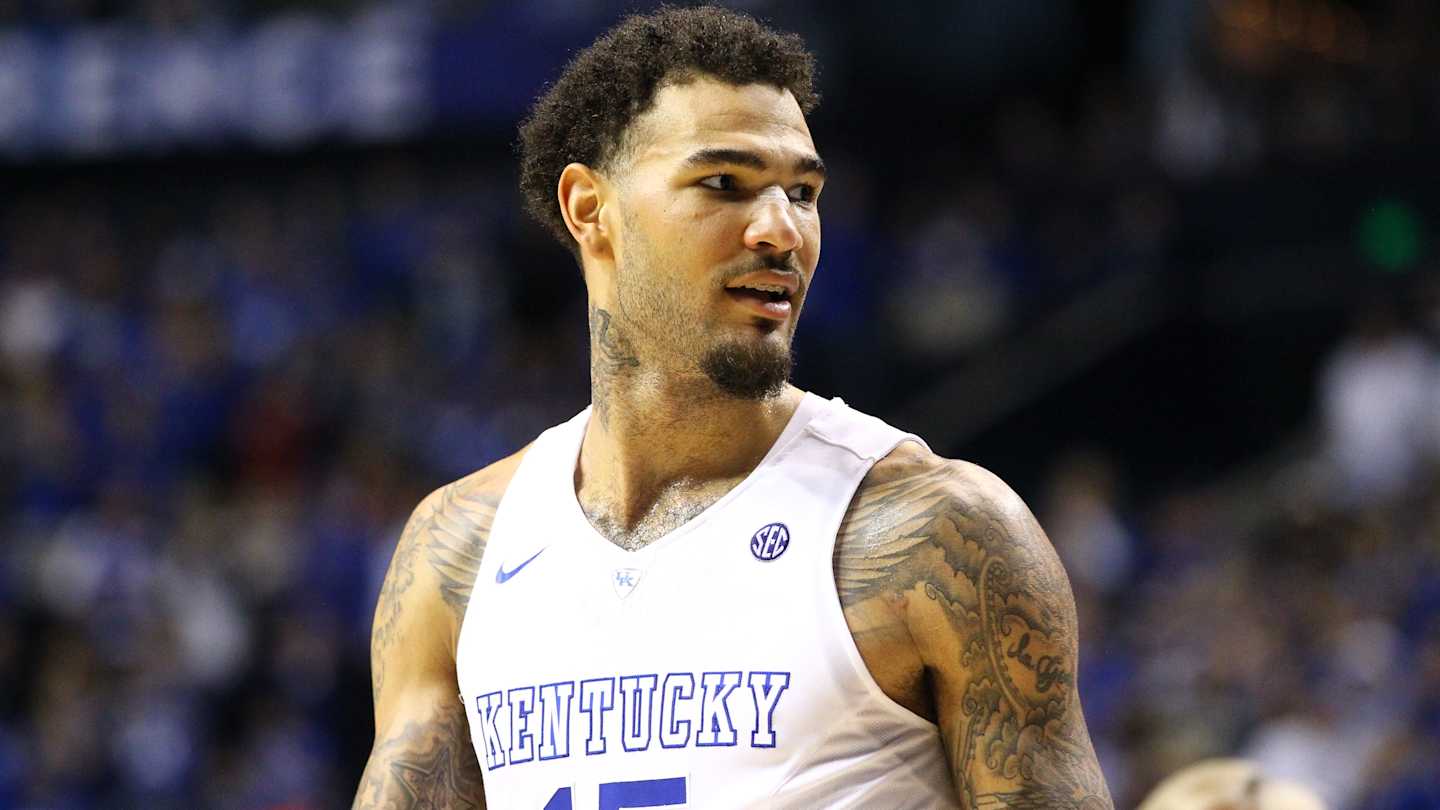
Willie Cauley-Stein didn’t tiptoe. He didn’t sugarcoat. He didn’t “all due respect” his way around Kentucky basketball’s current identity crisis. He lit a match and threw it straight into the heart of the NIL era, saying out loud what a lot of former players whisper behind closed doors: Effort isn’t automatic anymore.
And the uncomfortable truth?
He might be right.
When Cauley-Stein’s post went viral—pointing out how “(expletive) tough to be hungry” it is when players are rolling into practice in luxury cars and designer clothes—Kentucky fans didn’t just nod. They recognized it. They’ve been watching it play out on the floor all season.
This isn’t about talent. Kentucky’s always loaded.
This is about fire. Grit. Urgency.
And according to Cauley-Stein, that’s exactly what NIL has complicated.
THE NIL ERA CHANGED COLLEGE HOOPS — AND CAULEY-STEIN JUST SAID THE QUIET PART OUT LOUD
Cauley-Stein’s message wasn’t an anti-NIL rant. He didn’t blame players for cashing checks that generations before them earned on behalf of their schools. Instead, he called out the reality of the new landscape: players now enter college already living like pros, long before they’ve proven anything on the court.
You don’t have to look hard to see it:
Luxury cars in the parking lot
Designer fits on game day
Personal brands established before they hit double-digit minutes in college
NIL deals that sometimes reward hype more than production
None of that makes a player bad. But it does change the psychological equation.
The hunger players used to have to earn their way to the NBA?
Now it arrives early in the form of sponsorships, video views, and brand deals.
As Cauley-Stein put it, we’re in a new world of “professional student athletes.” And for coaches, the job is no longer just teaching the game. It’s managing personalities, egos, and expectations in a room full of teenagers who already have pro-level lifestyles.
So, when people ask, “Why doesn’t the energy look the same?”
Cauley-Stein’s response is basically: because the stakes have shifted.
KENTUCKY’S EFFORT PROBLEM ISN’T UNIQUE — BUT IT’S MORE VISIBLE
One important thing Cauley-Stein highlighted without saying it directly:
Kentucky isn’t the only team struggling with effort in the NIL era.
It’s happening everywhere.
College basketball today is filled with players who have:
Money in their pockets
Agents managing their deals
Media crews following their every move
A constant reminder that branding matters as much as winning
But Kentucky isn’t just another program.
It carries expectations other teams don’t.
Every lack-of-effort possession becomes a headline.
Every slow defensive rotation becomes a talking point.
Every game that feels “flat” becomes a crisis.
And that’s why comments from guys like DeMarcus Cousins and Willie Cauley-Stein sting a little more in Lexington. These aren’t random analysts. They’re former Wildcats who bled for the program when the only thing on the line was pride and draft stock.
They know what the work used to look like. They know what the energy used to feel like.
And they’re not seeing it consistently now.
WHY CAULEY-STEIN’S “HUSTLE BONUS” IDEA HITS DEEPER THAN YOU THINK
The viral part of Cauley-Stein’s message was his half-joking, half-serious suggestion that players should get bonuses for hustle plays—steals, blocks, rebounds, assists.
It sounds like a joke.
But there’s truth underneath it.
In a world where points and highlights get players paid, what actually motivates effort?
What cuts through the comfort of NIL deals?
Cauley-Stein is saying the quiet part:
You have to incentivize the things that don’t show up on endorsement decks.
He’s pointing to a bigger issue programs like Kentucky must solve:
How do you convince players that legacy still matters?
How do you get them to chase banners instead of followers?
How do you reward “winning plays” in a world obsessed with stats and clips?
That’s the new coaching challenge. And it’s not small.
MARK POPE INHERITED A DIFFERENT KENTUCKY — AND HE HAS TO LEAD IT DIFFERENTLY
Cauley-Stein and Cousins played under a different version of Kentucky basketball.
Different pressures, different motivations, different dynamics.
Mark Pope isn’t coaching that world.
He’s coaching the NIL world.
The transfer portal world.
The “brand-first” world.
And that means he has to build a culture where:
Sacrifice is praised publicly
Toughness is valued more than Instagram shine
The community matters as much as the checks
Winning plays become the new currency in the building
Because Cauley-Stein is right about one thing:
“Trying to win ships ain’t the fuel anymore.”
Not automatically.
Not for everyone.
Someone in that locker room—whether it’s Pope, a veteran, or a breakout leader—has to make it fuel again.
SO… IS WILLIE CAULEY-STEIN RIGHT?
He’s not attacking players.
He’s explaining the era.
And in many ways, yes, he’s right:
The effort gap is real.
NIL changed the psychology of competition.
Kentucky’s identity is shifting and must be rebuilt.
Hunger isn’t guaranteed anymore—it has to be taught, earned, and demanded.
Cauley-Stein wasn’t trying to tear down the program.
He was trying to hold it to the standard he helped build.
And maybe that’s exactly the voice Kentucky needs right now.
If the Wildcats are going to be the team they should be in March, someone inside has to ignite that old fuel again—because talent alone won’t cut it.
Not in this era.
Not at Kentucky.




