


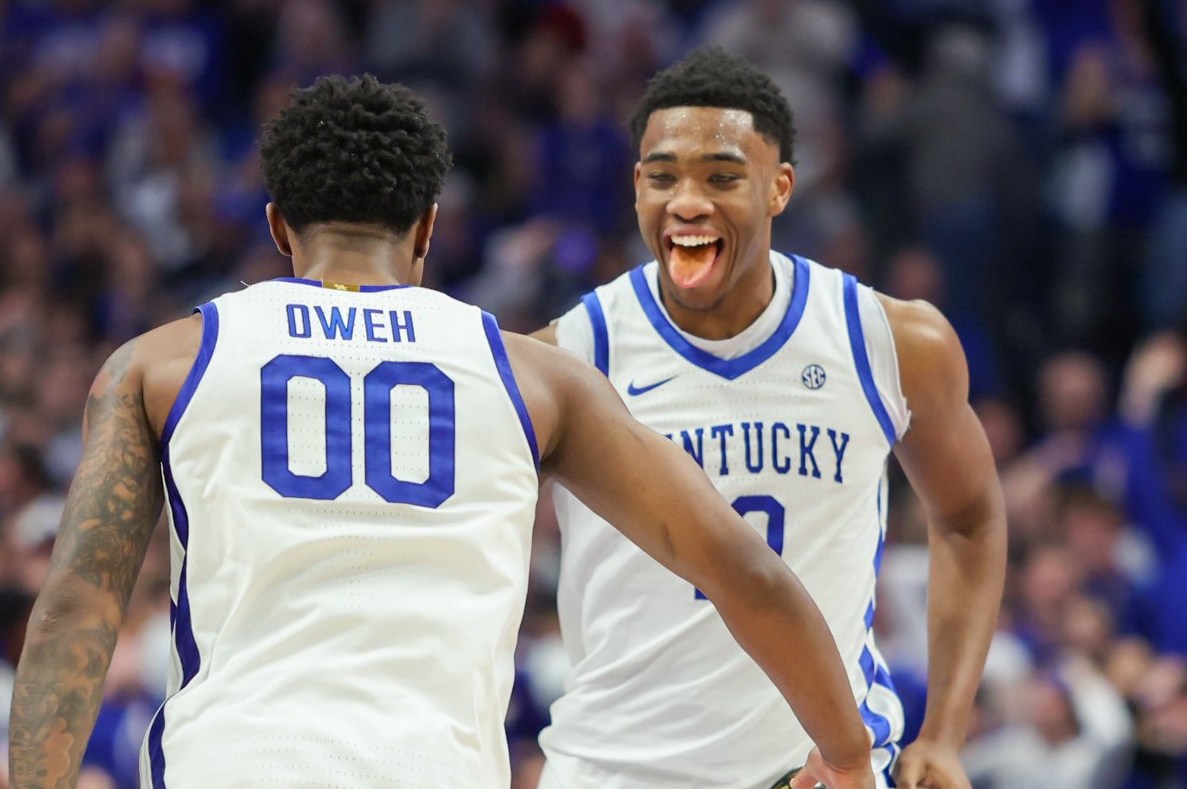
In rivalry games, the spotlight usually settles on stars, box-score leaders, or the loudest moments that flip momentum. But Kentucky’s latest win over Indiana was shaped just as much by something quieter and far more revealing: Brandon Garrison’s refusal to sulk when he had every reason to.
The sophomore big man didn’t start. He didn’t dominate early touches. He didn’t play mistake-free basketball. What he did instead was embody a kind of competitive maturity Kentucky has been searching for all season — the ability to stay engaged, stay ready, and impact winning even when circumstances are less than ideal. Against Indiana, that mindset changed the game.
In a rivalry steeped in history and emotion, Garrison became an unlikely catalyst, helping steady Kentucky during critical stretches and injecting energy when it mattered most. His performance wasn’t flashy, but it was foundational, and it spoke volumes about where this team is headed.
The hidden challenge of modern college basketball
In today’s college basketball landscape, there are countless reasons for a player to disengage. Rotations shift weekly. NIL expectations loom. Social media amplifies every perceived slight. Players know their minutes, roles, and statistics are constantly being scrutinized, not just by coaches but by fans and future evaluators.
For someone like Garrison, the challenges are even more specific. He arrived at Kentucky with expectations. His physical tools, defensive instincts, and upside were well documented. But early in the season, minutes fluctuated. Matchups dictated his role. Some nights he was central to the game plan. Other nights, he was a supporting piece.
Those are the moments when players either lean into growth or drift into frustration. Against Indiana, Garrison made his choice clear.
Early frustration, no visible fallout
From the opening minutes, it was clear this wouldn’t be an easy night for Kentucky’s frontcourt. Indiana attacked with physicality, forcing early defensive adjustments. Garrison picked up contact, battled through traffic, and didn’t always get the whistle or the bounce.
There were moments where frustration could have taken hold. A missed rotation. A contested rebound slipping away. A trip down the floor without a touch. On many teams, those moments lead to slumped shoulders or disengaged possessions.
Not with Garrison.
Instead, he doubled down on effort. He sprinted into defensive position. He talked on switches. He stayed vertical at the rim. He made himself available as a screener and a rebounder, understanding that his value didn’t depend on shot attempts.
That steadiness became contagious.
Winning plays that don’t show up in headlines
Kentucky’s turning point didn’t come from a single highlight. It came from a series of small, connected plays, many of them involving Garrison.
A hard hedge that forced Indiana’s guard to retreat. A second-chance rebound that extended a possession. A kick-out pass that didn’t earn an assist but led to a rotation-breaking swing. A defensive stop that allowed Kentucky to push in transition.
These are the moments coaches value most and fans often overlook. Against Indiana, they added up.
Garrison’s defensive presence changed how Indiana attacked the paint. His ability to slide, contest without fouling, and recover on rebounds gave Kentucky stability during stretches when the offense stalled. While others scored, he ensured those points mattered by preventing runs on the other end.
Emotional control in an emotional game
Rivalry games are pressure cookers. Indiana-Kentucky brings history, pride, and noise into every possession. One emotional misstep can swing momentum instantly.
What stood out most about Garrison’s performance was his composure. He didn’t react to contact. He didn’t jaw with opponents. He didn’t let a missed opportunity affect the next play. That emotional discipline allowed Kentucky to weather Indiana’s pushes and stay connected as a group.
Late in the game, when Indiana threatened to make it a one-possession contest, Garrison’s calm was evident. He communicated on defense, directed traffic, and stayed locked into assignments. That presence helped Kentucky close without panic.
Growth that reflects the program’s direction
Under Mark Pope, Kentucky has emphasized connectivity, accountability, and role acceptance. Garrison’s night against Indiana was a clear example of those values translating onto the floor.
This wasn’t about ego or minutes. It was about impact.
Pope has consistently spoken about players earning trust through preparation and response. Garrison’s response to a fluctuating role sent a message not just to the coaching staff, but to the entire roster. Winning basketball requires buy-in, especially from players who aren’t guaranteed starring roles every night.
Kentucky’s bench fed off that energy. The defensive intensity remained high. The ball movement stayed sharp. Indiana never found the emotional opening it needed to flip the game.
A performance bigger than the stat line
When the final buzzer sounded, Garrison’s box score numbers didn’t scream dominance. But anyone who watched closely understood his importance.
He altered shots. He extended possessions. He stabilized the frontcourt. He played within himself and elevated those around him.
In rivalry games, that kind of performance often matters more than scoring bursts. It’s the difference between surviving a push and folding under pressure.
Why this game could matter later
Kentucky’s season is still unfolding, but games like this often become reference points. They set standards. They define expectations. They show young teams what winning actually looks like.
For Garrison, this could be a turning point. Not necessarily in minutes or usage, but in trust. Coaches notice players who respond the right way when things aren’t perfect. Teammates notice too.
As Kentucky moves deeper into conference play, depth and resilience will matter. There will be nights when shots don’t fall, matchups aren’t favorable, or roles shift unexpectedly. Having players like Garrison who stay locked in regardless gives Kentucky a competitive edge.
A quiet statement in a loud rivalry
Indiana-Kentucky games are remembered for stars, shots, and statements. This one will also be remembered for something subtler: a player choosing engagement over frustration.
Brandon Garrison ignored a hundred reasons to sulk and instead helped spark a Kentucky win that felt bigger than the final score. In doing so, he showed exactly what this version of Kentucky basketball wants to be — connected, resilient, and driven by players who understand that winning often starts with the smallest choices.
And sometimes, those choices make all the difference.




