


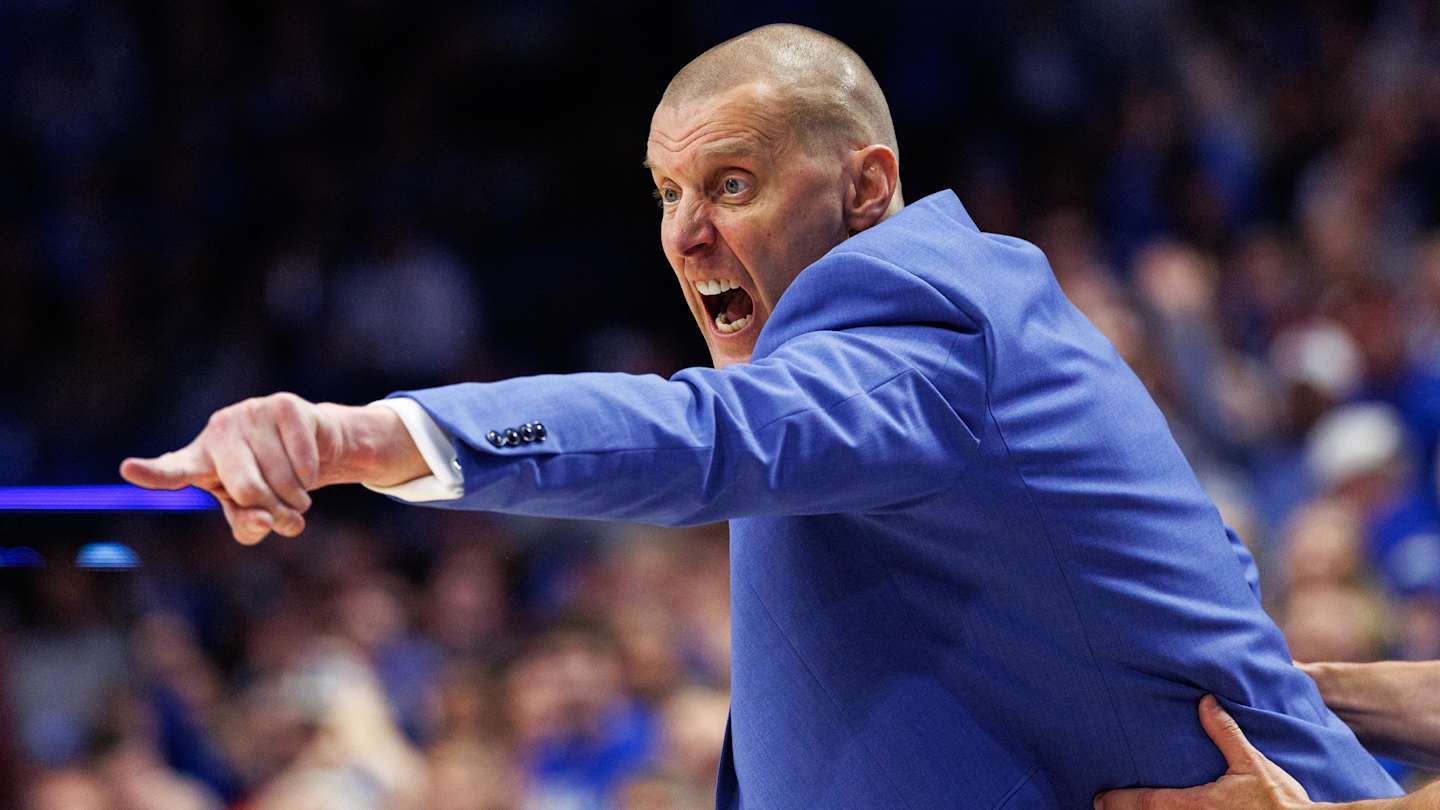
Mark Pope has never been short on confidence when it comes to what his Kentucky basketball team can become. From the moment he arrived in Lexington, Pope preached balance, effort, and trust in the work done behind closed doors. Even as outside perception labeled this roster as less skilled from the perimeter than last season’s group, Pope continued to insist that the shooting would come. He saw it every day in practice, and he believed — and still believes — that those numbers will eventually show up when the lights are brightest.
Back in September, Pope raised eyebrows when he pointed to the team’s practice shooting data as proof that Kentucky could be a legitimate threat from beyond the arc. “That translates to a game. It always has for us,” Pope said at the time. Those comments sparked optimism among fans who wondered whether the Wildcats might be better shooters than expected.
Early in the season, however, that optimism has yet to be rewarded. Kentucky’s shooting struggles have been impossible to ignore, and they reached a low point in Saturday’s win over Indiana. The Wildcats connected on just 3-of-15 shots from three-point range, the worst perimeter shooting performance of the Pope era so far. Yet despite the cold shooting night, Kentucky walked away with a convincing victory — and that fact may be just as important as any made three.
Instead of relying on perimeter scoring, Kentucky won with effort, intensity, and defensive commitment. The Wildcats dictated the tone on that end of the floor, forcing 18 Indiana turnovers and converting them into 23 points. Their defensive pressure disrupted rhythm, fueled transition opportunities, and allowed Kentucky to attack the rim with confidence, particularly in the second half. Indiana, meanwhile, was held to a season-low 4-of-24 shooting from beyond the arc, a testament to Kentucky’s energy and discipline.
While the shooting struggles remain frustrating, Pope sees something deeper developing within his team. He points to the Noah Shooting System — a data-driven tool used to track consistency, arc, and accuracy — as evidence that improvement is inevitable. Several players are posting shooting numbers in the mid-70 percent range over extended periods in practice. According to Pope, history tells him that those numbers always find their way into games.
“Listen, by the end of the year, I think we’re going to be really dangerous shooting the ball,” Pope said. “I’ve never been on a team where the Noah numbers don’t eventually transport their way into games. I just haven’t seen that. We have guys doing this consistently who haven’t exploded in games yet — but they will. That’s just a matter of time.”
For Kentucky, that leap will likely depend on key contributors stepping up. Players like Trent Noah, Kam Williams, and Collin Chandler have shown flashes, but consistency remains elusive. Pope knows that for his offense to reach another level, those players must become reliable threats, forcing defenses to respect the perimeter and opening lanes for dribble penetration and post play.
Still, there is a silver lining to the current shooting woes. Kentucky is learning how to win without relying on the three-point shot — a valuable skill as the season progresses. The Wildcats protected the ball, attacked mismatches, and played with physicality on both ends of the floor against Indiana. That identity, Pope believes, can serve as a foundation when shots aren’t falling.
“I think we can win games when we have that type of commitment to our team and that type of grit,” Pope said. “It’s not the way we want to have to win every game, but it’s something we should always be able to fall back on.”
That statement may define this team’s early-season growth. Kentucky isn’t yet the dangerous shooting unit Pope envisions, but it is becoming a tough, connected defensive group capable of imposing its will. The defensive hype surrounding the Wildcats during the offseason is no longer theoretical — it’s beginning to show up in real, tangible ways on the court.
If and when the shooting numbers finally align with the practice data, Kentucky’s ceiling could rise dramatically. A team that already defends, forces turnovers, and attacks the basket with purpose becomes far more dangerous when it adds consistent three-point shooting to the mix. Pope is betting on the work, the data, and the process — and if history is any indication, his patience may soon be rewarded.
For now, Kentucky keeps grinding, trusting that the shots will fall. Until then, effort, defense, and grit will carry the Wildcats — and that alone makes them a team no one will enjoy facing.




