


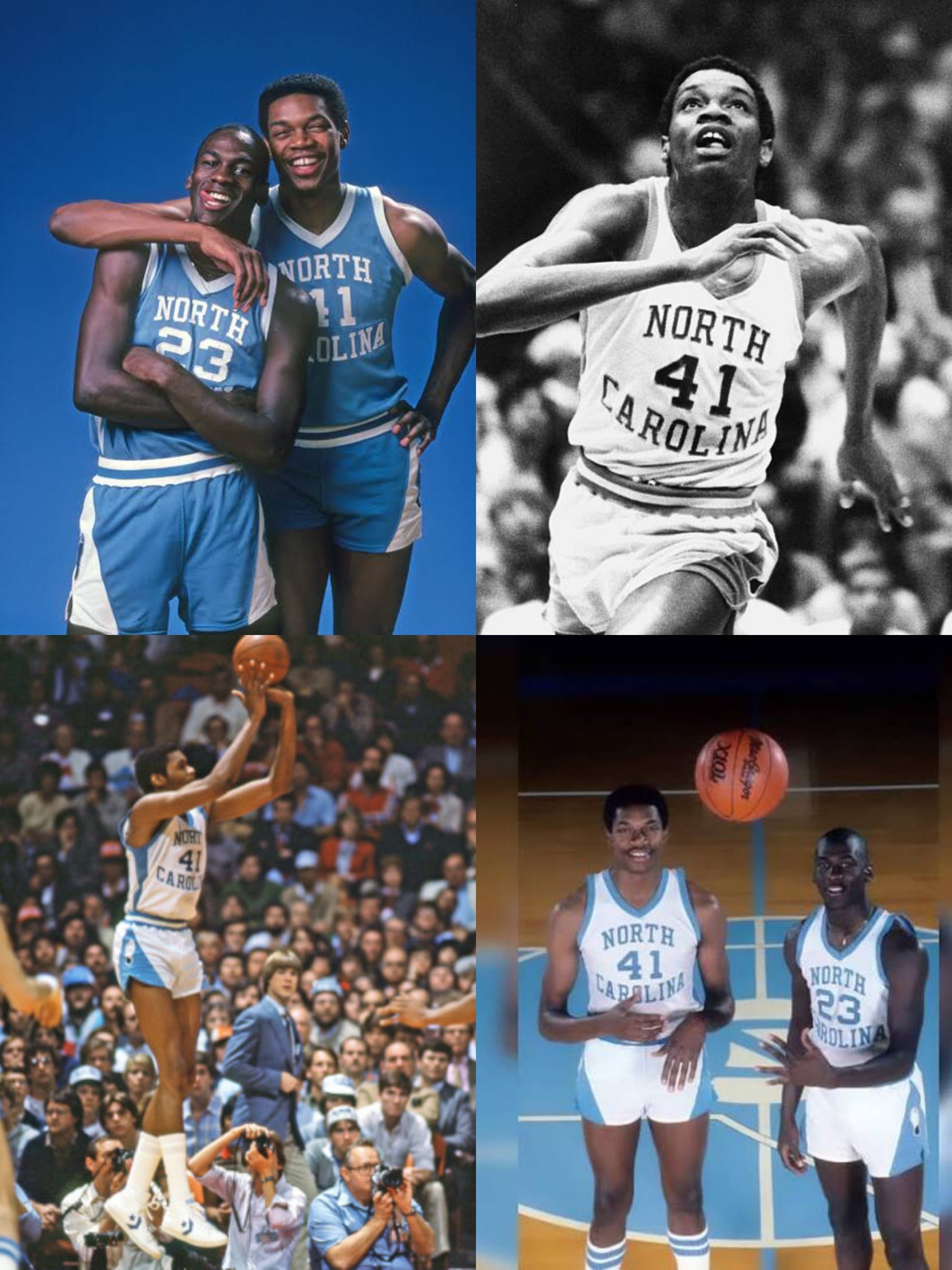
The Secret Weapon Behind North Carolina’s 1982 Title: He Outscored Michael Jordan in the Final Four and Led the 1982 Tar Heels in Rebounding—So Why is the Third Member of UNC’s Most Famous ‘Big 3’ Still the Most Forgotten Legend in Basketball?
When most people think of the legendary 1982 North Carolina Tar Heels, two names dominate the conversation: Michael Jordan and James Worthy. Jordan, with his explosive athleticism and clutch scoring, would go on to become a global icon, while Worthy’s smooth versatility helped him thrive in both college and the NBA. Yet, tucked in the shadow of these two giants is a player whose contributions were just as crucial to that historic championship run—Sam Perkins. Often labeled “the forgotten member of the Big 3,” Perkins’ story is one of consistency, grit, and understated brilliance that played a decisive role in UNC’s rise to national prominence.
Perkins entered Chapel Hill in 1979, a highly skilled forward with an extraordinary combination of size, agility, and basketball IQ. While the Tar Heels’ system thrived on fast breaks and high-profile scoring from stars like Jordan and Worthy, it was Perkins who provided the foundation: crashing the boards, setting solid screens, and delivering reliable scoring when the spotlight shifted. During the 1982 season, he averaged 7.8 rebounds per game, leading the team in this critical category and demonstrating an ability to control the paint against the nation’s best competition.
One game that perfectly encapsulates Perkins’ impact was UNC’s 68-63 Final Four victory over Houston. While Jordan would later be celebrated for his dazzling athleticism, it was Perkins who led the team in scoring with 25 points and grabbed 10 crucial rebounds. Against a formidable Houston squad that featured future NBA talent, Perkins’ performance provided both stability and a spark. Without his presence on the floor, the Tar Heels’ championship might have looked very different. The victory was a culmination of Perkins’ steady work and an example of how his contributions, though less glamorous, were essential to the team’s ultimate success.
Perkins’ college career was remarkable not only for that singular Final Four performance but also for his overall consistency. He played all four years at UNC, improving steadily and earning All-American honors in both his junior and senior seasons. In an era dominated by scorers and flashy athletes, Perkins’ game may have lacked the overt theatrics of his teammates, but it offered something arguably more important: reliability. Coach Dean Smith, renowned for his strategic acumen, leaned on Perkins’ basketball intelligence to anchor the team’s frontcourt, trusting him to make smart decisions in both offensive and defensive schemes.
After college, Perkins embarked on a 16-year NBA career, leaving an indelible mark with multiple franchises, including the Dallas Mavericks, Los Angeles Lakers, Seattle Supersonics, and Indiana Pacers. While Jordan and Worthy’s careers were rightly celebrated, Perkins carved his own path, earning a reputation as a versatile forward capable of scoring, rebounding, and defending at an elite level. He became the kind of player every team needed: adaptable, intelligent, and unafraid of high-pressure situations. His professional longevity alone is a testament to his skill, resilience, and ability to remain relevant in a league filled with stars.
So why does Sam Perkins remain overshadowed in the narrative of the 1982 Tar Heels? The answer lies in the way history remembers basketball greatness. Flashy highlight reels, clutch moments, and superstar status often take precedence over steady excellence. Jordan’s meteoric rise to global fame and Worthy’s NBA championships created a lens through which Perkins’ quiet dominance was often overlooked. Yet, when dissecting the Tar Heels’ championship season, analysts and historians alike agree that the team’s success relied on the synergy of all three stars, with Perkins’ contributions forming the backbone that allowed Jordan and Worthy to flourish.

Perkins’ legacy also offers an important lesson about how we evaluate greatness in sports. While points, dunks, and headlines capture attention, championships are won on the less glamorous aspects: rebounding, defense, smart decision-making, and consistent effort. Perkins embodied all of these qualities. His ability to perform under pressure, particularly in the NCAA tournament, demonstrated an intangible value that goes far beyond basic statistics. In many ways, he was the glue that held the Big 3 together, the player whose presence often dictated whether the team’s potential could be fully realized.
Even decades later, Perkins’ contributions continue to spark discussion among basketball enthusiasts. In revisiting the 1982 UNC season, there’s a growing appreciation for the full scope of his talents—from his clutch performances in critical games to his seamless transition into a long and productive professional career. Fans and analysts alike are beginning to question: Can a team truly be considered great if it doesn’t have players like Sam Perkins, who quietly elevate the entire group?
In retrospect, the story of Sam Perkins is a reminder that basketball legends are not always measured solely by fame or media attention. Sometimes, they are defined by consistency, intelligence, and the ability to rise when it matters most. The 1982 Tar Heels were a team of stars, but the real secret weapon—the player whose contributions allowed those stars to shine—was Sam Perkins. As UNC fans reflect on the program’s storied history, it’s clear that Perkins deserves a renewed place in the spotlight, celebrated not just as “the third member of the Big 3,” but as a central figure in one of college basketball’s most iconic teams.
For those revisiting UNC’s 1982 championship, Sam Perkins stands as a timeless lesson: greatness is as much about the unseen effort as it is about the highlight reel, and sometimes, the quietest player is the one who changes the game.




