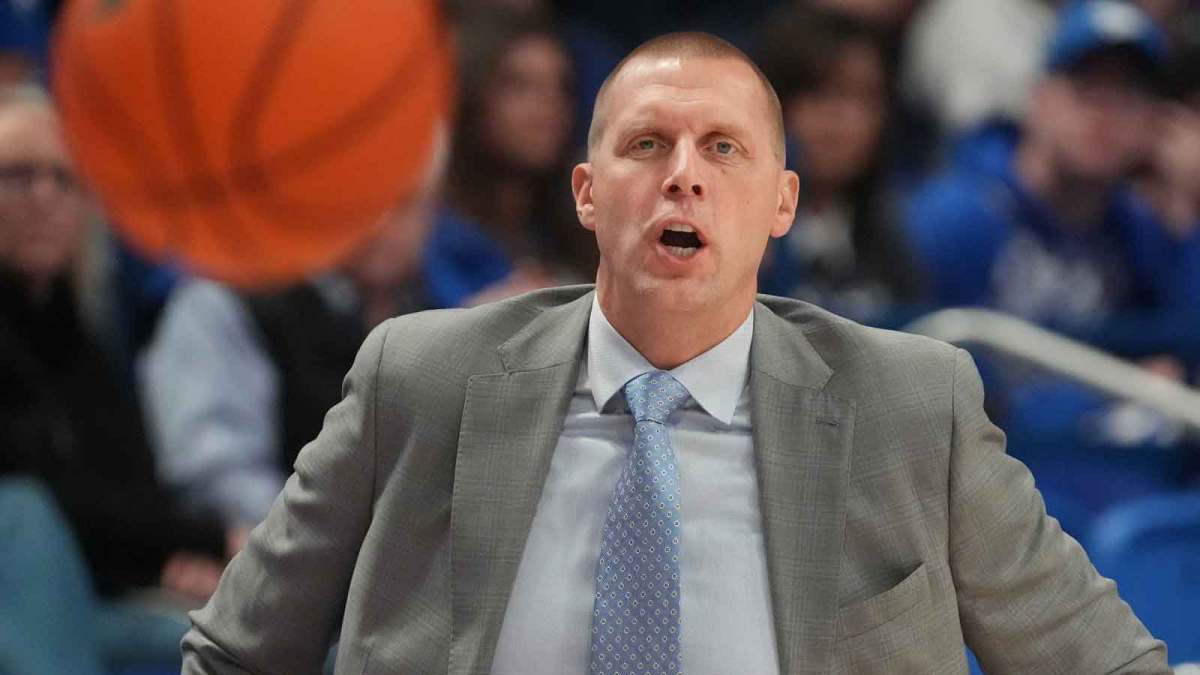
Kentucky head coach Mark Pope didn’t need a postgame speech to make his feelings known. His body language said it all. Arms crossed, jaw tight, eyes fixed on the floor, Pope looked more disappointed than relieved after the Wildcats’ 78–66 win over No. 22 St. John’s on Saturday night. For most coaches, a double-digit victory over a ranked opponent would be cause for celebration. For Pope, it was a reminder that standards matter more than the scoreboard.
The Wildcats closed out the game in chaotic fashion. With just three seconds remaining, Kentucky somehow managed to score 10 points during a stretch that should have been nothing more than a quiet countdown to the final buzzer. What followed was a sequence that left Pope visibly frustrated and overshadowed an otherwise solid performance.
A late dunk by Mouhamed Dioubate ignited tensions on the floor and led to a heated exchange with St. John’s forward Zuby Ejiofor. Words were exchanged, emotions flared, and officials stepped in quickly. Both players were assessed technical fouls, turning an already strange ending into a moment that drew national attention. Cameras quickly panned to Pope, who showed no hint of satisfaction despite his team securing a ranked win.
For Pope, the issue wasn’t about running up the score or embarrassing an opponent. It was about composure, respect for the game, and understanding how Kentucky basketball is supposed to look from start to finish. His reaction made it clear that he expects his players to handle success with the same discipline they show when fighting from behind.
Kentucky’s win improved the Wildcats to 9–4 on the season and handed St. John’s just its fourth loss. From a résumé standpoint, it was a valuable victory. From a cultural standpoint, however, Pope saw something that needs correcting. In his mind, late-game execution isn’t just about protecting a lead—it’s about protecting the program’s identity.
The Wildcats had done plenty of good things earlier in the game. They defended with energy, shared the ball, and showed poise against a ranked opponent. The crowd was engaged, the pace was controlled, and Kentucky looked like a team continuing to find its rhythm under a head coach who understands the program’s legacy better than most.
That legacy matters deeply to Pope. From 1994 to 1996, he wore the Kentucky uniform himself, playing under legendary coach Rick Pitino. In 1996, Pope was part of the Wildcats team that captured a national championship, a group remembered not just for its talent, but for its professionalism and edge. Those experiences clearly shape how Pope approaches coaching today.
That’s why moments like Saturday’s ending frustrate him. He knows how quickly reputation is built—or damaged—on a national stage. Kentucky basketball has always been held to a higher standard, and Pope wants his players to understand that every possession, even in garbage time, reflects on the program.
The contrast between Saturday’s frustration and Pope’s recent praise of the fan base was striking. Just days earlier, after a convincing 72–60 win over Indiana on Dec. 13, Pope spoke glowingly about the energy and support from Kentucky fans. He emphasized how much the crowd fuels the team and how important it is for the players to represent the program the right way.
That message cuts both ways. Support comes with expectations, and Pope knows the Big Blue Nation demands more than just wins. They want effort, class, and accountability. The coach’s reaction to the late-game chaos showed that he is aligned with those expectations.
As the calendar winds down, Kentucky has little time to dwell on the moment. The Wildcats will close out 2025 on Dec. 23 with a matchup against the Bellarmine University Knights of Louisville. On paper, it’s a game Kentucky should control. In reality, it’s another opportunity for Pope to reinforce his values and ensure his team finishes strong—both in play and in demeanor.
Saturday’s ending may end up being a teaching moment rather than a turning point. Pope’s disappointment wasn’t about anger; it was about growth. He sees a team capable of much more and understands that championship habits are built long before March.
Kentucky won the game. Mark Pope made sure his players understood that winning alone isn’t the goal. At Kentucky, how you win still matters.