


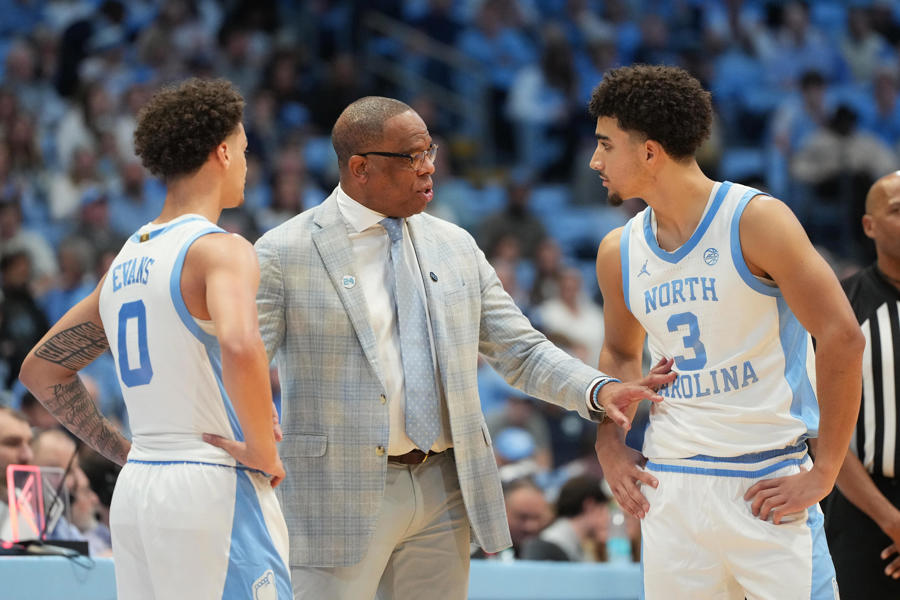
Nobody inside the Dean E. Smith Centeror watching from afar—expected the CBS Sports Classic matchup between North Carolina and Ohio State to turn into a psychological test. On paper, this was supposed to be a clean, résumé-building opportunity for a top-15 Tar Heels team. Instead, it became something far more revealing. Ohio State erased a double-digit deficit, surged late, and briefly threatened to flip the game entirely. North Carolina survived. But when the final horn sounded, it was clear this game wasn’t going to be remembered for the score. It was going to be remembered for what came after—when Hubert Davis spoke, calmly and deliberately, about what he had just seen.
Because sometimes, the most important moments of a season don’t happen during the final possession. They happen when a coach explains why his team survived one.
A Game That Refused to Stay Comfortable
For much of the afternoon, North Carolina looked like the sharper, more complete team. The ball moved crisply. Defensive rotations were sound. The Tar Heels played with the composure of a group that understood the stage and the opponent. Ohio State, meanwhile, struggled to keep pace early, particularly against UNC’s size and discipline.
But college basketball has a way of humbling even the most prepared teams.
Slowly, possession by possession, Ohio State began to settle in. The Buckeyes started attacking matchups instead of forcing shots. They pushed the tempo just enough to disrupt North Carolina’s rhythm. What had once been a manageable lead began to shrink—and with each basket, the pressure mounted.
By the final minutes, the game had flipped emotionally. Ohio State wasn’t just hanging around. They were believing.
And belief is dangerous.
The Rally That Changed the Conversation
Ohio State’s late surge wasn’t fueled by desperation alone. It was fueled by execution and confidence. Devin Royal became increasingly difficult to contain, using his physicality and instincts to create problems inside. Bruce Thornton showed why he’s one of the most respected guards in the Big Ten, controlling pace and making timely decisions.
North Carolina suddenly found itself in unfamiliar territory—no longer dictating terms, but responding.
The Buckeyes briefly grabbed the lead with under a minute remaining, and in that moment, the entire dynamic of the game shifted. What had been trending toward a comfortable UNC win became a pressure-packed test of maturity.
North Carolina didn’t panic. But they didn’t glide, either.
They had to earn it.
Surviving the Moment
Down the stretch, the Tar Heels did just enough. They made the more composed plays. They defended without fouling. They trusted spacing, timing, and communication. It wasn’t pretty. It wasn’t dominant. But it was effective.
When the final score settled at 71–70, UNC had the win—but not the sense of invincibility that sometimes follows one.
And that’s exactly where Hubert Davis stepped in.
Hubert Davis Didn’t Celebrate the Escape
Postgame, Davis met with the media and spoke with the calm precision that has become his signature. There was no chest-thumping. No relief disguised as confidence. Instead, Davis focused on details—on respect for the opponent, on execution, and on the importance of staying grounded even after a win.
He spoke openly about how difficult it was to guard Devin Royal, praising his physical presence and ability to impact the game without forcing it. That acknowledgment wasn’t accidental. Davis wanted his players—and anyone listening—to understand that Ohio State didn’t “get lucky.” They earned every bit of that rally.
He also highlighted Bruce Thornton, emphasizing the respect he has for guards who can control a game with poise. That comment carried weight. Davis knows that games like this are often decided by decision-makers, not just scorers.
But perhaps most telling was how Davis addressed the final stretch.
“We Had to Make Composed Plays”
That phrase—composed plays—came up repeatedly.
Davis explained that when games tighten, systems matter less than habits. The habits you build in practice. The habits you lean on when momentum swings. North Carolina didn’t win because they were perfect. They won because they stayed connected when chaos threatened to take over.
That message wasn’t just about Ohio State.
It was about March.
Davis understands something many fans overlook: teams don’t magically learn how to win close games in the NCAA Tournament. They reveal whether they already know how.
Saturday was a reveal.
Why This Message Matters More Than the Result
Here’s the uncomfortable truth: North Carolina could have lost this game and still taken valuable lessons from it. But the fact that they won while being tested makes Davis’ message even more important.
Because success can lie.
Blowout wins don’t always show cracks. Comfortable victories can mask flaws. But games like this—where momentum turns, nerves tighten, and execution is demanded—strip teams down to who they really are.
Davis didn’t want his players walking away thinking, “We survived.”
He wanted them thinking, “We were tested—and here’s what we need to fix.”
That mindset is what separates good teams from championship threats.
Respecting the Opponent, Not Fearing Them
One of the most notable aspects of Davis’ comments was the respect he showed Ohio State. He didn’t frame the rally as a failure by UNC. He framed it as a response by a quality opponent.
That matters.
When teams blame themselves exclusively, they risk ignoring the reality of high-level competition. Ohio State executed. They adjusted. They played with purpose. And UNC had to respond in kind.
By acknowledging that, Davis reinforced a critical principle: every possession matters, because every opponent is capable.
That’s a lesson North Carolina will need again—and soon.
A Young Team Learning Old Lessons
This Tar Heels roster blends experience with youth. There are players who have seen big moments before, and others who are still learning how quickly games can change at this level.
Saturday’s finish was a classroom.
Davis’ postgame tone reflected that. He didn’t scold. He didn’t deflect. He taught.
He emphasized staying present. He emphasized communication. He emphasized trusting preparation when emotions run high.
Those are lessons that don’t show up in the box score—but they echo throughout a season.
The Bigger Picture for North Carolina
At 12–1 and holding a marquee neutral-site win, North Carolina’s résumé remains strong. But Davis isn’t building résumés in December. He’s building habits.
The ACC grind is coming. Physical road environments are coming. Tournament pressure is coming.
And games like this—where the margin shrinks and execution becomes everything—are previews.
Davis knows that.
That’s why his message mattered more than the win itself.
Ohio State Leaves With Confidence, Not Consolation
From Ohio State’s perspective, this loss hurts—but it also reveals potential. The Buckeyes showed resilience, discipline, and belief. They proved they can go toe-to-toe with a national contender and nearly walk away with a statement win.
Davis’ respect for Ohio State wasn’t empty. It was earned.
And that respect underscores why UNC couldn’t afford complacency.
What UNC Must Take Forward
North Carolina didn’t escape because of luck. They survived because of composure.
But survival isn’t the goal.
Growth is.
If the Tar Heels take Davis’ message seriously—about discipline, execution, and emotional control—this game becomes a turning point rather than a warning sign.
If they don’t, future opponents won’t miss the opportunity Ohio State nearly seized.
The Win Was Important. The Lesson Was Essential.
In the standings, this goes down as a win.
In the locker room, it goes down as a reminder.
Hubert Davis didn’t need a dramatic speech to deliver it. His calm, measured words carried the weight. He saw a team tested, a lead threatened, and a moment that demanded maturity.
North Carolina passed the test—barely.
What matters now is what they do with it.
Because when March arrives, no one will care how comfortable the first 30 minutes felt.
They’ll care about the final five.
And thanks to Ohio State’s furious rally—and Hubert Davis’ postgame message—the Tar Heels are already learning what that really means.




