


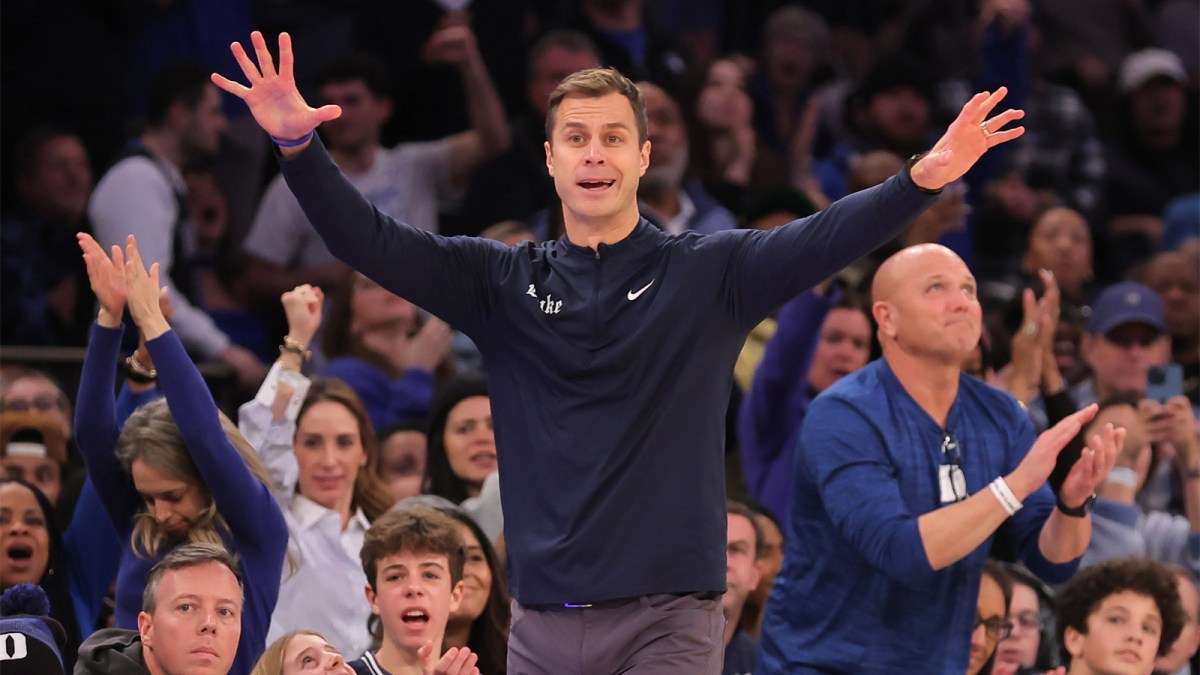
There are losses that sting, and then there are losses that linger — the kind that force uncomfortable conversations, expose hidden flaws, and challenge a team’s sense of identity. Duke’s 82–81 loss to No. 19 Texas Tech on Saturday fell firmly into the latter category. For a Blue Devils team ranked No. 3 nationally and riding the confidence of recent close wins, blowing a 17-point lead was both shocking and sobering.
Yet in the immediate aftermath of the collapse, Duke head coach Jon Scheyer did not sound defeated. He sounded reflective. Measured. Even, in a way, optimistic.
While fans and analysts focused on what went wrong — the missed free throws, the defensive breakdowns, the late-game execution — Scheyer zoomed out. He framed the loss not as a disaster, but as a moment of clarity. One that, if handled correctly, could ultimately strengthen his team as it prepares for the unforgiving grind of ACC play.
A Loss That Felt Sudden — But Was Building
On the surface, Duke’s collapse against Texas Tech felt abrupt. The Blue Devils controlled much of the game, building a lead that swelled to 17 points. Their offense flowed. Their defense disrupted. And for long stretches, Duke looked every bit like a national title contender asserting its dominance.
But as Scheyer hinted afterward, the warning signs had been there.
In recent weeks, Duke had escaped with narrow victories over Arkansas and Florida — games where double-digit leads shrank late, forcing the Blue Devils to hang on rather than close decisively. Those games ended in wins, masking some underlying issues. Against Texas Tech, those same cracks widened — and this time, the opponent fully capitalized.
Texas Tech didn’t panic. The Red Raiders ramped up their physicality, pressured Duke’s ball handlers, and attacked the glass with urgency. Possession by possession, they chipped away. And when Duke faltered late — missing free throws, losing box-outs, committing costly turnovers — the momentum swung entirely.
By the final buzzer, Duke had suffered its first loss of the season. And perhaps more significantly, it had been forced to confront some uncomfortable truths.
Jon Scheyer’s Immediate Perspective: Growth Through Discomfort
In the postgame press conference, Scheyer acknowledged the disappointment. He didn’t sugarcoat the pain of losing a game his team had largely controlled. But he also refused to frame the loss as a setback without purpose.
“The one thing this team has done, they responded every time,” Scheyer said, via ESPN. “In practice, in games, so I know I’m going to have a team that comes back ready to work, ready to build, and a team that takes responsibility, too.”
That word responsibility stood out. Scheyer wasn’t pointing fingers. He wasn’t blaming officiating or luck. Instead, he emphasized accountability, both individually and collectively. According to Scheyer, this group has consistently shown an ability to respond when challenged, and he believes this moment will be no different.
“Winning Can Make You Soft”: A Striking Admission
Perhaps the most revealing part of Scheyer’s comments came when he addressed the dangers of success.
“And I think for us, and for me, the only good part about this is it gives you — winning can make you soft, it just does,” Scheyer said. “And, so it can give you just that extra understanding of the value of every possession…”
It was a blunt admission, especially coming from the head coach of a top-three team. But it spoke volumes about Scheyer’s philosophy.
Winning breeds confidence — but it can also breed complacency. Close wins, in particular, can convince teams that they’ll “figure it out” late, rather than demanding sharp execution throughout all 40 minutes. Against Texas Tech, Duke learned the hard way that talent alone doesn’t close games. Attention to detail does.
Scheyer emphasized how fragile leads can be at the highest level of college basketball. A missed free throw. A blown defensive rotation. A failed box-out. Any single lapse can tilt the outcome.
That lesson, he suggested, may be more valuable now — in December — than it would be later in the season.
Late-Game Execution: Where the Game Slipped Away
From a basketball standpoint, Duke’s collapse was not the result of one catastrophic mistake, but a series of small ones that compounded.
Offensively, the Blue Devils became stagnant late. Ball movement slowed. Shots grew tougher. Texas Tech’s pressure forced Duke into uncomfortable decisions, and the margin for error vanished.
Defensively, Duke struggled to secure rebounds and finish possessions. Texas Tech generated second-chance opportunities and attacked with confidence, sensing vulnerability.
At the free-throw line, Duke left points on the board — the kind that loom large in a one-point loss. Each miss tightened the game further, allowing Texas Tech to believe.
Scheyer didn’t single out individual players in his remarks, but his comments about “the value of every possession” clearly referenced these moments. Against elite competition, games are often decided not by highlight plays, but by discipline in the margins.
Why This Loss Might Matter More Than a Win
For all the frustration surrounding the collapse, there’s a compelling argument that this loss could serve as a turning point.
Duke is young, talented, and ambitious. With high preseason expectations, it’s easy for a team like this to assume success is inevitable. Scheyer’s comments suggested that this game stripped away that illusion.
Instead of reinforcing confidence, the loss demands introspection. It forces players to reexamine habits, focus levels, and communication. It exposes what happens when intensity dips — even briefly.
Scheyer framed this as an opportunity, not a crisis.
“And, so it can give you just that extra understanding of the value of every possession… and that can be the difference of winning and losing,” he said.
That understanding, if internalized, can be transformative.
A Coach Who Believes in His Team’s Response
One consistent theme in Scheyer’s postgame remarks was belief. Despite the disappointment, he expressed confidence in how his team would respond.
“In practice, in games… I know I’m going to have a team that comes back ready to work,” he said.
That belief isn’t blind optimism. It’s rooted in experience. Scheyer has seen this group respond to adversity before — tightening up defensively, sharpening execution, and embracing coaching.
Losses, particularly ones like this, often reveal leadership. How players carry themselves in practice. How they accept criticism. How they adjust.
Scheyer clearly believes his team has the maturity to turn this moment into progress.
The Timing: A Hidden Advantage
One fortunate aspect for Duke is the timing of the loss.
The Blue Devils now have 11 days off before opening ACC play on Dec. 31 against Georgia Tech. That break offers something invaluable: time.
Time to review film.
Time to address late-game situations.
Time to reinforce habits that prevent collapses.
Rather than immediately jumping back into another high-stakes matchup, Duke can process the loss, absorb its lessons, and recalibrate.
Scheyer will undoubtedly use this window to emphasize situational basketball — protecting leads, valuing possessions, and maintaining defensive intensity regardless of the score.
A Bigger Picture Perspective
In the grand scope of a college basketball season, December losses rarely define teams. But they often shape them.
For Duke, this game may serve as a reminder that being talented isn’t enough. That expectations don’t win games. That closing matters.
Scheyer’s willingness to publicly acknowledge the dangers of winning — and the benefits of being humbled — reflects a coach focused on long-term success, not short-term optics.
This loss will hurt. It should. But if Duke internalizes its lessons, it could become one of the most important moments of the season.
Final Thoughts
Duke’s 17-point collapse against Texas Tech was stunning, frustrating, and painful. There’s no denying that. But in Jon Scheyer’s postgame reflections, there was also clarity.
He didn’t excuse the loss. He didn’t dismiss the mistakes. Instead, he framed the moment as a necessary wake-up call — one that reinforces how fragile leads are and how costly small lapses can be.
“Winning can make you soft,” Scheyer said — a statement that cuts to the heart of competitive sports.
Now, the question is how Duke responds.
If history — and Scheyer’s confidence — is any indication, the Blue Devils will treat this loss not as a scar, but as a lesson. One that sharpens focus, strengthens resolve, and ultimately prepares them for the challenges that await in ACC play and beyond.




