


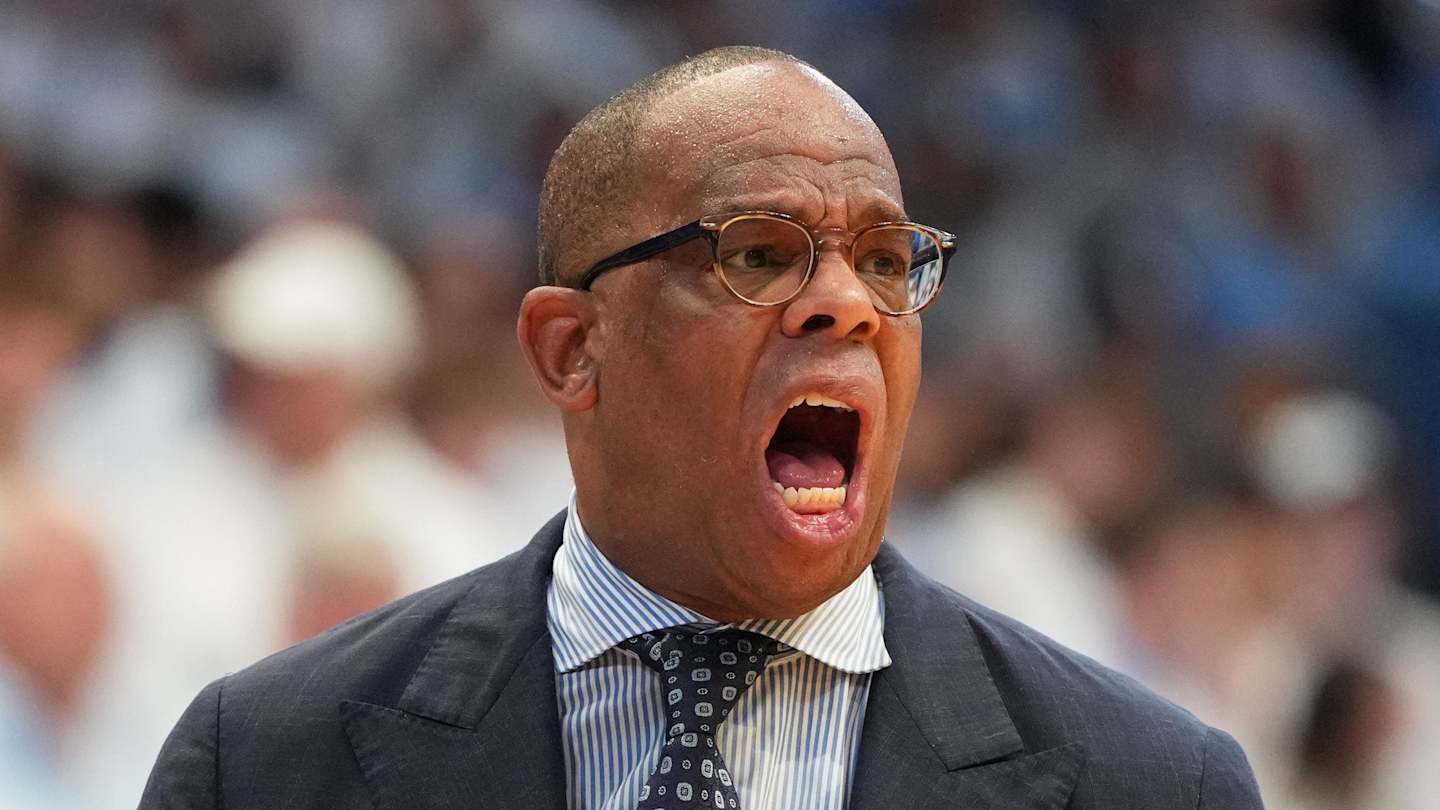
The transfer portal has become one of the most powerful forces in modern college basketball, reshaping rosters almost overnight. For North Carolina, the 2024–25 offseason was defined by both aggressive additions and painful departures. While head coach Hubert Davis successfully retooled the roster by bringing in impact players such as Henri Veesaar, Kyan Evans, Jarin Stevenson, and Luka Bogavac, the Tar Heels did not escape the portal unscathed.
In total, UNC lost six notable contributors, departures that created holes across nearly every position group. Those exits largely explain why Davis attacked the portal with urgency and precision. Fortunately for Carolina, the incoming transfers have paid immediate dividends, helping stabilize the roster and maintain the program’s competitive standing.
Still, an important question remains: how are the players who left Chapel Hill performing in their new environments? Some have flourished with expanded roles, others have found better system fits, and a few continue to search for consistency. Here’s a closer look at how UNC’s outgoing transfers have fared this season.
PG: ELLIOT CADEAU — MICHIGAN
Elliot Cadeau’s move to Michigan has proven to be one of the most impactful transfers of the season. Now running the show for the Wolverines, Cadeau is averaging 9.7 points and 6.1 assists per game, while shooting an efficient 45.5 percent from the field and an impressive 41.5 percent from three-point range.
Statistically, Cadeau’s overall production mirrors what he posted last season at North Carolina, but the biggest difference lies in his perimeter shooting. During the 2023–24 campaign, the 6-foot-1 guard shot just 31.7 percent from beyond the arc. This year, his nearly 10-point jump in three-point accuracy has transformed him into a legitimate scoring threat, forcing defenses to respect his jumper.
Beyond the numbers, Cadeau has provided invaluable stability for a No. 2-ranked Michigan team. His poise, decision-making, and ability to control tempo have been central to the Wolverines’ success, validating his decision to seek a fresh start.
SG: IAN JACKSON — ST. JOHN’S
Ian Jackson’s transition to St. John’s has been a strong fit for both player and program. The sophomore guard is averaging 11.3 points per game, while shooting 47 percent from the field and 34 percent from three-point range.
For a Red Storm team that struggled mightily from the perimeter last season, Jackson’s shooting and offensive versatility have been crucial. He is one of three players who have helped elevate St. John’s overall efficiency from deep, stretching defenses and opening lanes for others.
Jackson’s athleticism and ability to score at all three levels have made him a reliable option in the Red Storm’s rotation. While he may not be a primary star, his consistent production has addressed one of the team’s biggest weaknesses from a year ago.
SF: CADE TYSON — MINNESOTA
Cade Tyson’s journey has been one of the more intriguing storylines among UNC’s outgoing transfers. After arriving in Chapel Hill from Belmont ahead of the 2023–24 season, expectations were sky-high. Tyson had averaged 16.2 points per game while shooting 46.5 percent from three-point range in his final year at Belmont, numbers that suggested he could be a major perimeter weapon for the Tar Heels.
Instead, his lone season at UNC was a disappointment. Tyson averaged just 2.7 points per game, shooting 40.3 percent from the field and 29.2 percent from three, never quite finding his rhythm or role within Carolina’s system.
Now at Minnesota, Tyson is looking for a reset. While his production has improved modestly, consistency remains a challenge. The Golden Gophers have given him more freedom, but replicating his Belmont-level efficiency has proven difficult. Still, a change of scenery may yet help him rediscover the confidence that once made him one of the nation’s most dangerous shooters.
A BIGGER PICTURE FOR UNC
While it’s natural to focus on what North Carolina lost, the broader picture remains encouraging for the Tar Heels. The players who departed have largely found roles that better suit their individual strengths, but UNC’s incoming transfers have filled the gaps effectively — and in some cases, elevated the team’s ceiling.
Hubert Davis’ aggressive portal strategy was not just a reaction to losses, but a calculated effort to modernize and rebalance the roster. Early returns suggest that approach has worked. The Tar Heels remain competitive at a high level, while their former players continue carving out new paths elsewhere.
In the ever-evolving world of college basketball, roster turnover is inevitable. What matters most is how programs adapt — and once again, North Carolina has shown it knows how to respond.




