


Madison Square Garden has long been a stage where legends are made and seasons are defined. On Saturday night, it became a place of harsh reflection for Duke basketball. What should have been another statement win for the No. 3 Blue Devils instead turned into their first loss of the 2025–26 season — an 82–81 defeat to No. 19 Texas Tech that felt far more painful than a single point on the scoreboard.
Duke led by as many as 17 points. The game appeared firmly in control. And yet, by the final horn, the Blue Devils were left stunned, searching for answers as the Red Raiders celebrated one of the biggest wins of their season.
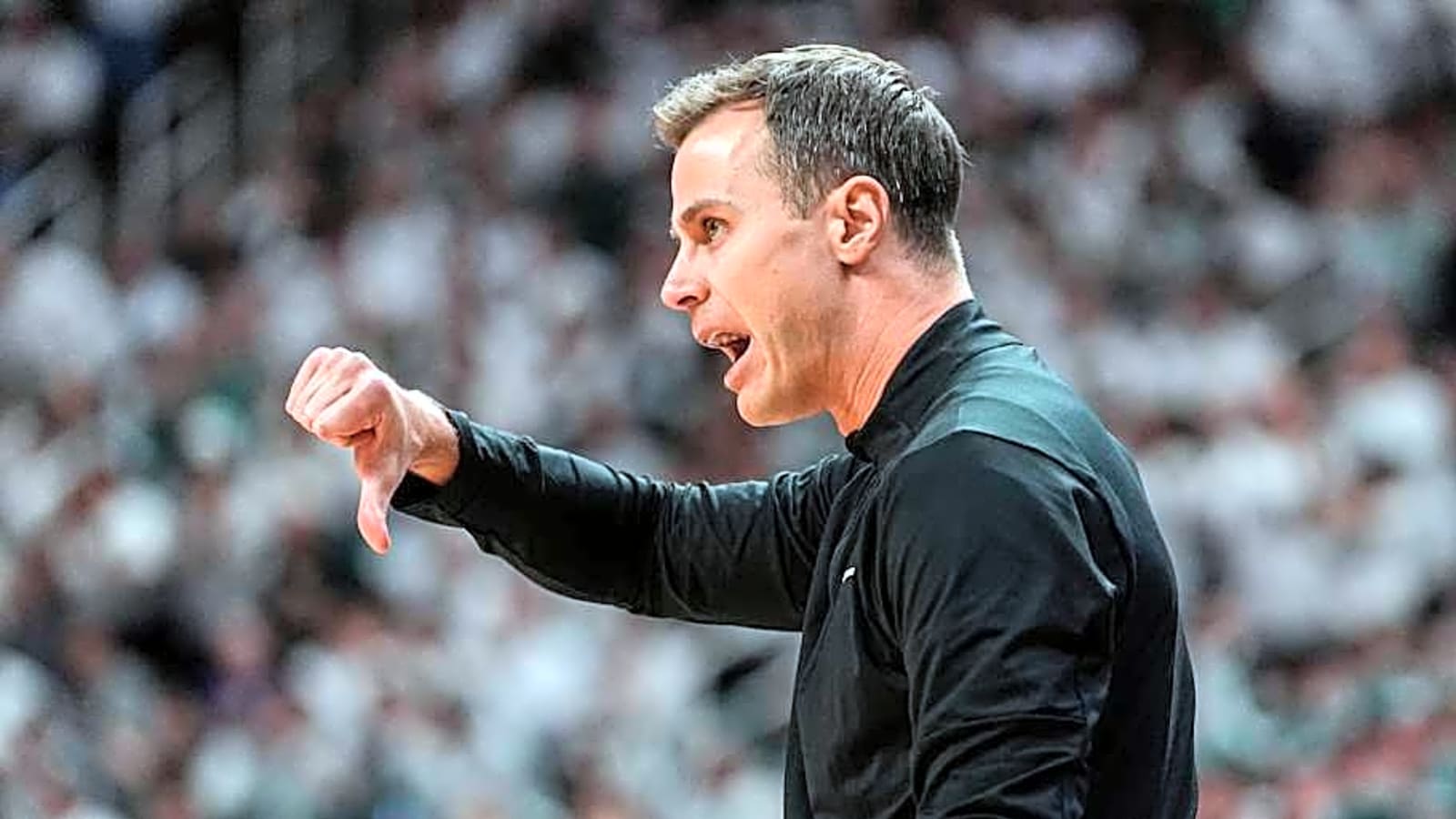
Afterward, Duke head coach Jon Scheyer didn’t hide his frustration. He didn’t deflect. And he didn’t pretend this was just “one of those games.” His postgame admission was blunt, honest, and revealing — and it’s exactly why Duke fans now find themselves uneasy as ACC play approaches.
A Game Duke Controlled — Until It Didn’t
For the first 25 minutes, Duke looked like the superior team in nearly every facet. The Blue Devils moved the ball crisply, knocked down shots from the perimeter, and built a double-digit lead that steadily grew. Early in the second half, when Duke stretched the advantage to 17 points, the game felt close to being over.
Duke entered halftime leading 46–36, fueled by a scorching 7-of-14 (50%) performance from three-point range. While the Blue Devils weren’t dominant in the paint, their outside shooting and offensive rhythm masked those concerns. Texas Tech struggled to keep pace, and Duke appeared poised to cruise.
But basketball games aren’t won in 25 minutes — and Duke learned that lesson the hard way.
Texas Tech gradually increased its defensive pressure, sped up the tempo, and began attacking Duke’s weaknesses with precision. What followed was a second-half surge that exposed lapses in Duke’s execution, composure, and fundamentals.
By the time the final seconds ticked away, a game Duke once owned had completely slipped through its fingers.
“It’s Disappointing”: Scheyer’s Honest Admission
Jon Scheyer’s postgame comments captured the weight of the moment. There was no sugarcoating what happened.
“For us it’s disappointing, in control of the game and up in the second half,” Scheyer said. “They were playing free and I thought we were playing not to lose.”
That single sentence — playing not to lose — resonated deeply.
It spoke to a mindset shift that occurred as Duke built its lead. Instead of continuing to attack, the Blue Devils appeared to tighten up. Offensive possessions became cautious. Defensive intensity dipped. The confidence that fueled Duke early gave way to hesitation.
Scheyer went further, pinpointing exactly where the game unraveled.
“I point to the rebounding, our defense, and we have to make free throws,” he said. “We gotta be ready to come back for ACC play. We’ll be back with a vengeance working like crazy to make this a really special season the rest of the way.”
That quote wasn’t just about one loss — it was about urgency.
Missed Free Throws: The Glaring Issue Duke Can’t Ignore
If there was one stat that defined Duke’s collapse, it was at the free-throw line.
The Blue Devils shot just 17-of-29 (59%) from the charity stripe — an unacceptable number for a team with championship aspirations. The struggles were even more pronounced in the second half, where Duke went just 6-of-13 (46.2%).
Those missed points loomed large in a one-point loss.
This isn’t a one-game anomaly, either. Duke now ranks 227th nationally in team free-throw shooting percentage, hitting just 70.3% on the season according to KenPom. For a team that thrives on execution and detail, that statistic should raise alarms.
Scheyer knows it. Duke fans know it. And ACC opponents will absolutely exploit it.
In close games — the kind Duke will face night after night in conference play — missed free throws don’t just hurt. They decide outcomes.
Defensive Breakdown in the Second Half
While free throws were the most obvious culprit, Duke’s defensive collapse was just as damaging.
After holding Texas Tech in check early, the Blue Devils simply couldn’t get stops in the second half. The Red Raiders shot a staggering 62.1% from the field after halftime, including 6-of-13 (46.2%) from beyond the arc.
For the game, Texas Tech finished at 55% shooting — the highest percentage Duke has allowed any opponent this season.
That’s not just a bad night defensively. That’s a breakdown in fundamentals.
Closeouts were late. Help defense was inconsistent. Rebounding suffered, allowing Texas Tech extra possessions and confidence. Once momentum swung, Duke struggled to regain control.
Scheyer highlighted rebounding specifically, and the film will undoubtedly reinforce his concerns.
Cameron Boozer’s Bright Spot in a Brutal Loss
Amid the disappointment, one development offered genuine encouragement: Cameron Boozer.
The highly touted freshman delivered his most impactful performance in a Duke uniform, tallying 13 points, two assists, and shooting 5-of-8 (62.5%) from the field in just 19 minutes. He also knocked down 2-of-5 (40%) from three, providing a crucial spark during a tense second half.
This was only the second high-major game in which Boozer played more than 15 minutes — and he made the most of the opportunity.
Boozer’s poise, shot-making, and confidence stood out, especially as Duke searched for answers offensively. Even as the game slipped away, his performance suggested something important: Duke’s backcourt future is beginning to take shape.
The Importance of a Boozer–Caleb Foster Backcourt
As the season progresses, the development of a consistent scoring guard duo will be critical for Duke. Cameron Boozer and Caleb Foster have the potential to form exactly that.
Foster has already shown flashes of leadership and shot creation. Boozer’s emergence adds another dynamic scorer who can relieve pressure, space the floor, and create in key moments.
Scheyer has emphasized growth throughout the season, and Boozer’s performance against Texas Tech could accelerate his role moving forward. In a game filled with frustration, Boozer’s coming-out party was one of the few reasons for optimism.
Why This Loss Hurts More Than Most
Losses happen. Even great teams lose. But context matters.
This wasn’t a game where Duke was outplayed wire to wire. It wasn’t a hostile road environment. It wasn’t a talent gap.
Duke gave this game away.
The Blue Devils were up 17 points. They controlled the pace. And yet, through missed free throws, defensive lapses, and a shift in mentality, they allowed Texas Tech to believe — and ultimately to win.
That’s why this loss will linger.
Duke fans aren’t panicking because of the record. They’re uneasy because the issues exposed are the same ones that resurface in March.
Scheyer’s Challenge Ahead as ACC Play Looms
With ACC play beginning on Dec. 31 against Georgia Tech, Scheyer now faces a defining stretch as Duke’s head coach.
The good news? Duke has 11 days to regroup.
The bad news? The ACC offers no margin for error.
Scheyer must address:
Free-throw shooting consistency
Defensive intensity for 40 minutes
Rebounding discipline
Late-game execution
Mental toughness with a lead
His comments suggest he’s fully aware of what’s at stake.
“We’ll be back with a vengeance working like crazy,” Scheyer said.
That mindset will be tested immediately in conference play, where every opponent circles Duke on the schedule.
Perspective: Why Duke Is Still a Title Contender
Despite the disappointment, it’s important to maintain perspective.
Duke remains one of the most talented teams in the country. The Blue Devils have depth, shooting, and high-level freshmen beginning to grow into their roles. One loss — even a painful one — does not erase that.
In fact, losses like this often serve as turning points.
Scheyer himself acknowledged that winning too much, too easily, can mask flaws. This loss ripped the cover off Duke’s vulnerabilities — and that may ultimately benefit the team if the lessons are learned.
Final Thoughts
“It’s disappointing.”
Jon Scheyer’s words echoed what every Duke fan felt Saturday night. This wasn’t just a loss — it was a missed opportunity and a reality check.
The Blue Devils showed how dominant they can be. They also showed how fragile control can become when focus slips and execution falters.
As ACC play approaches, Duke has a lot to figure out — and Scheyer knows it. His honesty, accountability, and urgency suggest this loss won’t be ignored or brushed aside.
The question now isn’t whether Duke is talented enough.
It’s whether this moment becomes a warning sign — or the wake-up call that fuels a championship run.




