


There was no film session.
No walkthrough.
No whiteboard filled with matchups, sets, or scouting notes.
Instead, with Christmas approaching and the relentless grind of the college basketball season finally easing for a brief moment, Mark Pope said something that caught people off guard — and stayed with them long after the words left his mouth.
After weeks of nonstop games, travel, late nights, recruiting pressure, expectations, criticism, and constant evaluation, Kentucky’s head coach admitted it was time to slow down.
Not to fix a broken jumper.
Not to tweak a defensive scheme.
Not to grind through another round of film.
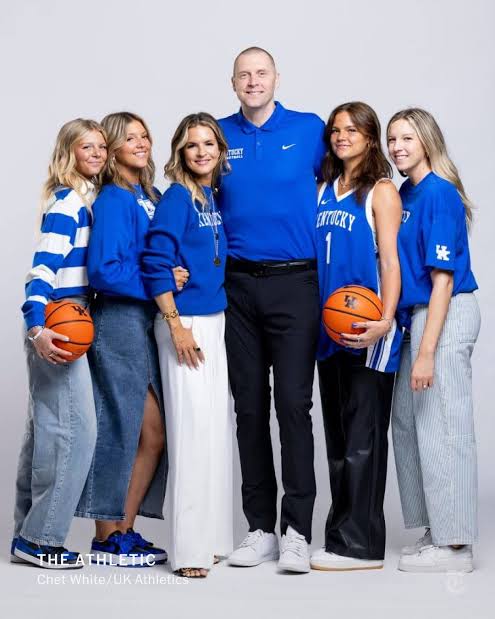
He said it was time to be a better husband.
At Kentucky — a place where basketball is not just a job but an identity, a responsibility, and a public trust — that kind of honesty is rare. And that is exactly why it landed the way it did.
A Moment That Cut Through the Noise
College basketball never truly stops. Even during the holidays, coaches are expected to be preparing, scheming, adjusting, and recruiting. The pressure does not pause because the calendar turns festive. Especially not in Lexington.
So when Pope chose that moment to speak openly about stepping back — not from leadership, but toward family — it felt different.
This wasn’t a coach dodging accountability.
It wasn’t a program lowering standards.
It wasn’t an excuse.
It was perspective.
Pope didn’t frame Christmas as “time off.” He framed it as time that matters.
That distinction matters too.
Leadership Beyond the Sideline
In that quiet, unexpected moment, Pope reminded everyone listening that leadership doesn’t start or end with basketball. It doesn’t live exclusively in locker rooms, huddles, or postgame press conferences. It’s shaped by how a person lives when the lights aren’t on and the crowd isn’t watching.
To say, out loud, that being a better husband mattered — at Kentucky — was a subtle but powerful act of leadership.
It told his players something important without lecturing them.
It told them:
You are allowed to be human.
You are allowed to value relationships.
You are allowed to breathe.
And in a sport where toughness is often confused with emotional neglect, that message resonated deeply.
Why This Felt Different at Kentucky
Kentucky basketball is built on intensity. Always has been. Expectations are enormous, scrutiny is relentless, and every decision is magnified. Coaches here don’t just coach games — they manage a cultural institution.
That reality often forces people into survival mode. Grind harder. Sleep less. Ignore everything else.
Pope didn’t deny that grind. He acknowledged it.
That’s the difference.
By recognizing the toll of the season — mentally, emotionally, personally — he showed self-awareness. And self-awareness is often the foundation of strong leadership.
This wasn’t about stepping away from responsibility. It was about anchoring it.
The Hidden Message to His Players
While the comment was about family, its impact reached far beyond it.
For his players — young men navigating pressure, expectations, social media, academics, and performance — Pope’s words quietly granted permission to exist outside basketball.
Not to be unfocused.
Not to be undisciplined.
But to be balanced.
Players don’t need coaches who pretend the grind doesn’t hurt. They need leaders who acknowledge it and model how to handle it.
Pope didn’t tell them to work less. He showed them how to live better.
A Program That Feels Grounded
There’s a reason people around the program have started to say this Kentucky team feels different.
Not softer.
Not less competitive.
Different.
There’s accountability — but not fear.
Intensity — but not chaos.
Standards — but not suffocation.
Pope’s Christmas comment fits perfectly into that pattern.
It revealed a program culture rooted in honesty rather than performance. One that understands that emotional burnout doesn’t build champions — resilience does.
And resilience starts with perspective.
Why Perspective Matters in March
Every season has a moment where things get hard.
A losing streak.
An injury.
A controversial call.
A missed shot that won’t stop replaying in someone’s head.
Teams without perspective fracture under that weight. They panic. They turn inward. They press.
Teams with perspective respond.
They trust each other.
They stay connected.
They don’t collapse under pressure because their identity isn’t fragile.
When Pope talked about being a better husband, he wasn’t just talking about December. He was talking about March — whether he realized it or not.
Not a Viral Quote — A Real One
In today’s media environment, coaches often speak in soundbites designed to trend. This wasn’t one of those moments.
There was no dramatic delivery.
No performative emotion.
No attempt to brand himself.
That’s part of why it stuck.
It felt real.
It felt like something said because it needed to be said — not because it would be repeated.
Those moments carry weight because they reveal character rather than craft.
The Grind Is Real — And He Acknowledged It
Pope didn’t romanticize the season. He didn’t pretend the workload was easy or the pressure insignificant.
He acknowledged the grind.
That honesty matters, especially to players who are living it daily. When leaders deny reality, trust erodes. When they acknowledge it, trust grows.
Pope’s comment validated what everyone already felt — that the season demands a lot. And then he showed how to respond to that truth without losing yourself.
A Message to Big Blue Nation
For fans, the comment landed differently — but just as powerfully.
It was a reminder that this program is led by someone who understands the weight of the job and still chooses balance. Someone who respects the tradition without being consumed by it.
In a place where winning often feels like the only currency, Pope subtly reminded everyone that values still matter.
That doesn’t weaken the program.
It strengthens it.
Why This Moment Will Be Remembered
Years from now, no one will remember the exact score of a December game before Christmas.
But people will remember how this program felt.
They’ll remember whether it was chaotic or composed.
Burned out or balanced.
Disconnected or grounded.
Moments like this shape that memory.
Not because they change a playbook — but because they shape people.
The Quiet Strength of Human Leadership
Mark Pope didn’t announce a philosophy. He lived one.
He didn’t give a speech about values. He modeled them.
And in doing so, he revealed something essential about who he is — and what kind of program he’s building.
This wasn’t about stepping away from basketball.
It was about leading it the right way.
Because teams led by perspective don’t fold when things get hard.
They respond.
And sometimes, the most important coaching moment of a season doesn’t happen on the sideline — it happens in a quiet room, before Christmas, when a coach chooses honesty over optics and humanity over grind.
That’s why people stopped and listened.
And that’s why this chapter of Kentucky basketball feels grounded, honest, and real.




