


There was a time—not all that long ago—when the line between college basketball and professional basketball was clear, firm, and rarely crossed in reverse. Players went from college to the NBA, not the other way around. Once you signed a professional contract or appeared in an NBA game, your college career was over. End of discussion. That long-standing reality is now being challenged in ways that would have sounded absurd even five years ago. And once again, Kentucky basketball finds itself right at the center of the sport’s biggest and most confusing evolution.
Reports that Mark Pope and the Kentucky Wildcats have expressed interest in Trentyn Flowers—a former five-star prospect currently on a two-way NBA contract with the Chicago Bulls—have sent shockwaves through college basketball circles. Not because Flowers isn’t talented. Not because Kentucky lacks ambition. But because this recruitment forces everyone involved to confront a simple, unsettling question: Is this even allowed?
Welcome to the wildest chapter yet of the NIL era, where the rules are blurry, the guardrails are missing, and college basketball’s identity is being rewritten in real time.
The Trend That Changed Everything
The idea of professionals returning to college basketball didn’t begin with Kentucky. The first major domino fell when Baylor landed James Nnaji, the No. 31 pick in the 2023 NBA Draft. That move alone stunned the sport. A drafted NBA player returning to college was once unthinkable. But instead of triggering a crackdown or formal clarification from the NCAA, it opened the floodgates.
Soon after, Louisville reportedly added a G League player set to enroll during the second semester, even if his on-court debut wouldn’t come until a future season. Other programs quietly began exploring similar possibilities, monitoring former elite recruits who bypassed college or spent time in professional leagues overseas. The message was unmistakable: if one school could do it, others weren’t going to sit back and watch.
Now Kentucky—a program that rarely tiptoes around major shifts in the sport—has entered the conversation.
Who Is Trentyn Flowers?
To understand why this situation is so jarring, you have to understand Flowers’ path. Trentyn Flowers was a consensus five-star recruit coming out of high school, one of the most talented wings in his class. Originally committed to Louisville, he ultimately chose to skip college and go straight to the professional ranks, signing with the Adelaide 36ers in Australia’s NBL. His choice aligned with a growing trend at the time: elite prospects opting for professional development over the NCAA experience.
After his stint overseas, Flowers continued climbing the professional ladder, eventually landing a two-way contract with the Chicago Bulls. He has appeared in eight NBA games—an important detail that separates him from many others now being discussed in this new wave of “returning” pros.
This isn’t a player who simply practiced with professionals or signed a contract without seeing the court. Flowers has logged actual NBA minutes.
And yet, Kentucky’s reported interest suggests that even that might no longer be a dealbreaker.
Mark Pope’s Role in the New Era
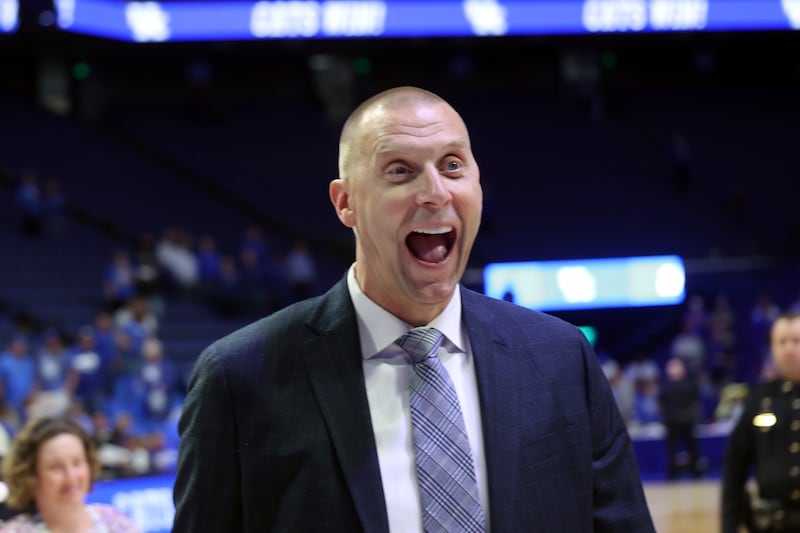
Mark Pope is not a coach known for passivity. Since taking over at Kentucky, he has made it clear that adaptation is not optional in the modern college game—it’s survival. NIL, the transfer portal, and now this strange new professional-to-college pipeline are realities that coaches must either embrace or be left behind by.
Pope’s interest in Flowers doesn’t necessarily mean Kentucky expects him to suit up immediately—or at all. Eligibility has not been granted, and there is no public indication that Flowers has formally applied for reinstatement. But even expressing interest sends a powerful message: Kentucky is paying attention, and Kentucky is willing to test the limits.
There’s also familiarity at play. Kentucky assistant Jason Hart recruited Flowers out of high school during Hart’s time connected with G League Ignite. That relationship matters. In an era where recruiting is increasingly about relationships and trust rather than traditional pipelines, familiarity can reopen doors that once seemed permanently closed.
NIL Changed the Math—Completely
None of this is possible without NIL. Name, Image, and Likeness didn’t just allow college athletes to earn money; it fundamentally changed the value proposition of college basketball itself.
For a player like Flowers, returning to college no longer means financial sacrifice. With NIL collectives capable of offering six- and even seven-figure opportunities, the gap between fringe NBA earnings and elite college compensation has narrowed dramatically. In some cases, college can now offer greater financial stability, exposure, and on-court opportunity than a two-way contract that shuttles players between the NBA bench and the G League.
This is the uncomfortable truth the sport is now grappling with: college basketball is no longer clearly “below” the professional ranks. For certain players, it may actually be the better option.
The NCAA’s Silence Is Deafening
Perhaps the most alarming aspect of this entire situation isn’t Kentucky’s interest—it’s the NCAA’s apparent lack of urgency in defining the rules.
As of now, there is no clearly articulated standard for determining eligibility for players who have signed professional contracts, played in NBA games, or earned significant income before stepping onto a college campus. Waivers are being granted inconsistently, often without transparent justification. What qualifies one player but disqualifies another remains a mystery.
Michigan State coach Tom Izzo voiced what many are thinking when he criticized the trend publicly:
“If we’re dipping into guys who were drafted to the NBA, shame on the NCAA. And shame on the coaches, too.”
Izzo’s comments weren’t just about competitive balance—they were about clarity. Coaches are being forced to guess where the lines are because the governing body hasn’t drawn them.
Why Flowers’ Case Is Different
This is where the Flowers situation becomes especially complicated. Many of the recent professional-to-college cases involve players who never appeared in an NBA game. Flowers has. Eight times.
That fact alone raises serious questions. If a player who has logged NBA minutes can return to college, then what exactly disqualifies anyone?
Is it salary? Contract type? Draft status? Number of games played? None of those criteria have been clearly defined. And without definition, enforcement becomes impossible.
If Flowers is granted eligibility, it will set a precedent that fundamentally alters the recruiting landscape.
The Competitive Ripple Effect
Programs with strong NIL collectives and national brands—Kentucky included—stand to benefit disproportionately from this chaos. Smaller programs may not have the financial or institutional infrastructure to compete for players coming from professional leagues. The result could be an even wider gap between the sport’s haves and have-nots.
Roster construction is also being transformed. Coaches are no longer just recruiting high school seniors and transfers; they’re now monitoring G League rosters, overseas leagues, and NBA depth charts. Midseason roster additions once limited to transfers may soon include players with professional résumés.
That reality is both fascinating and unsettling.
How Kentucky Fans Are Reacting
Among Kentucky fans, reactions range from excitement to disbelief. On one hand, the idea of adding a former five-star, NBA-tested wing is undeniably appealing. Kentucky fans are accustomed to elite talent, and Flowers fits the mold.
On the other hand, there’s confusion—and even concern—about what this means for the sport’s integrity. Many fans are asking the same question as the headline: Is this even allowed?
Others are already dreaming bigger. If this door is truly open, could former college stars return? Could someone like Oscar Tshiebwe—beloved in Lexington—ever come back for another run?
That may sound far-fetched now, but so did the idea of NBA players rejoining college teams just a year ago.
Where Does This All Lead?
No one knows where this trend ends. That’s what makes it so compelling—and so dangerous. Without clear rules, the sport risks becoming a free-for-all where eligibility decisions feel arbitrary and competitive balance erodes further.
Kentucky’s reported interest in Trentyn Flowers doesn’t mean he will ever wear a Wildcats jersey. But it does mean that the conversation has reached a new level. When a program of Kentucky’s stature begins exploring these possibilities, it signals that this is no longer a fringe experiment—it’s the new frontier.
The NCAA can no longer afford to watch from the sidelines. Clear guidelines are needed, not just for fairness, but for the long-term credibility of college basketball itself.
Until then, coaches like Mark Pope will continue to explore every option available to them. And fans will keep asking the same question—louder each time:
Is this even allowed?
One thing is certain: college basketball will never be the same again.




