


Many NFL bettors begin their weekly process the same way: scrolling through the board, scanning spreads, totals, teasers, and props, and asking simple questions like “Which line looks off?” or “What total feels too high or too low?” That bottom-up approach isn’t wrong — but it often misses context.
In this space, the goal is different.
Rather than starting with the bet, we start with the game itself. We zoom out, examine team-level trends, schematic changes, matchup dynamics, and market perception — then work our way down into the betting opportunities that fall out of that analysis.
Sometimes that leads us to a traditional spread. Other times it opens the door to alternate lines, derivatives, or correlated angles the market hasn’t fully priced in.
In Week 17, one game stands out as a clear example of the market lagging behind reality:
New Orleans Saints vs. Tennessee Titans
And the value, when you break it down properly, points strongly toward Saints -6.5.
Establishing the Baseline: Team Fundamentals
Before diving into matchups and situational angles, it’s important to establish a baseline understanding of both teams.
Using Timo Riske’s baseline team strength metrics, the picture is fairly clear:
New Orleans Saints
Strong defense
Below-average offense (season-long view)
Tennessee Titans
Poor offense
Below-average defense
On the surface, this doesn’t immediately scream “lay nearly a touchdown.” That’s exactly why the market has been slow to move. But this is where season-long averages start to mislead.
The Saints of September are not the Saints of December.
And the Titans’ recent improvements come with caveats the market may be overvaluing.
The Saints Defense: Elite, Not Just “Above Average”
The most important element of this matchup — and the one the betting market continues to underprice — is the New Orleans defense.
According to Inpredictable, which uses betting lines and lookahead markets to estimate team strength, the Saints are still ranked 21st defensively. That number alone tells you how slow the adjustment has been.
Because over the second half of the season, the Saints have arguably been the best defense in the NFL.
Let’s look at the data:
1st in EPA allowed per play
3rd in EPA allowed per rush
3rd in EPA allowed per dropback
Best defensive success rate against the pass
3rd-fewest yards allowed per dropback
This isn’t a defense surviving on fluky turnovers or opponent mistakes. This is down-to-down dominance.
That distinction matters for betting.
Turnover-driven defenses can be volatile. Efficiency-driven defenses are sustainable — and far more reliable when laying points.
Why the Market Is Still Behind
If the Saints defense has been this good for weeks, why hasn’t the line moved more aggressively?
A few reasons:
Early-season offensive struggles still anchor perception
New Orleans looked dysfunctional offensively early in the year, and bettors are slow to forget that.
No marquee defensive “name brand”
This isn’t a defense led by one viral superstar. It’s system-driven, assignment-sound, and brutally consistent — traits the market often undervalues.
Tennessee’s recent offensive improvement
The Titans have shown life lately, particularly on the ground, creating the illusion of a more functional offense than the underlying data supports.
But when you strip away those narratives and focus on matchups, the Saints’ defense poses a very specific problem for Tennessee.
Cam Ward vs. the Saints’ Pressure Package
One of the most meaningful developments in New Orleans’ defensive evolution has been a significant increase in blitz rate.
Over the past month, the Saints have blitzed at the seventh-highest rate in the NFL.
That matters because Cam Ward has struggled mightily against the blitz.
This season:
Ward loses nearly 0.2 EPA per dropback when facing extra rushers
His decision-making degrades
His efficiency collapses in obvious passing situations
The Titans have been able to mask some of this recently by:
Improving the run game
Avoiding long down-and-distance scenarios
Keeping Ward out of pure dropback situations
Last week, just 33% of Ward’s dropbacks came in obvious passing downs — a massive drop from his season average of 64%.
That’s not sustainable in this matchup.
Why Game Script Matters So Much Here
Against New Orleans, Tennessee is unlikely to control the game on the ground.
The Saints’ run defense ranks among the league’s best by EPA and success rate, meaning early-down efficiency — not just splash plays — will be hard to come by.
If the Titans fall behind, even modestly, the entire offensive equation changes.
More passing.
More blitzes.
More obvious passing downs.
That’s exactly where Ward has been at his worst.
In those situations:
He again loses roughly 0.2 EPA per dropback
He ranks among the least efficient quarterbacks in the NFL
The offense stalls rather than rallies
This creates a compounding effect: the Saints’ defensive strength feeds directly into Tennessee’s biggest offensive weakness.
The Saints Offense: Quietly Improving
While the defense is the headline, the Saints offense deserves attention — particularly because the market still treats it as a liability.
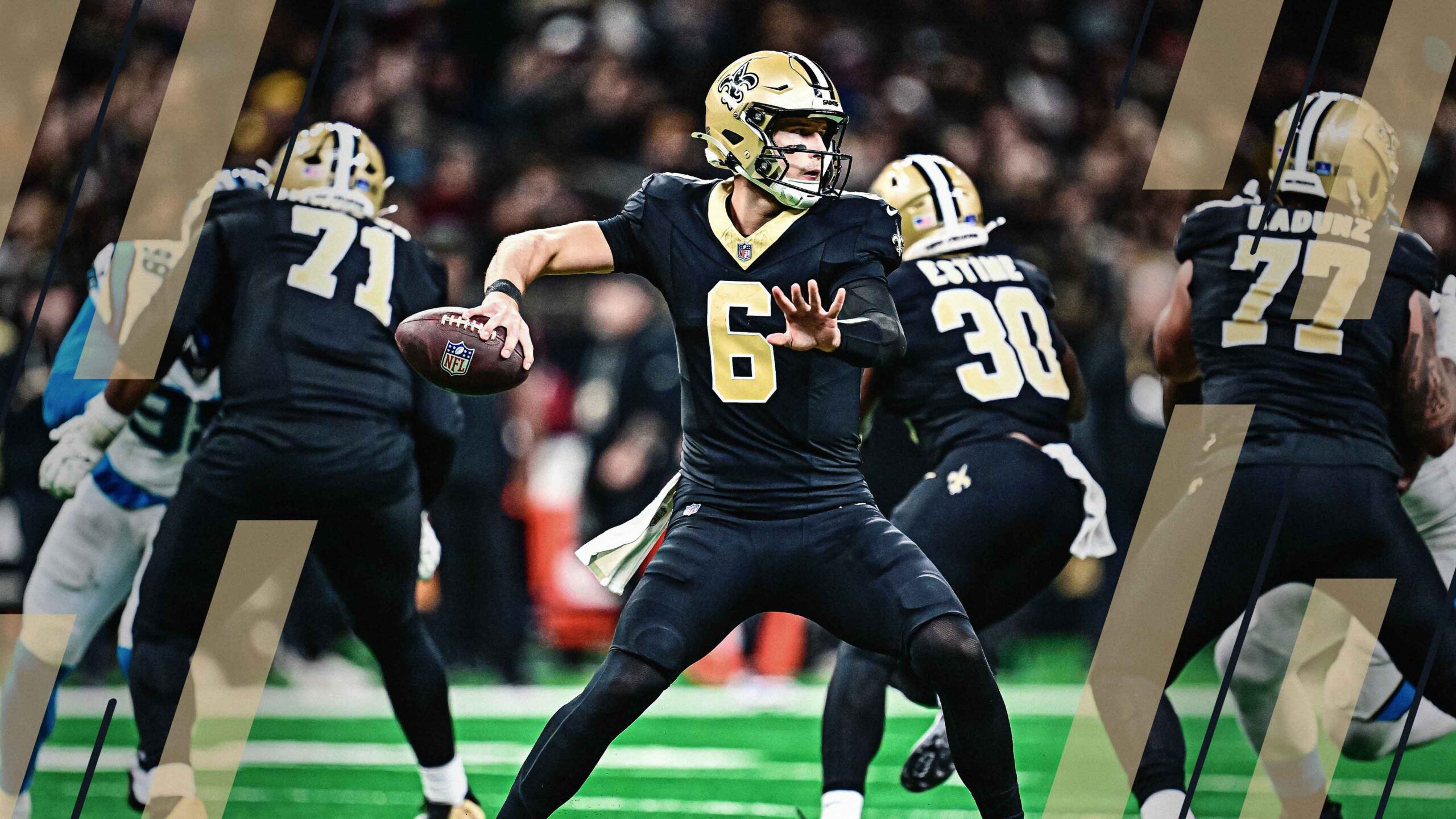
Over the past month, Tyler Shough has emerged as a stabilizing presence.
In that span:
Shough owns the sixth-best PFF grade among quarterbacks
The Saints have moved closer to league average in:
EPA per play
Success rate
Yards per dropback
Is some of that matchup-driven? Possibly.
But that doesn’t weaken the case this week — because this is another favorable matchup.
Titans Defense: A Perfect Storm for Shough
Tennessee’s defense has been quietly dreadful in the areas that matter most against New Orleans’ current offensive profile.
The Titans rank:
4th-worst in yards allowed per dropback
7th-worst in EPA
7th-worst in disruption rate
Dead last in perfect coverage rate
That last metric is critical.
It suggests quarterbacks aren’t just beating Tennessee with explosive plays — they’re consistently finding clean windows. That’s exactly the environment where a rhythm-based quarterback like Shough can continue his recent success.
If the Saints offense can simply stay on schedule — not dominate, just function — the defensive advantage becomes overwhelming.
Why Saints -6.5 Makes Sense
When all of these elements come together, the picture sharpens:
An elite, undervalued defense
Facing a quarterback who struggles against pressure
In a matchup likely to force obvious passing situations
Supported by an offense that has quietly stabilized
Against a defense ill-equipped to slow efficient passing
That’s not a recipe for a close, grind-it-out game.
It’s a recipe for margin.
From a game-flow perspective, New Orleans profiles as a team that:
Can score early
Can force Tennessee into negative scripts
Can compound advantages rather than protect slim leads
That’s exactly what you want when laying more than a field goal.
Considering Alternate Lines and Correlated Angles
Because this matchup is so game-script dependent, Saints -6.5 may not even be the ceiling of value.
If New Orleans builds an early lead:
Ward’s efficiency drops
Blitz frequency increases
Turnover risk rises
Short fields emerge
That opens the door for:
Alternate spreads
Team total overs for New Orleans
Titans team total unders
The market’s failure to fully adjust to the Saints’ defensive dominance creates value beyond the primary line.
Final Thought: Why This Is a Market Lag, Not a Coin Flip
This isn’t about predicting a single outcome in a volatile sport.
It’s about identifying systemic mispricing.
The Saints’ defense has been elite for long enough that it should be treated as such. The Titans’ offense, particularly through the air under pressure, has shown us exactly who it is.
When those realities collide, the spread should be larger than it is.
That’s why, in Week 17, Saints -6.5 isn’t just a play — it’s a statement that the market is still catching up.
And until it does, there’s value to be had.




