


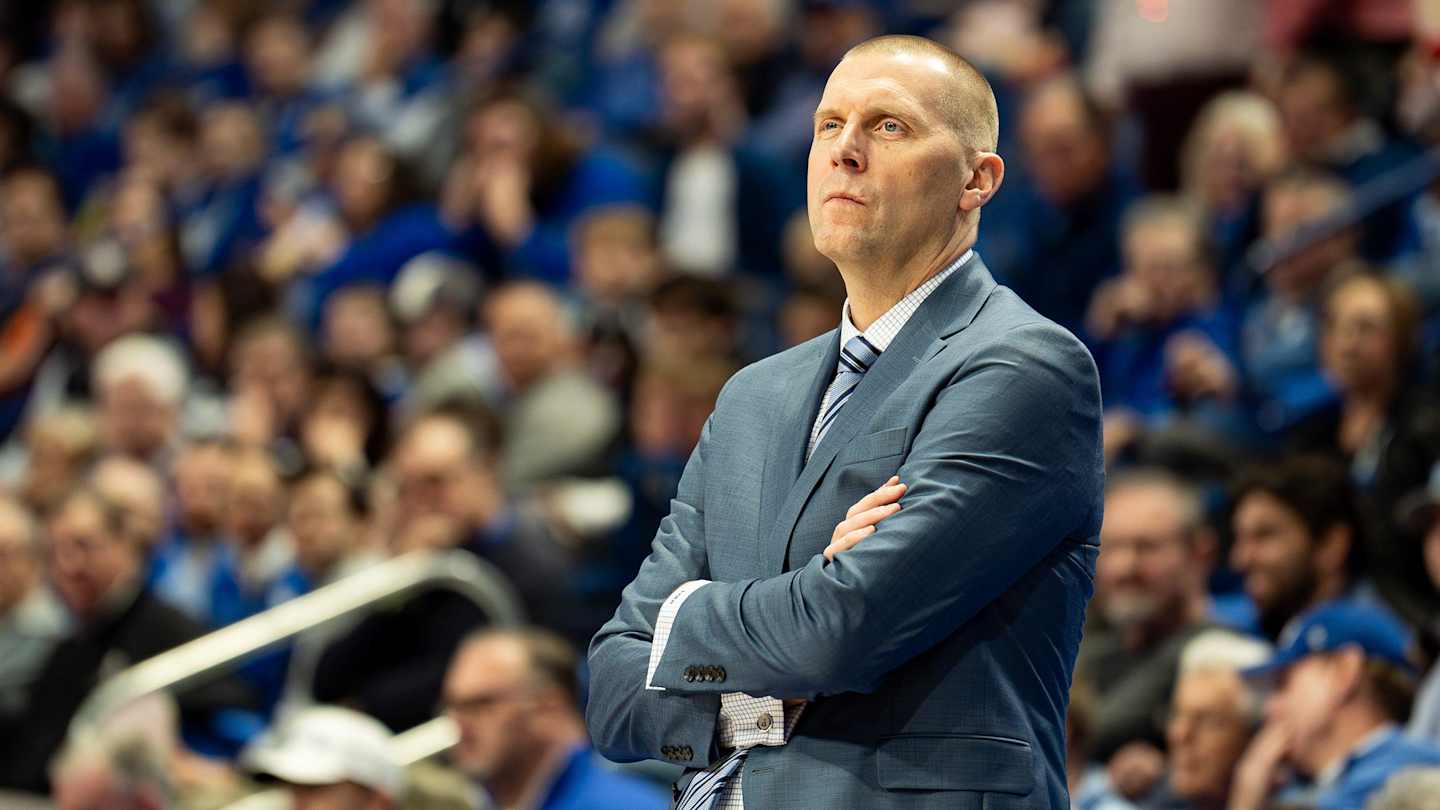
There are moments in a college basketball season that feel bigger than the final score. Nights when the noise inside an arena — and the noise that follows online — tells you something fundamental has shifted. Kentucky’s Saturday matchup against Alabama became one of those moments. Not because it officially ended a season, and not because it erased belief in Mark Pope overnight, but because it exposed the fragile emotional space where Big Blue Nation currently lives.
When Kentucky hired Mark Pope in 2024, the move felt poetic. A former Wildcat. A national champion. A coach who understood the pressure, history, and expectation that comes with the job. Pope wasn’t just another hire — he felt like one of their own coming home. That goodwill carried him through Year One, even when the season didn’t quite match the most optimistic preseason dreams. A Sweet 16 run suggested the foundation was real. The belief was intact.
But belief in Kentucky basketball is never unconditional. It is earned nightly, possession by possession. And Saturday night felt like the first time a significant portion of the fanbase began asking a question they hadn’t really asked before: Is this actually heading where we thought it was going?
The Weight of Expectation at Kentucky
Kentucky basketball does not exist in the same ecosystem as most programs. A 9–4 record might be cause for patience elsewhere. At Kentucky, it’s a red flag. Not because losses are unforgivable, but because how those losses happen matters just as much as the result.
The Wildcats entered the Alabama game needing a response. Not a miracle. Not perfection. Just a sign of identity. Something tangible that suggested this group understood what it means to compete at Kentucky when adversity shows up. Instead, the first half delivered the opposite message.
Trailing by 16 points before halftime, Kentucky looked disconnected. Defensive rotations were late. Offensive possessions lacked urgency. Body language became the story before the scoreboard did. And in a fanbase trained for decades to read between the lines, that combination is what triggers alarm bells.
By the time social media began flooding with frustration, it wasn’t simply about the score. It was about the feeling that Kentucky wasn’t dictating anything — not pace, not toughness, not emotion. For a program built on imposing its will, that absence cuts deeply.
Why the Reaction Felt So Sudden — and So Loud
To outsiders, the reaction may have looked extreme. Calls for a coach’s job during his second season are easy to dismiss as overreaction. And to be fair, some of it was emotional venting — the kind that comes from caring too much, not too little.
But inside Big Blue Nation, Saturday night felt like a tipping point because it touched on lingering concerns that had been quietly building. This wasn’t about one game. It was about patterns fans believed they were starting to see.
Rotations. Effort consistency. Defensive identity. Competitive edge.
Kentucky fans are not allergic to losing. They are allergic to confusion. When a team struggles but fights, the fanbase rallies. When a team struggles and looks unsure of itself, patience erodes quickly. That distinction matters.
Mark Pope’s approach — emphasizing opportunity, belief, and shared responsibility — resonates philosophically. But at Kentucky, philosophy must translate into urgency. Fans want to know who the alpha is on the floor. They want to see accountability that shows up immediately, not eventually.
Saturday night raised uncomfortable questions about whether that accountability is landing the way it needs to.
The Calipari Shadow Still Lingers
No Kentucky coach escapes comparison to John Calipari. That’s not fair, but it’s reality. Calipari’s tenure trained fans to expect ruthless efficiency when things went sideways. If a player struggled, he sat. If a lineup worked, it stayed. Adjustments came fast, sometimes brutally so.
Pope’s style is different — more inclusive, more developmental, more trusting. That approach can absolutely work. In fact, it often builds deeper long-term buy-in. But when losses mount or effort dips, fans instinctively revert to what they know.
The comments comparing Pope’s rotations to Calipari’s weren’t necessarily demands to bring the past back. They were expressions of uncertainty. Fans were saying, in essence: We don’t see the lever being pulled when things go wrong.
That uncertainty breeds fear, and fear breeds harsh reactions.
A Fanbase Wrestling With Identity — Not Just Results
One of the most important things to understand about Kentucky fans is this: they don’t just watch basketball, they inherit it. Generations pass down expectations like heirlooms. When something feels off, it isn’t just disappointing — it’s disorienting.
Saturday night tapped into that emotional inheritance.
Was Kentucky still Kentucky?
That’s the real question fans were wrestling with as the deficit grew. It’s why emotions spilled out so dramatically online. People weren’t reacting to Mark Pope the coach as much as they were reacting to the possibility that the program might be drifting from the standards they’ve always known.
And yet, even in the harshest comments, there was something telling: very few fans sounded indifferent. Anger, frustration, even extreme reactions — those come from care. From investment. From wanting this to work badly.
The Reality Check Mark Pope Is Facing
To Pope’s credit, he has never shied away from the magnitude of this job. He knew exactly what he signed up for. He understood that patience at Kentucky is conditional, and that goodwill can evaporate quickly if belief wavers.
Saturday night was not a referendum on his future. But it was a referendum on urgency.
Kentucky fans want to see that the staff sees what they see. That adjustments won’t wait weeks. That effort lapses are corrected immediately. That competing hard isn’t optional, even in games that feel unwinnable early.
The frustration wasn’t about being outplayed — it was about being out-fought.
What Happens Next Matters More Than What Just Happened
The most important thing about Saturday night is that it doesn’t define the season. But the response to it might.
Kentucky still has time. Still has talent. Still has opportunities to rewrite the narrative. SEC play offers no mercy, but it also offers redemption quickly. One gritty win can restore belief faster than a dozen press conferences ever could.
For Mark Pope, the challenge now is clarity. Clarity in rotations. Clarity in expectations. Clarity in identity.
Who is this team when things get uncomfortable?
Kentucky fans don’t need perfection. They need conviction.
Why the Conversation Shifted — and Why It Can Shift Back
The reason Saturday night felt so loud is because it came at a crossroads. A moment where hope and doubt collided publicly for the first time under Pope’s leadership. That collision doesn’t mean the foundation is cracked — it means it’s being tested.
And tests are inevitable at Kentucky.
What defines coaches here isn’t avoiding criticism. It’s responding to it with authority and adaptability. Fans will forgive losses. They will forgive growing pains. What they won’t forgive is silence — not literal silence, but competitive silence.
The good news for Pope is this: the same fanbase that sounded alarm bells Saturday night is the same one that will rally behind him instantly if they feel the fight return.
Belief at Kentucky isn’t fragile — it’s conditional. Meet the standard, and the noise becomes support. Miss it, and the noise becomes pressure.
Saturday night shifted the conversation. What happens next will decide where it goes.




