


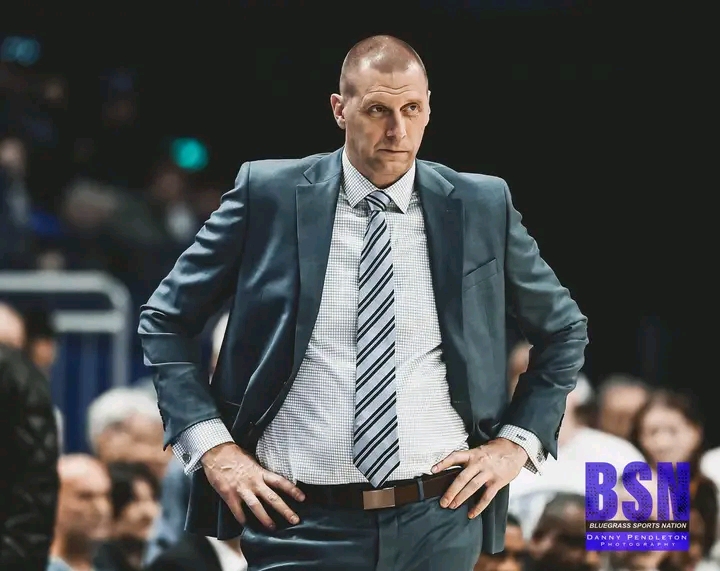
There are postgame quotes that pass through a season without leaving a mark. And then there are the ones that linger — not because they are dramatic, but because they are disarmingly honest. Mark Pope’s words after Kentucky’s first game of the year against Alabama fell squarely into the second category.
“We hit a wall.”
It wasn’t said with frustration. It wasn’t deflective. It wasn’t dramatic. It was calm. Almost too calm. And that’s exactly why it made Big Blue Nation pause.
Because Kentucky basketball fans are trained to hear coded language. They listen not just to what a coach says, but to what it signals. And on that night, Pope’s admission didn’t sound like a temporary explanation. It sounded like a revealing moment — one that peeled back the curtain on where this team really was, emotionally and structurally, at that point in the season.
That game against Alabama wasn’t the loudest loss Kentucky would endure. It wasn’t the most damaging in the standings. But it may have been the most revealing — and Pope’s words afterward quietly confirmed what many fans felt but hadn’t yet voiced.
The Game That Changed the Tone
Kentucky didn’t walk into that Alabama game expecting perfection. But they did expect competitiveness. They expected resistance. They expected a team that would bend but not break when things got uncomfortable.
Instead, the Wildcats unraveled early.
Alabama dictated pace from the opening possessions. Kentucky looked reactive, not assertive. Defensive rotations were late. Offensive possessions stalled into isolation or rushed decisions. And most notably, when the Crimson Tide pushed, Kentucky didn’t push back.
By the time the deficit ballooned in the first half, it wasn’t just the scoreboard that concerned fans — it was the body language. Heads dipped. Communication faded. The game felt like it was slipping before halftime even arrived.
That’s why Pope’s postgame words landed the way they did. He didn’t blame youth. He didn’t point to injuries. He didn’t hide behind clichés.
He simply said the team hit a wall.
And for a Kentucky fanbase that understands momentum, psychology, and pressure better than almost anyone, that phrase carried weight.
Why ‘We Hit a Wall’ Wasn’t Just a Quote
In most programs, saying a team “hit a wall” might be brushed off as a conditioning issue or a one-night lapse. At Kentucky, it triggers deeper questions.
A wall isn’t a missed shot.
A wall isn’t a bad whistle.
A wall is resistance — internal or external — that stops progress cold.
Fans immediately began interpreting what Pope meant. Was it physical fatigue? Mental fatigue? Emotional fatigue? Or something more concerning: a team that wasn’t yet built to handle sustained pressure?
The unsettling part wasn’t that Kentucky struggled. It was that the struggle looked abrupt and complete.
One moment they were competing. The next, they weren’t.
And Pope acknowledged it without softening the language.
The Kentucky Standard Doesn’t Allow Long Walls
Kentucky basketball operates under a unique standard. This isn’t hyperbole — it’s history. Generations of success have conditioned the fanbase to expect not invincibility, but response.
Kentucky teams are allowed to lose.
They are not allowed to fold.
When Pope said the team hit a wall, some fans heard vulnerability. Others heard honesty. But nearly everyone heard something unfamiliar.
Because Kentucky teams, at their best, don’t stop when challenged. They adapt. They dig in. They survive ugly stretches through effort alone.
This team, on that night, didn’t.
And Pope didn’t deny it.
Mark Pope’s Honesty — A Strength and a Risk
One of Pope’s defining traits as a coach is transparency. He doesn’t dodge questions. He doesn’t sugarcoat reality. He doesn’t try to win press conferences.
That authenticity has earned him goodwill. It helped him early in his tenure. Fans appreciated hearing a coach speak like someone who understands the game — and the job.
But honesty cuts both ways at Kentucky.
When Pope admitted the team hit a wall, he wasn’t making excuses. But he was acknowledging a limitation. And at Kentucky, limitations are scrutinized immediately.
Fans began asking questions — not angrily, but cautiously.
Why did they hit a wall?
Why didn’t adjustments come sooner?
Why did the energy disappear so quickly?
Those questions weren’t accusations. They were the early stages of evaluation.
The Context Matters: First Alabama Game vs. What Came Later
What makes that quote even more significant is how it aged.
At the time, fans chalked it up as a learning moment. A tough early test. A necessary gut check. Kentucky still had runway. Still had belief.
But as the season unfolded and similar patterns emerged in other games — slow starts, uneven urgency, stretches of passivity — Pope’s words after Alabama began to echo louder.
It wasn’t just one wall anymore.
It felt like a recurring obstacle.
And suddenly, that early-season honesty felt less like a snapshot and more like a warning.
Big Blue Nation Knows When a Team Is Searching
Kentucky fans are emotional, yes. But they are also observant. They can tell when a team knows who it is — and when it doesn’t.
Against Alabama, Kentucky didn’t look defiant. They looked unsure.
That uncertainty is what unsettles BBN the most.
Fans don’t demand dominance every night. They demand identity.
Who do you turn to when things break down?
Who sets the tone defensively?
Who refuses to let the game slip?
On that night, those answers weren’t clear.
And Pope’s words acknowledged that clarity hadn’t yet arrived.
The Shadow of Expectations
Every Kentucky coach lives under the shadow of past success. Not just championships, but standards of response.
Fans remember teams that clawed back from deficits. Teams that defended out of pride even when shots wouldn’t fall. Teams that fought because that’s what Kentucky basketball does.
When Pope said they hit a wall, it contrasted sharply with that inherited memory.
And that doesn’t mean Pope is failing — but it does mean the margin for growth is narrow.
At Kentucky, development must happen loudly and visibly.
Why Fans Didn’t Panic — But They Paused
What’s important to understand is that Pope’s quote didn’t cause outrage. It caused reflection.
Fans didn’t flood timelines calling for change. They didn’t abandon belief.
They paused.
They listened.
They waited to see if the wall would become a lesson or a pattern.
That pause is significant. Because Kentucky fans don’t pause when they’ve given up — they pause when they’re reassessing.
The Responsibility of the Moment
To Pope’s credit, he didn’t dismiss the issue. He talked about lineup considerations. About addressing slow starts. About accountability.
But Kentucky fans know talk is only the first step.
They want to see the wall addressed.
More urgency early.
Sharper rotations.
Clearer leadership on the floor.
Immediate consequences for lapses in effort.
Because at Kentucky, belief isn’t sustained by explanation. It’s sustained by evidence.
Why That Quote Still Matters Now
The reason “we hit a wall” still resonates isn’t because it was wrong — it’s because it was accurate.
It captured something real about that team at that moment. And moments like that often reveal more than highlight wins ever do.
It was a glimpse into the work still required.
It was a reminder that talent doesn’t automatically translate to toughness.
And it was a signal that Mark Pope understands the problem — even if solving it is the harder task.
The Path Forward Is Still Open
Here’s the truth Kentucky fans know, even amid concern: this story is not finished.
Teams grow. Coaches adjust. Seasons evolve.
One gritty win. One game where Kentucky refuses to break. One night where effort overwhelms doubt — and the narrative flips.
But those moments don’t happen by accident.
They happen when a team decides the wall isn’t the end of the road — it’s the test.
Final Thought: Why Pope’s Words Were Necessary
Mark Pope didn’t lose Kentucky fans with that quote.
He challenged them.
He acknowledged reality instead of hiding from it. And at Kentucky, reality always surfaces eventually.
The question now isn’t whether the team hit a wall.
The question is whether they’ve learned how to climb it.
Because Big Blue Nation will wait — briefly.
But once they see the fight return, once they see conviction replace hesitation, that same fanbase that paused after Alabama will rally louder than ever.
That’s Kentucky basketball.
And that’s the weight behind four simple words that said far more than they seemed to at the time.




