


It started with a clip that spread faster than anyone inside the program could control. A single crossover, a brief stumble, a moment frozen and replayed across timelines and message boards. By the time the week ended, that viral snapshot of North Carolina basketball collided with something far more consequential on the football side: a quarterback quietly entering the transfer portal, reshaping a position battle many assumed was settled.
On the surface, the two stories couldn’t be more different. One lives in the noisy, reaction-driven world of social media. The other unfolds in the calculated, transactional reality of modern college football. But together, they tell a revealing story about where UNC stands right now — a program navigating pressure, perception, and transition across two major sports, all in the same breath.
A moment that refused to stay small
The crossover itself lasted barely a second.
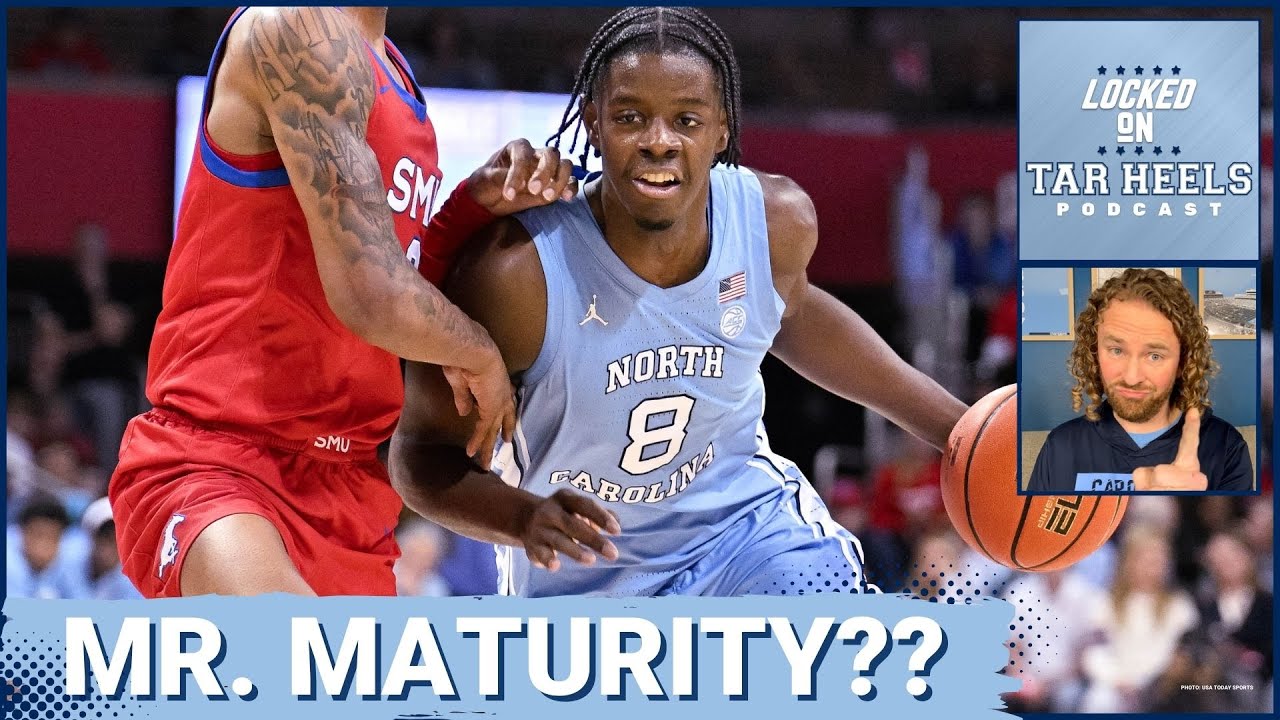
SMU guard Boopie Miller created space, shifted directions, and Caleb Wilson briefly lost his footing. In real time, it was just another possession in a long game — the kind of thing that happens dozens of times every night in college basketball. But in the digital age, context doesn’t always survive the clip.
Within hours, the video was everywhere.
Fans debated it. Critics pounced. Memes multiplied. And just like that, a single defensive slip became a talking point far larger than the game itself.
For young players, moments like that can linger. They can become labels. They can spiral into narratives that distort reality. But what followed revealed far more about Caleb Wilson than the clip ever could.
Caleb Wilson’s response told the real story
What stood out in the aftermath wasn’t denial, defensiveness, or frustration. It was maturity.
Wilson didn’t duck the moment. He didn’t blame circumstances or officials. He acknowledged it, absorbed it, and moved forward. Inside the program and in media analysis — including the Locked On Tar Heels segment that sparked renewed discussion — Wilson’s response became the focus, not the crossover itself.
That reaction matters.
College basketball seasons are defined by how players handle adversity, not how they avoid it. Wilson’s willingness to own the moment, learn from it, and keep competing speaks to a mentality that coaches covet and teammates respect.
Rather than shrinking, he leaned in.
Why “viral” pressure is different from game pressure
There’s a difference between pressure inside the lines and pressure outside them. Game pressure ends when the buzzer sounds. Viral pressure doesn’t.
Players can watch film, make adjustments, and move on from missed shots or defensive breakdowns. But viral moments follow them everywhere — into classrooms, dorms, and locker rooms. They invite opinions from people who didn’t watch the full game, don’t know the scouting report, and don’t see the daily work.
How a player processes that noise can shape a season.
Wilson’s response suggested something important: he understands that the loudest voices are often the least relevant. That mindset, more than any single highlight or lowlight, determines growth.
A chip-on-the-shoulder edge UNC needs
For UNC, Wilson’s reaction may end up being a positive inflection point.
Great teams often develop an edge not from dominance, but from being challenged. From feeling doubted. From being tested publicly. Wilson’s competitive fire — described by analysts as a “chip-on-the-shoulder” attitude — fits neatly into that pattern.
Rather than letting the moment define him, he’s using it as fuel.
That kind of internal response can ripple through a locker room. It sharpens focus. It tightens accountability. And as UNC prepares for tough ACC matchups like Wake Forest, that edge could matter more than any single possession.
Meanwhile, a quieter shock hit UNC football
While basketball discourse buzzed online, a more understated but arguably more impactful development unfolded on the football side.
Quarterback Gio Lopez entered the transfer portal.
There was no viral clip. No immediate explosion of reaction. Just a roster move that subtly altered the landscape of UNC’s quarterback competition.
And in modern college football, there is no such thing as a minor quarterback decision.
Why Gio Lopez’s departure matters
Quarterback rooms are ecosystems. Every decision affects the balance.
Lopez’s departure changes the math. It alters practice reps. It reshapes competition. And it forces coaching staffs to reassess timelines, depth, and development plans.
For a program navigating transition and evaluating its future under center, losing a quarterback — especially one viewed as part of the competitive mix — carries consequences that extend well beyond the portal entry itself.
It raises questions about opportunity, fit, and direction.
The transfer portal reality UNC can’t avoid
UNC isn’t unique in facing this reality. The transfer portal has become an ever-present force, especially at quarterback. Players want clarity. They want pathways. And if those aren’t visible, movement happens quickly.
Lopez’s exit underscores how fluid roster construction has become. Stability is no longer assumed. Competition is constant. And patience, particularly at high-profile positions, is increasingly rare.
For UNC, the task now is twofold: manage the remaining quarterback room while ensuring the broader program vision remains intact.
Two sports, one shared theme: response
What links these two stories isn’t timing alone — it’s response.
Caleb Wilson faced public scrutiny and responded with maturity and resolve. Gio Lopez faced uncertainty within a crowded quarterback room and responded by seeking opportunity elsewhere.
Neither response is inherently right or wrong. Both are reflections of the current college sports environment, where individual paths intersect with program expectations in complex ways.
UNC, as an institution, is navigating both realities at once.
The broader lesson for UNC fans
It’s easy to overreact to moments — viral clips, portal entries, headlines that feel larger than life in the moment. But seasons aren’t defined by isolated incidents. They’re defined by patterns.
Wilson’s pattern suggests growth, resilience, and competitive maturity. Lopez’s move highlights the constant churn and recalibration that modern football demands.
Together, they remind fans of an uncomfortable truth: college sports are no longer static. Rosters shift. Narratives evolve. And development isn’t always linear.
Why this week felt different
UNC has had louder weeks. Bigger controversies. More dramatic wins and losses.
But this week felt different because it revealed how much the environment has changed.
A basketball player’s reaction to a viral clip becomes a leadership moment. A football quarterback’s quiet exit reshapes future planning. Both happen simultaneously, under the same Carolina banner.
It’s not chaos — it’s adaptation.
Looking ahead: what really matters
For UNC basketball, the focus returns to the floor. Wilson’s play, not the clip, will determine his impact. His response suggests he’s ready for that challenge.
For UNC football, the portal decision forces clarity. The remaining quarterback competition becomes sharper, more defined, and more urgent.
Neither story is finished. Both are still unfolding.
Final thought
One viral moment. One surprise exit.
On their own, they’re just stories. Together, they paint a picture of a program navigating the modern college sports landscape — where pressure comes from everywhere, decisions carry immediate consequences, and growth is measured by response, not reaction.
For UNC, the week didn’t just take an unexpected turn. It offered a glimpse into how the program is learning to move forward in an era where nothing stays small for long.




