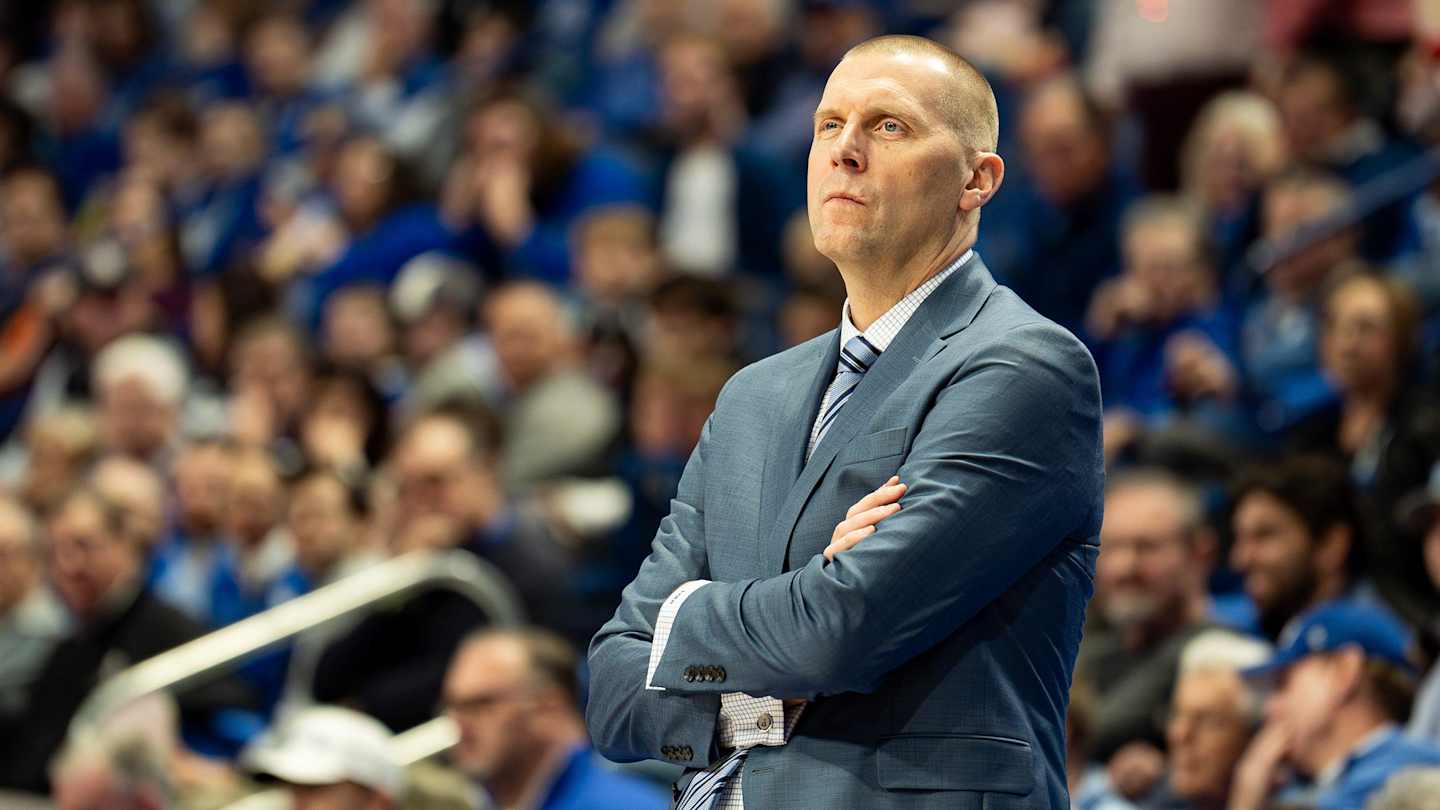
There’s a difference between collapse and concern, and that distinction matters right now for Kentucky basketball. The Wildcats are not spiraling. They are not broken. They are not beyond saving. But to pretend everything is fine would be just as dishonest as declaring the season over. What Big Blue Nation is reacting to isn’t one loss, or even a handful of them — it’s the uncomfortable feeling of déjà vu. The same issues keep showing up in the same moments, and each time they do, belief takes another small hit. Kentucky isn’t falling apart, but the cracks are becoming easier to spot, and harder to explain away.
This is why the conversation around Mark Pope and this team feels louder than the record alone would suggest. Losses happen at Kentucky — even frustrating ones. What rattles the fanbase is repetition. When late-game execution falters again. When offensive flow dries up under pressure again. When effort spikes briefly, then fades again. Patterns matter at this program, because patterns are how fans measure whether progress is real or just promised.
Hope Wasn’t Imaginary — It Was Earned
It’s important to remember how this season began, because it didn’t start with skepticism. It started with belief. Mark Pope inherited a program desperate for direction after years of emotional whiplash. What he brought early was clarity of purpose and a roster built to play fast, share the ball, and attack with confidence. There was optimism not because Kentucky looked perfect, but because it looked connected.
That belief didn’t come from hype — it came from results. Competitive performances against quality opponents. Moments of resilience. A sense that Kentucky was rediscovering its edge without trying to be something it wasn’t. For a fanbase exhausted by extremes, that balance felt refreshing.
That’s why the current frustration cuts deeper. Because it’s not rooted in hopelessness — it’s rooted in contrast.
The Cracks Don’t Show Up Early — They Show Up Late
Kentucky’s most troubling issues don’t usually reveal themselves in the opening minutes. They surface late, when games tighten and decisions matter more. That’s when spacing shrinks. That’s when the ball sticks. That’s when confidence wavers just enough to turn good possessions into rushed ones.
Late-game offense has become a recurring problem, not because Kentucky lacks shot-makers, but because roles blur when pressure rises. Who initiates? Who finishes? Who slows the game down when it starts racing? Those answers don’t always feel clear, and uncertainty is deadly in close games.
Defensively, the story is similar. Kentucky will string together stops, show flashes of cohesion, then surrender a crucial breakdown — a missed rotation, a late closeout, a rebound not secured. One mistake becomes two, and suddenly momentum swings.
These moments aren’t isolated. They’re connected. And that’s what makes fans uneasy.
Effort Isn’t the Issue — Trust Is
One of the most misunderstood aspects of this season is effort. This Kentucky team is not disinterested. Players are competing. Bodies are flying. Emotion is visible. But effort alone doesn’t win games in this league — trust does.
Trust shows up when players know exactly where help is coming from. When they don’t hesitate on a pass. When a shot feels automatic instead of forced. Right now, Kentucky’s trust wavers in the biggest moments. Not because players don’t care, but because they’re still searching for certainty.
That’s a natural part of growth — but at Kentucky, patience is earned through evidence. Fans aren’t asking for perfection. They’re asking for proof that lessons are sticking.
Mark Pope’s Challenge Isn’t Philosophy — It’s Urgency
Mark Pope’s vision for Kentucky basketball has never been vague. He’s spoken openly about pace, connectivity, and accountability. Philosophically, his approach makes sense. The challenge isn’t what he believes — it’s how quickly those beliefs translate into consistent execution.
At Kentucky, time moves faster. Adjustments are expected now, not later. When the same mistakes recur, fans assume either they’re not being addressed, or they’re not landing. Neither explanation is comforting.
This is where the noise around Pope begins to grow. Not because fans want change, but because they want reassurance that the staff sees the same problems they do — and has concrete answers.
The good news for Pope is this: the foundation isn’t rotten. The roster hasn’t quit. The locker room hasn’t fractured. But goodwill is a resource, and like any resource, it can be depleted if not reinforced.
Identity Is the Real Question
The most pressing issue facing Kentucky right now isn’t record or rankings — it’s identity. Who is this team when the game slows down? What do they hang their hat on when shots stop falling? Where does their confidence come from when momentum turns?
At their best, the Wildcats play freely, move the ball, and attack with purpose. At their worst, they hesitate and overthink. The difference between those two versions is thin, but decisive.
Kentucky fans are not confused about what they want to see. They want toughness that shows up consistently. Discipline that survives adversity. And leadership that steadies the floor when emotions spike.
Those traits don’t appear overnight — but they do have to appear eventually.
Why the Reaction Feels Louder Than the Results
To outsiders, the reaction around Kentucky may feel exaggerated. But inside Big Blue Nation, this response is familiar. It’s what happens when expectations collide with uncertainty. When fans believe in the potential but worry about the direction.
This isn’t a fanbase turning on its coach. It’s a fanbase holding its program to a standard forged over decades. That standard doesn’t demand dominance every night — it demands clarity.
When Kentucky loses with clarity, fans rally. When Kentucky loses without it, concern grows.
The Season Isn’t Slipping Away — But It’s Being Defined
There’s still time for Kentucky to reshape this narrative. SEC play offers no shortage of opportunities to restore belief. One gritty win can change tone quickly. One disciplined performance can quiet weeks of doubt.
But the window isn’t infinite.
What happens next matters more than what has already happened. How Kentucky responds — not in words, but in execution — will determine whether these cracks are patched or widened.
For Mark Pope, this is the moment where leadership shows itself most clearly. Not through speeches or promises, but through visible adjustment. Through lineups that make sense. Through schemes that hold under pressure. Through a team that looks more certain tomorrow than it did today.
Why This Still Can Work
Despite everything, this season is not lost. Kentucky still has talent. Still has heart. Still has time. And perhaps most importantly, it still has a fanbase desperate to believe.
Big Blue Nation doesn’t need perfection. It needs direction.
If Kentucky can turn recurring mistakes into learned lessons, if close losses become composed wins, if hesitation becomes instinct — the story changes fast. And at Kentucky, stories always move quickly.
The cracks are real. But cracks don’t mean collapse.
They mean something needs fixing — and soon.
What Kentucky does next will decide whether this season becomes a cautionary tale… or the moment it finally finds itself.