


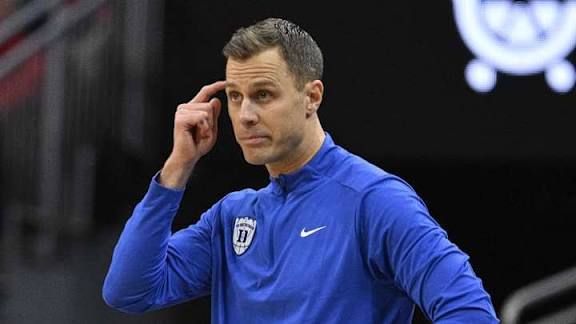
At first glance, it doesn’t jump off the screen the way a thunderous dunk or a logo three does. There’s no viral clip attached to it, no highlight package that plays on a loop. But quietly, steadily, and relentlessly, Duke basketball has been doing something this season that no other team in the country can claim: they are winning the free-throw attempt battle in every single game. Not most games. Not “almost all.” Every night.
And in a season where margins are razor-thin and championship aspirations hinge on small, repeatable advantages, that detail is becoming one of the clearest explanations for why Duke has separated itself from the rest of college basketball.
This isn’t accidental. It isn’t luck. And it certainly isn’t officiating bias, despite what rival fan bases might want to believe. It’s a reflection of how Duke is playing, how Jon Scheyer has built this roster, and how the Blue Devils are imposing their will in ways that don’t always show up on a highlight reel—but absolutely show up in the win column.
Why the Free-Throw Battle Matters More Than Ever

College basketball has changed. The pace is faster, spacing is wider, and three-point shooting dominates offensive conversations. But in high-stakes games—conference play, neutral-site battles, March pressure—free throws remain the great equalizer.
Winning the free-throw attempt margin usually means one thing: you are the aggressor.
It means you’re attacking the paint instead of settling. It means defenders are reacting, not dictating. It means you’re forcing referees to make calls instead of hoping they bail you out on jump shots.
Duke has mastered that formula this season.
While other teams oscillate between perimeter-heavy nights and inconsistent interior pressure, Duke’s approach has been remarkably stable. No matter the opponent, no matter the venue, no matter the score, the Blue Devils are finding ways to put pressure on the rim and force fouls.
That consistency is rare. And it’s powerful.
This Is a Style, Not a Stat Quirk
Let’s be clear: this isn’t happening because Duke shoots more free throws by design in a spreadsheet sense. It’s happening because of how they play basketball.
Duke attacks downhill.
Duke plays through contact.
Duke doesn’t shy away from physicality.
Whether it’s Cameron Boozer overpowering defenders in the post, guards turning the corner and absorbing contact, or wings cutting hard instead of floating on the perimeter, Duke’s offense is built to create collisions. And collisions lead to whistles.
Unlike teams that rely heavily on finesse or shot-making variance, Duke has established a baseline advantage. Even on nights when shots aren’t falling, free throws stabilize the offense. They stop runs. They allow Duke to score without relying on rhythm. They keep opposing teams in foul trouble and disrupt rotations.
That’s not glamorous basketball—but it’s championship basketball.
Cameron Boozer: The Epicenter of the Advantage
It’s impossible to talk about Duke’s free-throw dominance without talking about Cameron Boozer.
The freshman phenom isn’t just scoring at an elite rate—he’s doing it in a way that bends defenses. At 6-foot-9 and 250 pounds, Boozer is already built like a veteran, and he plays like one. He seals deep, finishes through contact, and refuses to fade away when defenders collapse.
Opponents have tried everything: single coverage, quick doubles, digging guards, physical fronts. None of it has worked consistently. And when they get desperate, they foul.
A lot.
Boozer’s presence alone changes how defenses operate. Help defenders arrive earlier. Rotations get sloppy. And suddenly, Duke’s guards are attacking a defense that’s already off balance.
That’s how free-throw margins snowball. One dominant interior force creates opportunities for everyone else.
Guards Who Don’t Avoid Contact
Another critical piece of this equation is Duke’s guard play. Too often in college basketball, guards avoid contact. They pull up early. They dance laterally. They hunt threes instead of forcing defenders to make choices.
Duke’s guards do the opposite.
They attack gaps. They use their bodies. They initiate contact instead of flinching from it. And that mentality is contagious.
When guards are willing to take hits in the lane, defenses have to collapse harder. When defenses collapse harder, fouls follow. It’s a simple chain reaction, but one that requires discipline and toughness to execute consistently.
That’s where Jon Scheyer’s influence becomes evident.
Jon Scheyer’s Quiet Evolution as a Coach
Scheyer’s Duke teams early in his tenure were skilled, but at times overly reliant on finesse. This version of Duke feels different. It feels more intentional. More mature.
Scheyer has leaned into balance. He’s empowered his players to be aggressive without being reckless. And he’s built an identity that travels.
Winning the free-throw battle on the road is especially telling. Home teams traditionally get more calls. Crowd noise matters. Familiar rims matter. But Duke has neutralized those advantages by forcing officials into unavoidable decisions.
When you’re attacking the rim over and over again, whistles follow—regardless of the jersey color.
That’s coaching. That’s preparation. And that’s growth.
The Psychological Toll on Opponents
One underrated aspect of free-throw dominance is what it does mentally to the other team.
Foul trouble changes everything.
Defenders become hesitant. Rotations slow down. Coaches pull players earlier than planned. Aggressive schemes soften. Suddenly, the opponent isn’t playing their game—they’re surviving.
Duke has put teams in that position repeatedly this season.
By halftime, opponents are already tracking fouls instead of momentum. By the final media timeout, benches are shorter, matchups are compromised, and fatigue sets in.
That’s not coincidence. That’s pressure.
Free Throws as a Late-Game Weapon
When games tighten—and they always do against elite competition—free throws become invaluable.
Duke’s ability to consistently get to the line late in games has turned close contests into manageable finishes. While other teams are scrambling for clean looks or settling for contested jumpers, Duke is attacking mismatches and forcing fouls.
It’s the difference between hoping a shot falls and knowing you can manufacture points.
That’s separation.
Addressing the Narrative: “Ref Bias”
Whenever one team dominates the free-throw margin, the same accusations surface. Bias. Favoritism. Reputation whistles.
But those narratives crumble under scrutiny.
Duke isn’t winning the free-throw battle because referees love them. They’re winning it because they’re dictating where the game is played.
If Duke were jacking threes, avoiding the paint, or playing a finesse-heavy style, this wouldn’t be happening. Officials don’t hand out free throws arbitrarily. They respond to action.
And Duke’s action is constant pressure.
Sustainability Heading Into March
Perhaps the most important question is whether this advantage is sustainable.
The answer? Yes—and that’s what should worry the rest of the country.
Shooting percentages fluctuate. Hot streaks cool off. But physicality, rim pressure, and offensive intent travel.
As defenses tighten in March, teams that rely solely on shot-making often struggle. Duke’s free-throw advantage gives them insulation against variance. Even on off-shooting nights, they can stay afloat.
That’s a luxury very few teams possess.
What Truly Separates Duke Right Now
Plenty of teams have elite scorers. Plenty have depth. Plenty can catch fire from three.
But Duke has something rarer: a repeatable edge that doesn’t depend on rhythm or confidence.
Winning the free-throw battle every night isn’t flashy—but it’s foundational. It reflects toughness. It reflects identity. It reflects control.
And control is what separates contenders from pretenders.
As the season grinds on and the spotlight intensifies, Duke’s free-throw dominance may never trend on social media. It may never lead SportsCenter. But inside locker rooms, on scouting reports, and on opposing benches, it’s already well understood.
Duke isn’t just winning games.
They’re winning the battles that decide championships.




