


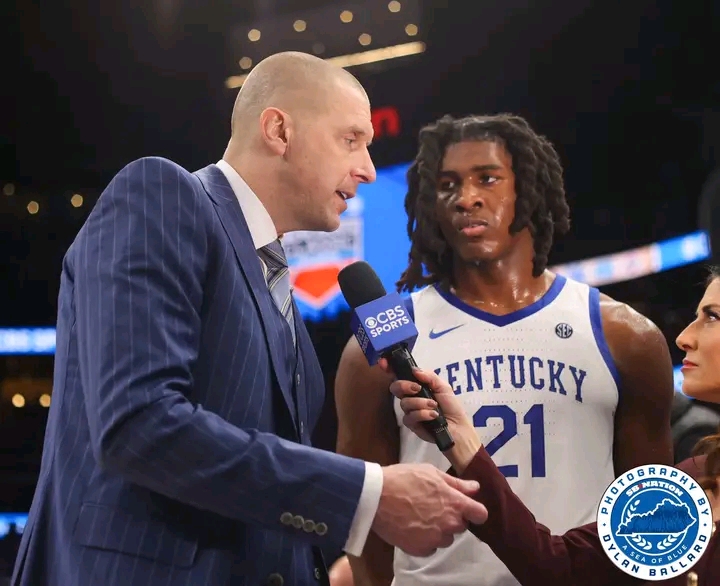
LEXINGTON, Ky. — As the Kentucky Wildcats continue navigating the grind of the 2025–26 college basketball season, injuries have emerged as a recurring storyline affecting rotations, minutes, and game plans. Head coach Mark Pope provided the latest updates on the status of three key players — Quaintance, Lowe, and Noah — in his weekly press session on Monday, Jan. 12.
With a slate of challenging games ahead in the SEC and a schedule packed with potential marquee matchups, Kentucky’s health report could prove pivotal to the team’s success over the next two months.
Quaintance: A Key Contributor Facing Time Off
Tyrese Quaintance, Kentucky’s energetic wing, has been dealing with a lingering ankle issue that first surfaced in late December. Pope indicated that the junior guard/forward is currently “day-to-day” but not yet ready to return to full action.
“Tyrese has been working hard in rehab,” Pope said. “He’s making progress, but we don’t want to rush him back. We want him 100% when he returns because he’s a player who can change the flow of games for us.”
Quaintance has been a versatile option on both ends of the floor for Kentucky this season. Known for his ability to defend multiple positions and create off the dribble, he has also provided valuable scoring bursts off the bench. Losing him, even temporarily, puts extra pressure on Kentucky’s perimeter rotation.
Pope emphasized that while Quaintance is currently unavailable, the coaching staff is confident in his eventual return to full strength, suggesting that the injury is manageable but requires patience.
Lowe: Managing Recovery with Caution
Forward Jalen Lowe has also been under observation after dealing with a minor knee issue. Pope described Lowe’s status as “progressing well”, noting that the forward has participated in limited individual workouts and non-contact drills.
“Jalen’s moving in the right direction,” Pope explained. “He’s doing everything in his power to be back on the floor, but again, we have to be cautious. The last thing we want is a setback.”
Lowe’s skill set as a stretch forward capable of spacing the floor has been a key part of Kentucky’s offensive schemes this season. His ability to hit open shots from beyond the arc and finish in transition gives the Wildcats a dynamic scoring option that complements their post-heavy rotation.
Pope indicated that Lowe could potentially return to full contact practice within the next two to three weeks, but a game-time decision will be made only once the staff is confident in his readiness.
Noah: Evaluating the Long-Term Plan
The third player Pope addressed was center Noah Thompson, whose season has been interrupted by a combination of nagging back stiffness and a previous minor shoulder issue. Unlike Quaintance and Lowe, Thompson’s return timeline is less clear, as Pope emphasized that long-term health is the priority.
“Noah is working through some issues that have been bothering him,” Pope said. “We’re monitoring closely, making sure we don’t compromise his health for short-term gain. He’s a big part of what we do, and when he’s ready, he’ll come back stronger.”
Thompson’s presence in the paint is vital for Kentucky, particularly for rim protection, rebounding, and post scoring. The Wildcats have had to adapt defensively in his absence, leaning more heavily on rotation players and undersized lineups, which can create matchup challenges against taller or more physical SEC opponents.
The Impact on Kentucky’s Rotation
With these three players facing varying degrees of injury-related absence, Kentucky has already adjusted rotations and is relying on younger or bench players to step into increased roles.
Backcourt adjustments: With Quaintance limited, point guard and wing players are logging heavier minutes, which tests depth and stamina.
Frontcourt shifts: Lowe and Noah’s availability affects defensive matchups and rebounding assignments. Pope has hinted that the team may adopt smaller, quicker lineups in certain matchups to compensate.
Bench contributions: Kentucky’s reserves are being asked to provide scoring punch, defensive energy, and stability, all while integrating into a rotation that has seen constant fluctuation.
Pope stressed that injuries are part of the game, and managing them is a collective effort. The coaching staff is focusing not just on treatment and rehab, but also on game preparation and tactical adjustments to maintain competitiveness despite absences.
Looking Ahead: Key Matchups on the Horizon
Kentucky’s upcoming schedule includes critical SEC clashes as well as opportunities to face non-conference opponents that could define the team’s tournament seeding.
Next two weeks: The Wildcats are set to host Arkansas and South Carolina, both of whom have strong frontcourt rotations. The availability of Lowe and Thompson will be closely watched.
SEC grind: Kentucky must navigate the likes of Tennessee, Alabama, and LSU, teams that excel in physicality and pace. Maintaining depth and rotation flexibility is crucial.
Post-injury integration: When Quaintance, Lowe, and Noah eventually return, Pope will need to carefully ease them back into game situations to prevent setbacks, particularly with postseason positioning in mind.
Mark Pope’s Approach: Patience and Long-Term Focus
Throughout the press conference, one consistent theme emerged: patience. Pope repeatedly emphasized that the priority is long-term health over short-term gain, reflecting an awareness that pushing players back too soon can have season-altering consequences.
“Rushing isn’t an option,” Pope said. “We want to make sure each of these guys comes back and can contribute fully, not just for a game or two, but for the rest of the season and beyond. That’s our focus.”
This approach mirrors best practices in modern sports medicine, where careful monitoring, individualized rehab plans, and strategic game-time integration are critical to preserving careers and optimizing team performance.
Fans and Media React
Kentucky fans, already known for their passionate support, have been vocal on social media regarding the status of Quaintance, Lowe, and Noah. The uncertainty surrounding these players has fueled speculation about how Kentucky will perform against upcoming conference rivals.
Pope’s calm and methodical updates aim to temper overreaction, reminding fans that injuries are part of every team’s journey and that Kentucky’s depth remains sufficient to remain competitive.
Analysts have noted that while the Wildcats will be tested, this period also provides younger players with valuable minutes, which could be pivotal for player development and rotation flexibility as the season progresses.
The Bigger Picture: Keeping Kentucky on Track
Injuries are unavoidable in college basketball, but the way a program responds and adapts often defines a season. Kentucky’s coaching staff has demonstrated a proactive approach:
Regular medical evaluations: Players are closely monitored by team physicians and athletic trainers.
Individualized rehab programs: Each injured athlete follows a tailored plan that balances conditioning, strength, and skill work.
Strategic rotation management: Coaches adjust lineups and minutes based on availability, opponent scouting, and player readiness.
Mental resilience: Keeping players engaged, motivated, and mentally prepared during rehab is emphasized to prevent disconnect from team dynamics.
Pope’s updates signal to fans and analysts alike that the team is in control of its injury challenges and is focused on sustainable performance over temporary fixes.
Final Thoughts
As Kentucky continues its 2025–26 campaign, the status of Quaintance, Lowe, and Noah will remain a key storyline. While their absences present challenges, the Wildcats’ approach under Mark Pope demonstrates discipline, foresight, and commitment to long-term success.
Fans can expect gradual updates as each player progresses through rehabilitation, and when they return, their contributions will likely have a significant impact on Kentucky’s ability to contend in the SEC and beyond.
For now, the Wildcats will continue to adapt, compete, and lean on depth, a strategy that has proven effective in managing adversity at this level.




