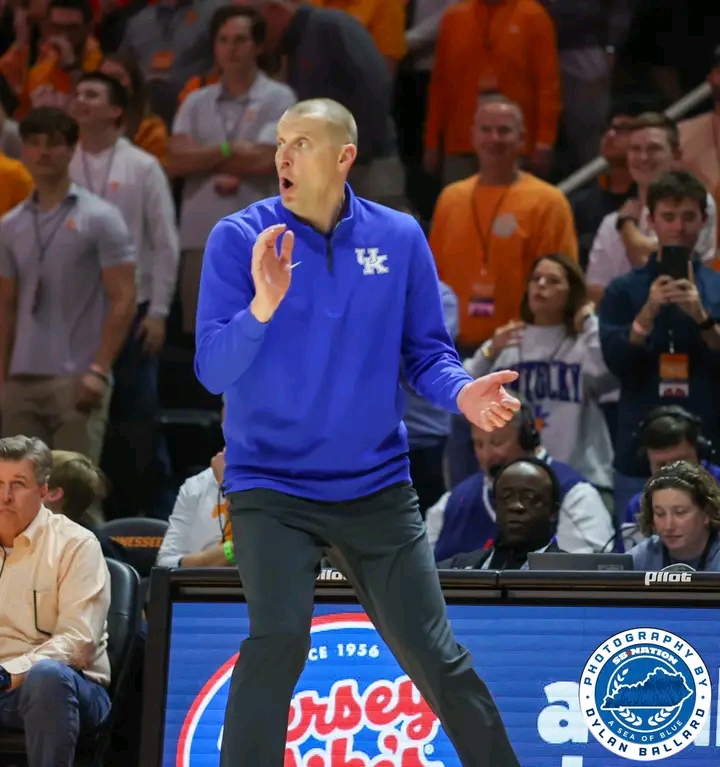
In a game that had everything — a massive comeback, late drama, and a postgame scuffle — two coaches with very different outlooks spoke to the media after the Wildcats pulled off one of the most remarkable wins of the SEC season. Kentucky overcame a 17‑point deficit to stun No. 24 Tennessee, 80‑78 in Knoxville, and what both Rick Barnes and Mark Pope said afterward is sparking debate across social media and college basketball circles.
This wasn’t just a comeback. It turned into a defining moment for both teams — and the reactions from both head coaches tell a deeper story about confidence, resilience, frustration, and the pressures of mid‑season college basketball in the SEC.
A Game That Defied Expectations — and Then Some
Kentucky’s road game at Tennessee was, on paper, a classic SEC battle — physical, grueling, and tightly contested from start to finish. But it quickly turned into something more dramatic. Tennessee jumped out to a huge lead early in the first half, pushing the Wildcats as many as 17 points behind before halftime.
Yet, in a stunning reversal, Kentucky rallied in the second half behind a ferocious collective effort that never let the Vols pull away, ultimately sealing the win in the final minute.
If the comeback was unexpected, the coaches’ reactions afterward were just as compelling — and revealed a lot about where each program is right now.
Rick Barnes Breaks Down Tennessee’s Loss
Tennessee head coach Rick Barnes is no stranger to big games and emotional swings, and his postgame comments reflected that blend of experience, accountability, and frustration that comes with a blow‑torch home defeat.
Emotion, Effort, and the Breakdown
Barnes didn’t mince words when describing how his team played early and how that impacted the outcome:
“Way too emotional to start the game,” he said, admitting that Tennessee’s opening intensity may have cost them composure later in the contest.
In Barnes’ view, the Volunteers allowed themselves to be influenced by the moment — something he believes can be dangerous as the season progresses, especially with the NCAA tournament looming.
Rebounding and Physicality in the Second Half
Barnes pointed directly to rebounding as a turning point — an area Tennessee is built to dominate but ultimately failed to do.
“When you get out‑rebounded, it is lack of effort. Plain and simple… it’s one‑on‑one combat when that shot goes up,” he said, emphasizing that the Wildcats won the battle for second‑chance points — a momentum swing that cost Tennessee dearly.
This comment struck a nerve with fans because rebounding — especially offense‑to‑defense board battles — is a foundational strength for Barnes’ teams, which makes the Wildcats’ control of the glass even more significant.
On Effort vs. Execution
Barnes was clear he wasn’t trying to single out any individual, but his tough talk about effort exposed deeper frustrations about how the Volunteers let such a large lead slip away:
“Effort, or lack of, and doing your job… almost every time it’s one‑on‑one combat… we just gave up 49 points in the second half,” he said.
By framing it around effort, Barnes made it clear he saw the loss not just as a tactical failing, but as a lapse in Tennessee’s identity — and that’s the kind of honest, emotionally charged commentary that gets fans talking long after the final whistle.
Mark Pope Praises Grit, Confidence — and the Kentucky Way
On the other side of the court, Kentucky head coach Mark Pope had a very different tone: one focused on belief, internal growth, and validation.
Earning Confidence the Hard Way
Pope’s main theme wasn’t the score or the comeback — it was the process.
“You don’t just get confidence — you have to earn it. You have to go do the gritty, hard, miserable work of earning confidence,” he said, highlighting that this wasn’t luck, but hard work.
That mentality allowed Kentucky to stay composed while trailing — something Pope believes is a mark of maturation far beyond ordinary experience.
Second‑Half Strength a Defining Trait
Pope also pointed to his team’s ability to play stronger in the second half as something that gives him great faith in his squad:
“I’m breathing a little bit more in the first half because they’ve given me so much confidence about what they do in the second half,” he explained.
If there’s one takeaway from Pope’s remarks, it’s that Kentucky’s identity this season is built around resilience — a team that believes it can outlast, outwork, and outfight any opponent, even when momentum swings wildly.
Kentucky’s New Identity
Pope also noted the unusual — and impressive — rhythm his team has developed with these comebacks:
“It feels like we won the first half, which is weird, but it’s the Kentucky way right now,” he said, describing the belief that has become part of this team’s DNA.
This kind of self‑validation is rare in college basketball — and Pope’s comments reflect that he sees something genuinely special and unique unfolding in his locker room.
The Dramatic Postgame Scene That Followed
The comeback was huge, but it wasn’t the final act of the night. After the buzzer, tensions flared in Knoxville in a way that captivated fans and highlights alike.
As the final seconds expired and Tennessee’s Jaylen Cary attempted to tie the game after an intentional missed free throw, a rebound scramble ended with Kentucky holding on. When the clock hit zero, what followed was a brief but heated moment under the Tennessee bench area.
According to reports, Cary shoved Kentucky’s Otega Oweh after the final play, prompting both benches to clear before staff and coaches intervened to keep the situation from escalating.
Though no major fights broke out, the tension was unmistakable — and it added another layer to the narrative of this game, suggesting that more than just the scoreboard was on the line.
Breaking Down the Game Itself
To fully understand why both coaches reacted the way they did, it helps to revisit the arc of the game.
First Half: Tennessee’s Dominance
The Volunteers came out strong, dominating the early stages and building a 17‑point lead that seemed nearly insurmountable.
Kentucky’s offense sputtered early, slowed by turnovers and Tennessee’s suffocating defense. At halftime, the Vols led 42‑31, and it looked like the Wildcats might be in serious trouble.
Second Half: The Wildcats Strike Back
But the Wildcats weren’t done.
Kentucky began to gain momentum, sparked by improved shooting and energy on the boards. Veteran Denzel Aberdeen scored a team‑high 22 points, many coming when the game was most in doubt.
With under a minute to play, a steal by Collin Chandler led to a key layup by Otega Oweh, giving Kentucky a 78‑77 lead — its first of the game.
Tennessee’s last chance came after the intentional missed free throw, but the Volunteers couldn’t convert, as the final tying attempt was denied and the Wildcats escaped with the win.
This type of comeback — from a deficit of that magnitude — is exceptionally rare in college basketball, especially on the road against a ranked opponent. It speaks to both Kentucky’s scoring and defensive adjustments in the second half and Tennessee’s inability to regain control once momentum shifted.
What This Game Means for Both Programs
Kentucky: A Resume Boost and Renewed Confidence
For Kentucky, this win is huge in multiple ways:
It adds another Quad I victory to their NCAA tournament résumé, enhancing their postseason profile.
It reinforces Kentucky’s identity as a team that believes in itself even when the odds seem stacked.
It gives fans belief that this group can hang with — and beat — elite competition on the road.
Pope’s comments about confidence and hard work underline this narrative, suggesting that the Wildcats are not just lucky — they are dangerous.
Tennessee’s Reflection and Growth
For Tennessee, the loss was tough but instructive. Barnes’ media remarks centered on learning from mistakes and strengthening execution in clutch moments.
The Volunteers still have a strong season, but the blown lead serves as a reminder of how competitive the SEC truly is.
Conclusion
The 80‑78 game in Knoxville will be remembered for its dramatic swing, stunning comeback, and the brief flare-up that followed the buzzer. But the reactions from Rick Barnes and Mark Pope reveal something even more compelling: two very different coaching philosophies and emotional responses to one of the season’s most explosive rivalry games.
Barnes’ candid frustration and emphasis on effort and execution reflect a coach grappling with what could have been, while Pope’s focus on belief and resilience showcases a team on the rise.
This wasn’t just a game. It was a moment — one that may end up shaping attitudes, expectations, and confidence for both teams as the SEC race continues.
And the story isn’t over.