


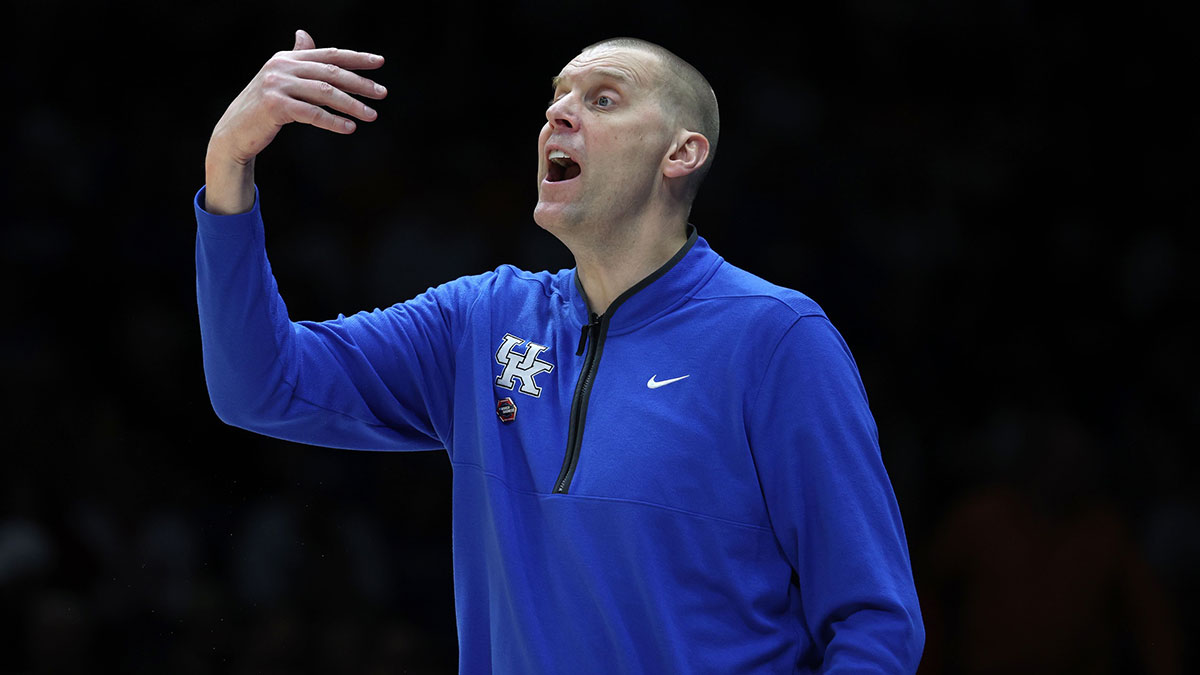
It wasn’t panic. It wasn’t frustration. And it certainly wasn’t disbelief. As Kentucky players filed into the locker room at halftime in Knoxville, down double digits yet again, there was something different in the air — a quiet confidence that didn’t match the scoreboard. Head coach Mark Pope noticed it immediately. No slumped shoulders. No sidelong glances. Just a shared understanding that this moment, however uncomfortable, felt familiar. Almost routine. What followed was another comeback that stunned Tennessee, energized Big Blue Nation, and revealed what Pope now calls a “gift” he plans to treasure.
Another familiar hole — and another familiar response
Kentucky’s 80–78 win over Tennessee didn’t unfold the way anyone would recommend drawing it up. The Wildcats trailed by as many as 17 points in the first half, struggled with offensive flow, and absorbed the kind of physicality that has historically caused problems for young teams on the road in SEC play.
By halftime, Kentucky was down 11. For many teams, that deficit in a hostile environment would feel like a looming defeat. For this Kentucky group, it felt like a challenge they’d already solved before.
Just days earlier, the Wildcats had erased a 16-point halftime deficit at LSU. That comeback wasn’t supposed to be repeatable. Not immediately. Not on the road again. And not against a Tennessee team built to grind opponents down defensively.
Yet Kentucky did it again.
“It’s what we do”
After the game, Mark Pope didn’t dwell on schemes or specific plays. Instead, he talked about belief — and the unusual comfort his team seems to have when facing adversity.
“I think the gift we have, and I will treasure this with this group — and we really feel it,” Pope said. “We actually talked about it in our team meeting last night. It’s like, we’re coming into halftime down 20. We’ve done it multiple times now and we come back and win every single time. It gives you so much confidence as a group because you can walk in the locker room and nobody’s sideways. It’s like, ‘Yep, this is what we do. We’ll come out and win the second half.’ These guys have proved to do it.”
That quote says more about this Kentucky team than any stat line.
This isn’t blind optimism. It’s earned belief — built through repeated experiences where the Wildcats have stared at deficits and refused to blink.
The anatomy of another comeback
The first half followed a frustrating script. Tennessee dictated pace, punished Kentucky on the glass, and capitalized on mistakes. The Wildcats struggled to string together stops and fell into long scoring droughts that allowed the Vols to build their largest lead.
But the second half flipped everything.
Kentucky took better care of the ball. Defensive rotations sharpened. Rebounding effort improved. The Wildcats began to generate stops that turned into transition opportunities, slowly chipping away at the lead.
What stood out most wasn’t a single player catching fire — it was collective resilience. When one possession failed, the next was met with urgency. When Tennessee tried to slow the game down, Kentucky refused to let the momentum stall.
By the time the Wildcats took their first lead with 34 seconds remaining, the comeback felt inevitable rather than miraculous.
Mental toughness becoming an identity
Teams often talk about toughness. Few demonstrate it repeatedly under pressure.
What Kentucky is showing right now is mental elasticity — the ability to absorb punches without unraveling. That trait doesn’t always show up in analytics, but it often determines outcomes in close games and March environments.
For Pope, that’s the real “gift.”
The Wildcats don’t view deficits as disasters. They view them as problems to solve. That mindset removes fear, and when fear disappears, execution tends to follow.
It also explains why Kentucky looks so different after halftime. Adjustments matter, of course, but belief amplifies those adjustments.
Not the blueprint — but a dangerous habit for opponents
To be clear, Mark Pope isn’t endorsing slow starts. Kentucky knows it can’t make a habit of digging deep holes and expect to survive every time — especially as SEC play intensifies.
But there’s a difference between relying on comebacks and being capable of them.
Opponents now face an uncomfortable reality: even a double-digit lead against Kentucky may not be safe. That knowledge changes how teams play late in halves and early in second halves. It introduces doubt.
And doubt is powerful.
Growth after early-season skepticism
Kentucky’s season didn’t begin with this kind of confidence. Early struggles led to questions — about rotations, chemistry, and whether this group could close games.
Now, the Wildcats sit at 12–6 with momentum building at the right time. The growth isn’t just physical or tactical; it’s psychological.
These players trust each other. They trust the staff. And perhaps most importantly, they trust their ability to respond when things go wrong.
That trust is fragile if it’s untested. Kentucky’s has been stress-tested repeatedly — and held.
Why this matters long-term
Comebacks like this do more than add wins to a resume. They shape how a team sees itself.
In February and March, games swing wildly. Shots stop falling. Opponents make runs. Crowds surge. Teams without inner belief fold quietly. Teams with it fight loudly.
Kentucky is building a library of proof that it can fight.
That doesn’t guarantee championships. But it gives teams a chance — and that’s often all great runs require.
Pope’s imprint becoming clearer
Mark Pope’s influence is becoming easier to see. This team doesn’t panic because its leader doesn’t. His message is consistent: trust the work, trust each other, and stay connected.
When players walk into halftime “not sideways,” as Pope put it, that’s culture speaking.
Culture doesn’t eliminate mistakes. It determines responses to them.
The challenge ahead
There is still a long way to go. Kentucky must start games better. The margin for error will shrink against elite opponents. Not every comeback will be there for the taking.
But the Wildcats are no longer searching for belief. They’ve found it — and reinforced it twice in the most unforgiving environments the SEC can offer.
For now, that “gift” Pope treasures continues to show itself when it matters most.
And as long as Kentucky keeps believing it’s never out of a game, opponents may find that no lead feels comfortable anymore.




