


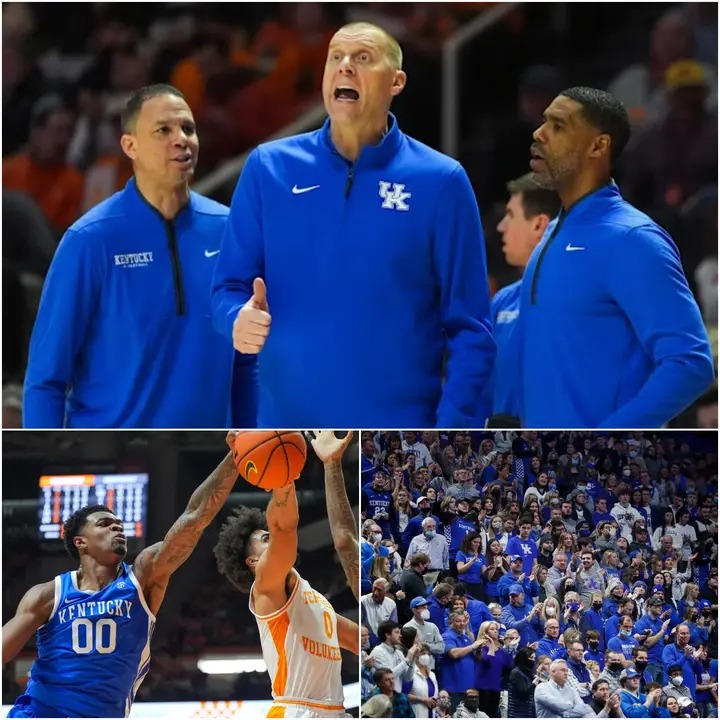
What began as another chapter in one of college basketball’s fiercest rivalries has now escalated into something far louder, sharper, and far more combustible.
Kentucky may have left the floor with an 80–78 win, but the real aftershock came minutes later, when Rick Barnes stepped in front of the microphones and delivered remarks that instantly reframed the night — and poured gasoline on an already raging Kentucky–Tennessee fire.
The Moment Everything Shifted
The final buzzer had barely faded when chaos erupted. Players exchanged words. Assistants rushed toward the scorers’ table. Officials worked to separate bodies and cool tempers as the arena buzzed with anger, disbelief, and raw emotion.
Most eyes stayed locked on the floor.
Barnes, meanwhile, was already shaping the narrative.
When he spoke, it wasn’t heated. It wasn’t shouted. And that, perhaps, made it more dangerous.
Barnes Didn’t Back Down — He Drew a Line
Barnes acknowledged the confrontation, but he refused to frame it as an isolated loss of control. Instead, he painted a broader picture — one that subtly challenged the tone, physicality, and accountability of the night.
“There’s competing hard,” Barnes said, “and then there’s allowing things to escalate when they shouldn’t.”
Without naming names, his words landed unmistakably close to home for the Kentucky Wildcats. Barnes suggested that the environment — physical play, unchecked emotions, and what he implied were uneven standards — created conditions where conflict became inevitable.
“It didn’t start at the end,” he added. “It built over time.”
That single sentence reverberated far beyond the press room.
A Rivalry Re-Ignited
Kentucky–Tennessee has never needed help staying intense. But Barnes’ comments did something different: they legitimized the anger felt by Tennessee fans while simultaneously daring Kentucky supporters to push back.
Within minutes, reactions exploded.
Tennessee fans viewed Barnes as standing up for his players — finally saying out loud what they felt had gone unsaid. Kentucky fans saw something else entirely: deflection, excuse-making, and a refusal to credit resilience under pressure.
Suddenly, this wasn’t just about one game.
It was about respect.
The Contrast With Kentucky’s Response
While Barnes spoke with pointed clarity, Kentucky head coach Mark Pope took a noticeably different approach earlier in the evening. Pope had framed the chaos as a warning to the sport itself — focusing on responsibility, restraint, and the fine line between intensity and misconduct.
Barnes, by contrast, leaned into accountability — but outwardly.
Where Pope warned about the future of college basketball, Barnes questioned what was allowed to happen in the present.
That contrast alone deepened the divide.
Why Barnes’ Words Matter So Much
This wasn’t postgame venting.
Barnes is one of the most respected voices in the sport — a veteran coach whose words carry weight with administrators, officials, and peers alike. When he speaks about standards, people listen.
By implying that the game’s tone had been permitted to spiral, Barnes effectively challenged the system around the game — officiating, enforcement, and oversight — without ever directly naming them.
And in rivalries, implication can be more explosive than accusation.
Fans Are Now Part of the Story
What happened next was inevitable.
Social media lit up. Message boards filled with frame-by-frame breakdowns of the physical play. Clips resurfaced. Old grudges were resurrected. Every hard foul became evidence. Every whistle — or lack of one — became ammunition.
Barnes’ comments didn’t cool emotions.
They validated them.
More Than a Game, Again
Kentucky still owns the win. Tennessee still owns the frustration.
But now both programs carry something heavier into the rest of the season: a rivalry freshly sharpened by words, not just whistles.
Rick Barnes didn’t scream.
He didn’t accuse.
He didn’t storm out.
He did something far more lasting.
He spoke carefully — and made sure everyone was listening.
And as Kentucky and Tennessee inevitably cross paths again, one thing is now certain:
This rivalry is no longer just physical.
It’s personal.




