


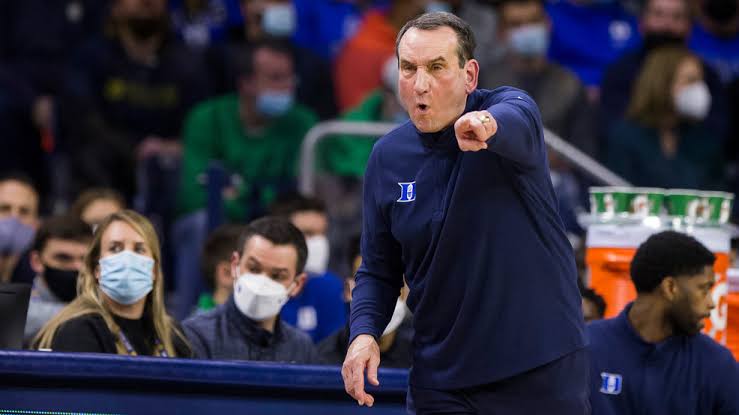
Some games fade because they lack meaning. Others disappear because they happened before highlight culture made immortality routine. And then there are games like Duke’s overtime win at Clemson on January 24, 1987 — a contest so wild, so consequential, and so revealing that it deserves far more attention than history has granted it.
At the time, it was simply another grueling road test in the ACC. In retrospect, it was something far bigger: a referendum on Duke basketball’s future, a survival test for a program still fighting the perception that it might be a fleeting success, and a snapshot of Mike Krzyzewski’s team learning how to win in chaos.
If you stumble upon the footage today — grainy, loud, imperfect — it feels like discovering buried treasure. Not because of polish or production value, but because of what the game represented. This was Duke basketball before banners stacked up, before national dominance became expected, before Cameron Indoor became a destination instead of a curiosity. This was Duke fighting to prove it belonged.
The Question That Hovered Over Duke Basketball
To understand why this game mattered, you have to go back a year.
In 1986, Mike Krzyzewski led Duke to the Final Four for the first time since 1978. The Blue Devils didn’t just arrive — they surged, all the way to the national championship game before narrowly losing to Louisville. It was exhilarating. It was validating. And it immediately created doubt.
Was Duke for real?
College basketball history is littered with programs that caught lightning in a bottle. Jim Valvano’s NC State shocked the world in 1983 but never returned to that stage. Bobby Cremins’ Georgia Tech had its moment, too. The ACC was ruthless, and sustaining success was far harder than achieving it once.
Duke entered the 1986–87 season with expectations but also skepticism. Four starters were gone. The roster was reshaped. The question wasn’t whether Duke could be good again — it was whether Duke could endure.
A Team Still Finding Itself
The 1986–87 Blue Devils were not a carbon copy of their Final Four predecessors. They were tougher in some ways, thinner in others, and still discovering their identity.
Senior guard Tommy Amaker was the anchor — steady, smart, unflappable. Sophomore Danny Ferry was the star, already emerging as one of the most complete players in the country. Around them was a mix of youth, role players, and competitors trying to define their place.
By late January, Duke was solid but not spectacular. Dangerous, but not dominant. And then came the road trip to Clemson.
Littlejohn Coliseum: Where Comfort Went to Die
Clemson’s Littlejohn Coliseum was not a friendly place in the 1980s. It was loud. It was physical. It was the kind of environment where games unraveled quickly if you weren’t mentally prepared.
Duke didn’t just walk into a hostile gym that night — it walked into a battle.
From the opening tip, the game was fast, physical, and relentless. Clemson refused to let Duke dictate tempo. Duke refused to wilt. The scoreboard climbed higher and higher as both teams traded punches.
By the time regulation ended, neither side had separated. The game went to overtime, already bordering on the absurd in both pace and tension.
Overtime Madness
Overtime did nothing to settle things.
Points came quickly. Fouls piled up. Every possession felt like it might be decisive — and then immediately wasn’t. Duke and Clemson exchanged leads, neither blinking, neither breaking.
With seconds remaining in overtime, Duke clung to a 105–103 lead. Clemson fouled Billy King, sending him to the free-throw line with a chance to extend the margin.
And then the night turned surreal.
The Rule That Changed Everything
College basketball had introduced a new rule that season: after a timeout, teams had 15 seconds to be back on the floor and in proper position at the free-throw line. Fail to do so, and possession would be forfeited.
It was a rule few had internalized. Fewer still had seen enforced in a moment like this.
Clemson called timeout. When play was set to resume, confusion reigned. Billy King, moments from sealing the game, wasn’t properly positioned in time.
Turnover.
The arena exploded. Duke’s bench was stunned. King was visibly shocked. A game that should have ended at the free-throw line was suddenly alive again.
One Last Stand
Clemson rushed the ball up the floor, sensing opportunity. Someone — believed to be Michael Tait — rose for the potential tying or winning shot.
Danny Ferry met it.
The block was clean, forceful, and symbolic. Ferry didn’t just erase the shot — he erased the doubt creeping in from the chaos moments earlier.
Duke secured the rebound, spread the floor, and played keep-away until Clemson finally conceded. The horn sounded. Duke escaped. Not comfortably. Not cleanly. But undeniably.
Why This Game Mattered More Than the Score
On paper, it was just a road win in January. In reality, it was a statement.
Duke had lost four starters from a Final Four team. It had entered a season full of questions. It had walked into one of the ACC’s toughest environments and survived one of the strangest endings imaginable.
Games like this are where programs are forged.
This wasn’t about style points. It wasn’t about rankings. It was about resilience. About composure. About learning how to win when nothing goes according to plan.
The Quiet Growth of a Power
By season’s end, the 1986–87 Blue Devils would reach the Sweet Sixteen. They didn’t repeat their Final Four run, but they proved something arguably more important: Duke basketball was not a fluke.
The Clemson game was part of that proof.
It showed that Duke could reload, not rebuild. That it could adapt to new roles and new pressures. That it could win ugly, win loud, win strange — and win anyway.
Those traits would become hallmarks of the program over the next three decades.
Why It’s “YouTube Gold” Today
In the age of instant highlights and curated memories, games like this often slip through the cracks. The footage isn’t pristine. The broadcast feels dated. The players aren’t yet legends in the public imagination.
But watch closely, and you’ll see the foundation of everything Duke would become.
You’ll see Coach K’s teams refusing to panic.
You’ll see stars making plays when it matters.
You’ll see role players surviving moments they shouldn’t.
You’ll see a program learning how to endure.
That’s why this game is YouTube gold. Not because it’s flashy — but because it’s honest.
The Bigger Picture
College basketball history isn’t only written in championships. It’s written in nights like this — in hostile gyms, in overtime chaos, in forgotten rule quirks, in defensive stops that don’t make montages.
Duke’s 1987 win at Clemson didn’t raise a banner. It didn’t define a season by itself. But it helped define a program.
It answered the question hanging over Durham after 1986: Was Duke here to stay?
The answer, delivered through 45 minutes of noise, confusion, and grit, was unmistakable.
Yes. And they were only getting started.
If you’d like, I can next:
Turn this into a Facebook long-read teaser
Add a modern Duke comparison
Or adapt it into a series-style “Forgotten Duke Classics” feature
Just say the word




