


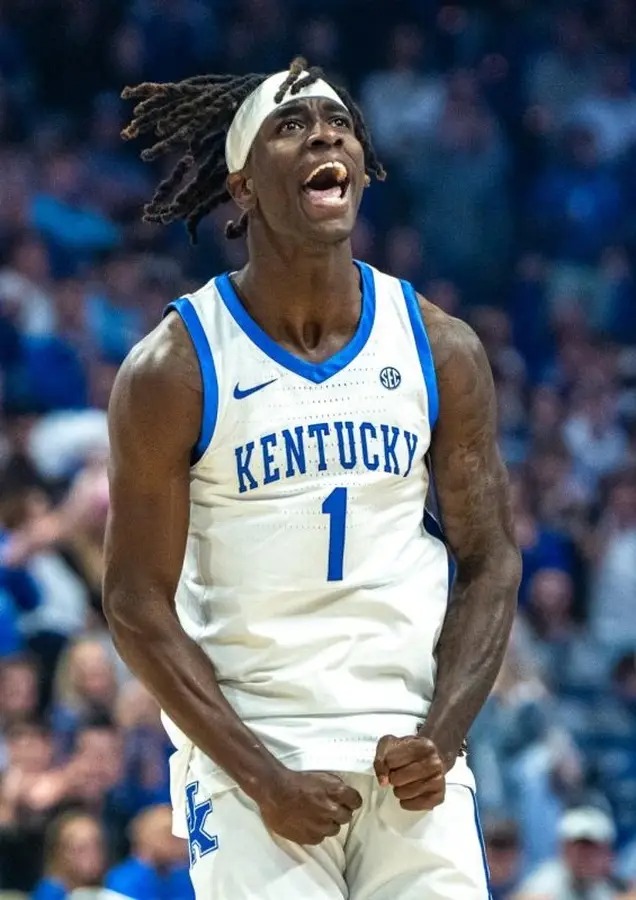
They Don’t Panic Anymore — And That Might Be the Most Dangerous Thing About Kentucky Right Now
There was a time earlier this season when double-digit deficits felt like a slow unraveling for Kentucky. Missed rotations turned into rushed shots. Confidence slipped. Crowds grew restless. And games drifted away before the Wildcats could steady themselves.
That version of Kentucky feels distant now.
Because over the last stretch, something unmistakable has changed — and opposing teams are starting to feel it. Three times recently, Kentucky trailed by double figures. Three times, the response wasn’t desperation. It was patience. Control. And then an eruption that flipped games on their head.
This team doesn’t just “play better” after halftime anymore. It comes alive.
The body language tells the story first. No frantic huddles. No forced hero ball. When Kentucky walks into the locker room down big now, there’s an almost unsettling calm — as if the deficit is simply information, not a verdict. And when they come back out, the pace shifts. Defensive pressure tightens. Ball movement sharpens. Suddenly, the same opponents who looked comfortable minutes earlier are rushing shots and arguing with officials.
It’s a pattern. And patterns become identities.
What’s made this evolution so compelling is that it hasn’t relied on a single star going nuclear every night. Instead, Kentucky’s comebacks have been collective — sparked by defense, fueled by effort, and sustained by trust. Loose balls get chased. Rotations get sharper. The offense stops hunting quick answers and starts finding good ones.
That’s not accidental.
Head coach Mark Pope has quietly emphasized adaptability all season, and now it’s paying off. Halftime adjustments aren’t about overhauling the plan — they’re about refining it. Where to apply pressure. Which matchups to exploit. When to slow the tempo and when to let it breathe. Kentucky’s second halves feel intentional, not reactive.
And the confidence is spreading.
Players on the bench stay engaged even when shots aren’t falling. Veterans calm the floor instead of pressing. Younger players don’t shy away from moments anymore — they lean into them. When Kentucky trims a 14-point deficit to eight, the reaction isn’t relief. It’s expectation.
That mindset shift may be the most dangerous development of all.
Because fans feel it too.
As the Wildcats roll back into Rupp Arena, there’s a growing sense that no lead against Kentucky is safe anymore — not for anyone. The early nerves that once rippled through the crowd during slow starts have been replaced by a different energy. A patient buzz. A belief that the game doesn’t really begin until the second half.
And now, that belief is waiting for the next visitor.
Texas Longhorns arrive with their own ambitions, but they’re stepping into an environment that has learned to thrive in chaos. Kentucky isn’t chasing perfection. It’s embracing resilience. And that makes preparation far more difficult for opponents, because game plans don’t account well for teams that refuse to fracture under pressure.
This Kentucky group has discovered something powerful: composure.
Not the quiet kind that fades into passivity — but the kind that explodes at the right moment. The kind that turns panic into pandemonium. The kind that transforms second halves into statements.
The wins are stacking. The momentum is real. And the swagger isn’t loud — it’s earned.
Tipoff is coming. The crowd is ready. And if history is any indication, Kentucky doesn’t need a fast start to make a loud point anymore.
They just need time.




