


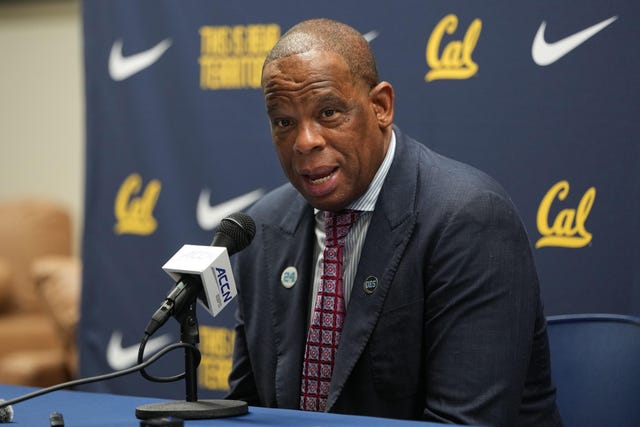
Sometimes, the most important coaching decisions aren’t about play calls or late-game adjustments. Sometimes, they’re about five names written on a whiteboard before the opening tip — and what those names quietly admit about where a team truly stands.
On Wednesday night against Notre Dame, North Carolina head coach Hubert Davis made another such admission.
For the third consecutive game — and the fourth time in the past five — Davis altered UNC’s starting lineup. This time, the change wasn’t subtle. Guard Jaydon Young earned his first career start as a Tar Heel, joining a reconfigured group that looked less like a long-term vision and more like a response to urgency.
The move was rooted in one place: Berkeley, California.
Just days earlier, UNC’s season appeared to be slipping away during a disastrous first half against Cal. But buried inside that road loss was one brief, revealing stretch — a lineup that sparked a furious comeback and nearly stole the game. On Wednesday, Davis made a clear decision: if that group was the only thing that worked, it deserved a longer look.
And in doing so, he revealed far more than a tactical tweak.
A Lineup Change Born From Desperation Not Experimentation
This was not a coach tinkering in December to find chemistry. This was a coach searching for answers in January.
UNC’s rotation instability has mirrored its inconsistent play. Defensive lapses, stagnant offensive stretches, and uneven energy have defined too many nights. For a program built on rhythm and identity, the constant lineup changes signal something deeper: the Tar Heels are still trying to figure out who they are.
Against Notre Dame, Davis turned to the only lineup that had recently shown life the group that ignited the comeback in Berkeley. That unit played faster, defended with purpose, and most importantly, competed.
Jaydon Young’s insertion into the starting five was symbolic. It wasn’t about seniority or preseason expectations. It was about energy, ball pressure, and accountability.
Davis didn’t frame the move as a benching or a demotion. But actions speak louder than press conferences.
Jaydon Young’s Start Was About Trust — and Tone
Young earning his first start wasn’t about stats. It was about tone-setting.
Throughout the season, Davis has preached effort, defensive buy-in, and toughness. Young, while still developing, has consistently brought those traits when on the floor. Starting him was a message — not just to the Notre Dame opponent, but to UNC’s own locker room.
The message was simple: roles are earned nightly.
From the opening possessions, Young’s presence helped UNC play with more pace and edge. He pressured the ball, moved without it, and made quick decisions. Even when the offense stalled early, the effort level didn’t.
That mattered.
UNC didn’t immediately pull away. In fact, the Tar Heels led by just one point at the first media timeout and only nine at halftime. But unlike previous games, the body language was different. The energy was there. The engagement was consistent.
And after halftime, everything changed.
The Second-Half Surge Validated the Decision
UNC erupted for 49 second-half points en route to a commanding 91–69 victory a game that ended far more lopsided than it began.
Ball movement improved. Defensive rotations sharpened. The Tar Heels attacked the paint with purpose rather than settling for contested jumpers. Eleven different players scored. The result was one of UNC’s most complete halves of the season.
It wasn’t just about shot-making. It was about connectivity.
The lineup Davis chose allowed UNC to switch defensively, play faster in transition, and create mismatches without forcing the issue. The offense breathed. The defense communicated. And the effort, so often questioned this season, never dipped.
That’s why the lineup change mattered.
Not because it was bold — but because it worked.
What the Change Really Reveals About UNC’s Season
The most telling part of Davis’ decision isn’t who started. It’s why he felt compelled to keep changing things.
UNC entered the season with expectations — internally and externally. Veteran leadership, a talented frontcourt, and a roster built to contend in the ACC were supposed to provide stability. Instead, inconsistency has forced Davis into reactive coaching mode.
Changing the starting lineup four times in five games is an admission that the original formula wasn’t producing the desired results.
That doesn’t mean the season is lost. But it does mean the margin for error has shrunk.
Davis is no longer coaching with patience. He’s coaching with urgency.
Flexibility Is a Strength — But It Comes With Risk
There is a fine line between adaptability and uncertainty.
On one hand, Davis deserves credit for being willing to adjust. Stubbornness ruins seasons. UNC’s willingness to pivot shows self-awareness and accountability from the coaching staff.
On the other hand, constant lineup changes can erode continuity. Players can press. Roles can blur. Confidence can waver.
That’s why the Notre Dame game matters beyond the scoreboard.
If this lineup — or at least its principles — becomes the foundation moving forward, it could stabilize UNC at the right time. If not, the revolving door may continue.
The Bigger Picture: Identity Over Personnel
What Davis ultimately revealed Wednesday night wasn’t a preference for one player over another.
He revealed what he values most right now:
Defensive effort
Ball movement
Energy
Accountability
Whoever embodies those traits will play.
Jaydon Young starting was proof that reputation doesn’t outweigh performance. It was a reminder that UNC’s culture still demands buy-in — even during turbulent stretches.
And perhaps most importantly, it showed that Davis is still searching — not for a savior, but for a group that plays the right way.
Final Takeaway
Why did Hubert Davis alter UNC’s starting lineup?
Because the season demanded it.
Because one brief stretch in Berkeley showed what this team could look like when effort and cohesion align.
And because at this point, the Tar Heels aren’t chasing perfection — they’re chasing identity.
Wednesday night didn’t solve everything. But it revealed something crucial: Hubert Davis isn’t afraid to disrupt comfort in order to find clarity.
And for UNC, that may be exactly what this season needs.




