


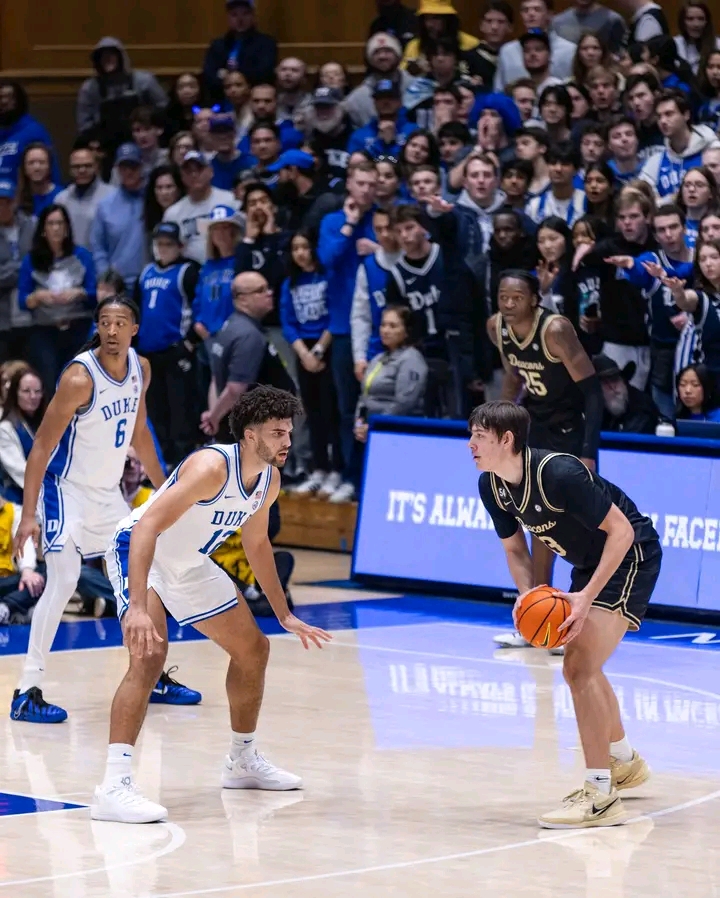
There are rematches — and then there are rematches that feel different. On paper, Duke vs. Louisville on Monday night looks like a simple sequel: same teams, same conference, same stakes. But beneath the surface, this one carries a completely different energy. Something has shifted since the first meeting. Lineups are healthier. Confidence has grown. Roles have evolved. And if you’re paying close attention, you can feel it — this game won’t be decided by what happened in January. It will be decided by what’s changed since then.
For Duke basketball, this rematch at Cameron Indoor Stadium isn’t just about extending a winning streak or protecting home court. It’s about answering a much bigger question: Has this team quietly leveled up since its last meeting with Louisville? And for the Cardinals, the return of one key player changes the entire equation — perhaps enough to flip the result.
Let’s break down why this rematch feels bigger than it looks, what’s changed since the first meeting, and why one key adjustment could decide everything.
A Look Back: What Happened the First Time
When Duke and Louisville first met on Jan. 6 at the KFC Yum! Center, the game unfolded in two very different halves.
Louisville controlled much of the first 20 minutes, using pace, physicality, and shot-making to build a nine-point halftime lead. Duke looked slightly out of rhythm, struggling to consistently generate clean looks and allowing Louisville to dictate tempo.
Then the second half happened.
Duke flipped a switch, outscoring Louisville 46–26 after halftime and cruising to an 84–73 win. The Blue Devils tightened defensively, sped up their ball movement, and exposed cracks in Louisville’s ability to handle sustained pressure. The margin wasn’t just about talent — it was about execution, depth, and discipline.
That game established a clear narrative: when Duke plays its brand of basketball, Louisville struggles to keep up.
But here’s the thing — Louisville wasn’t whole that night.
The Biggest Change: Mikel Brown Jr. Is Back
Everything about this rematch starts with one name: Mikel Brown Jr.
Brown Jr. missed the first meeting due to a lower back injury that sidelined him for eight games beginning in mid-December. His absence forced Louisville to reshuffle responsibilities, particularly in the backcourt. While the Cardinals stayed competitive, they lacked a true primary creator who could consistently break down Duke’s defense.
That problem no longer exists.
Brown Jr. returned recently and immediately reminded everyone why he’s so important. Against Virginia Tech, he poured in 20 points, added six assists, and looked comfortable controlling the flow of the offense. With him in the lineup, Louisville is 9–1 this season, compared to 4–4 without him.
He brings:
Elite ball-handling
Shot creation late in the clock
The ability to punish switches
A calm presence against pressure
In short, Louisville is a different team with Brown Jr. on the floor.
And that’s why this rematch matters.
How Louisville’s Offense Matches Up with Duke’s Defense
Statistically, Louisville enters the game with one of the most efficient offenses in the country. According to KenPom, the Cardinals rank seventh nationally in adjusted offensive efficiency, driven by a fast pace, smart shot selection, and a balanced scoring attack.
They thrive on:
Spacing the floor
Attacking closeouts
Scoring efficiently inside the arc
Creating open perimeter looks
Ryan Conwell leads the team at 19.5 points per game, shooting 37% from three. Isaac McKneely, Sananda Fru, and J’Vonne Hadley all average double figures, giving Louisville multiple options on any possession.
But here’s the challenge: Duke’s defense has evolved significantly since early January.
Duke’s Defensive Growth Is Real — and It Shows
If there’s one area where Duke has made the most noticeable jump over the past month, it’s on the defensive end.
The Blue Devils are no longer relying solely on length and athleticism. They’re communicating better, rotating faster, and — most importantly — staying disciplined.
Against Wake Forest, Duke held a high-powered offense in check, turning stops into transition opportunities and refusing to let the game become a shootout. That performance wasn’t an outlier; it was the continuation of a trend.
Duke now excels at:
Closing out under control
Switching without confusion
Contesting without fouling
Forcing opponents into late-clock decisions
The question isn’t whether Duke can defend — it’s whether they can do it consistently for 40 minutes against a healthier Louisville team.
Cameron Boozer: The Constant Louisville Still Hasn’t Solved
Every rematch features one unavoidable reality, and for Louisville, that reality is Cameron Boozer.
The freshman phenom is coming off a 32-point performance against Wake Forest, one of the most dominant offensive showings by a Duke player this season. His growth since the first Louisville game has been striking — not just in scoring, but in decision-making.
Boozer now:
Reads double teams faster
Punishes mismatches inside
Knocks down perimeter shots with confidence
Controls tempo when Duke needs a bucket
Louisville doesn’t have a single defender who can neutralize him one-on-one. If they send help, Duke’s shooters benefit. If they don’t, Boozer can take over stretches of the game.
That puts Louisville in a bind — and it’s one they haven’t solved yet.
The X-Factor: Duke’s Ball Movement vs. Louisville’s Pressure
This is where the game could truly be decided.
When Duke’s offense stagnates, Louisville becomes dangerous. The Cardinals thrive when they can speed teams up, force turnovers, and turn defense into offense.
But when Duke moves the ball side-to-side, attacks with purpose, and avoids careless passes, Louisville struggles to keep pace.
In the first meeting, Duke’s second-half surge was fueled by:
Crisp ball movement
Quick decisions
Relentless paint touches
That formula hasn’t changed — but Duke has gotten better at executing it.
If Duke keeps turnovers low and forces Louisville to guard for full possessions, the advantage swings heavily toward the Blue Devils.
Why Cameron Indoor Stadium Matters More This Time
There are tough road environments — and then there’s Cameron Indoor Stadium.
This will be Louisville’s first trip into Cameron with Duke playing at full confidence and riding momentum. The crowd will be engaged early, especially with a prime-time ESPN audience watching.
For a Louisville team still integrating Brown Jr. back into the rotation, that environment presents real challenges:
Communication gets harder
Defensive assignments break down faster
Momentum swings feel heavier
Duke thrives in these moments. Louisville must survive them.
Prediction: What Decides the Game
So who wins the rematch?
It comes down to one key change: Louisville’s improved backcourt vs. Duke’s evolved defense.
Mikel Brown Jr. will make this game closer than the first meeting. Louisville will score more efficiently and avoid some of the dry spells that doomed them in January.
But Duke’s balance, depth, and defensive growth — combined with Cameron Boozer’s star power — give the Blue Devils the edge.
Final Prediction: Duke 82, Louisville 74
Louisville keeps it competitive longer this time, but Duke’s ability to execute late, protect the ball, and feed off its home crowd ultimately decides everything.
This rematch won’t look like the first one but the result just might.




