


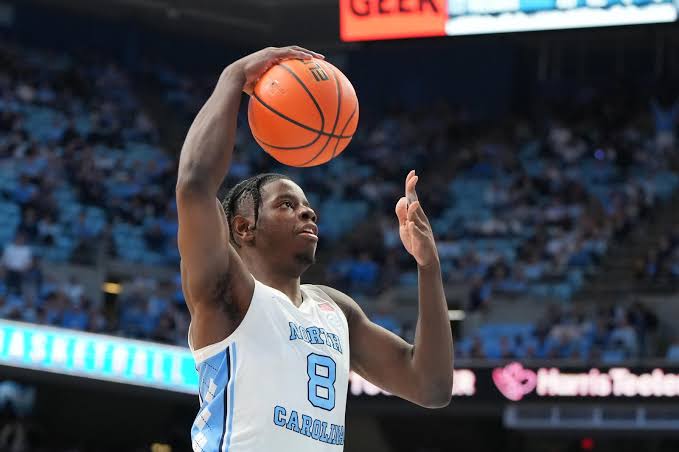
Some moments in sports are about points, rebounds, or wins. Others are about memory, motivation, and a little bit of poetic justice. For Caleb Wilson, Tuesday night against Notre Dame wasn’t just another game on the schedule — it was an opportunity to send a message, a reminder that some slights are never forgotten, and that some players keep receipts in ways that demand attention. By the final buzzer, UNC had secured a blowout victory, Wilson had dominated the stat sheet, and one particular former doubter — Notre Dame head coach Micah Shrewsberry — had received an unmistakable, personal reminder that some lessons take time, but they arrive in full force.
Caleb Wilson’s Dominance: Numbers Tell Part of the Story
The freshman forward’s performance against the Fighting Irish was textbook Wilson: efficient, aggressive, and multifaceted. Finishing with 22 points on 8-of-11 shooting, along with seven rebounds and five assists, Wilson did what elite players do — he controlled the game in multiple phases. His scoring wasn’t just prolific; it was timely. His rebounds and assists extended UNC’s pressure and ensured Notre Dame never found a rhythm.
Statistically, it was a statement game, but the true story went deeper than box scores. While many saw a routine dominance of an inferior opponent, Wilson saw something more: redemption, fueled by a specific slight from years past.
The Backstory: A Snub That Never Left His Memory
The reason behind Wilson’s extra fire? It dates back to 2024, when he was vying for a spot on the USA Basketball Junior National U18 team. According to Micah Shrewsberry — who was part of the decision-making process — Wilson was cut from the roster. That omission, though minor in the grand scheme, clearly left a mark on the young forward.
Shrewsberry himself revealed the interaction to the media during the ACC Coaches Call, describing a scene that might have gone unnoticed by anyone else:
“After the game, Wilson came up to me and said, ‘Thanks for motivating me.’”
Simple words. But loaded. For Wilson, they weren’t just thanks — they were a subtle declaration: he remembered the doubt, he used it as fuel, and now he had proven his worth on a stage that mattered.
Motivation in Sports: Everyone Operates Differently
Every athlete has a spark — a source of motivation that separates ordinary performers from extraordinary ones. For some, it’s fame. For others, it’s team success. For Caleb Wilson, it’s personal. Being doubted, overlooked, or cut is more than a minor disappointment — it’s ammunition.
Wilson’s response is a masterclass in psychological resilience. Instead of publicly criticizing those who doubted him, he internalized the setback, used it as motivation, and now lets his performances speak for themselves. Against Notre Dame, that fire was unmistakable.
The Game That Made It Personal
UNC’s blowout over Notre Dame might have seemed routine to casual fans, but for Wilson, the narrative was far more nuanced. Every drive to the basket, every open jumper, every defensive rebound carried a layer of personal meaning. While teammates and coaches celebrated a strategic victory, Wilson had his eyes on a secondary scoreboard — the one that tracks old doubters and overlooked opportunities.
His line — 22 points, 7 rebounds, 5 assists — reflected more than skill. It reflected intent. It reflected the kind of performance that says, “I remember everything.”
Shrewsberry’s Perspective: Admiration and Awareness

Micah Shrewsberry didn’t ignore Wilson’s message. In fact, he acknowledged it publicly. His recounting of Wilson’s postgame words — “Thanks for motivating me” — shows a unique blend of respect and recognition.
For a coach, having a former decision come back in the form of elite-level performance can be humbling. It’s a reminder that players evolve, adapt, and sometimes return with a vengeance — not out of malice, but out of determination to prove themselves.
Shrewsberry’s own words suggest he understood the significance: Wilson wasn’t merely celebrating a win; he was signaling growth, resilience, and focus.
The Psychological Edge: Turning Doubt Into Fuel
Caleb Wilson’s approach is a textbook example of the psychological edge in sports. High-level athletes often talk about “channeling doubt,” “playing with a chip on your shoulder,” or “using criticism as motivation.” Wilson embodies all three.
The cut from the USA Basketball U18 team in 2024 might have been a minor moment in the grand narrative of his career, but Wilson’s memory and preparation turned it into a driving force. Each practice, each game, and each high-pressure moment has been informed by the desire to respond — not with words, but with performance.
From College Standout to Top Draft Prospect
Wilson’s story isn’t just about revenge or pride — it’s about trajectory. His current standing positions him as a potential top-five pick in the upcoming NBA Draft. Scouts and analysts have noted his versatility, basketball IQ, and ability to impact multiple facets of the game — scoring, rebounding, assisting, and defending.
The Notre Dame game was an example of all those qualities in action, but more importantly, it demonstrated his mental acuity and competitive spirit. The fact that he channels past disappointments into fuel makes him a more complete and formidable prospect.
Team Dynamics: How Teammates Benefit From Wilson’s Fire
A player driven by personal motivation can often inspire teammates. Caleb Wilson’s intensity, focus, and determination have a ripple effect on the UNC roster. Teammates see his energy, his preparation, and his ability to execute under pressure — and they respond in kind.
Against Notre Dame, UNC’s collective performance reflected more than strategic execution. It reflected a culture of accountability and focus, amplified by leaders like Wilson who turn setbacks into collective motivation.
Beyond the Box Score: The Symbolism of Wilson’s Message
When Caleb Wilson approached Shrewsberry to deliver his simple line — “Thanks for motivating me” — it wasn’t just about a game, or even about points and rebounds. It was a statement about memory, preparation, and timing.
Athletes remember slights. Coaches make decisions based on countless variables. Sometimes, the smallest decisions reverberate for years. Wilson’s moment of clarity shows how sports can be about more than physical skill — it’s about mental strength, long-term planning, and strategic patience.
A Lesson in Patience and Preparation
Wilson didn’t rush to prove anything immediately. He waited, developed, and matured as a player. By the time the stage arrived — UNC vs. Notre Dame — he was ready. Not just to win, but to make a statement.
It’s a lesson for young athletes everywhere: setbacks aren’t permanent, and recognition isn’t always immediate. Preparation, focus, and belief in one’s own ability can transform early disappointments into future triumphs.
What This Means for the Rest of UNC’s Season
Wilson’s performance sends signals beyond a single game. For opponents, it’s a warning: underestimating UNC, or any player on this roster, can be costly.
For the Tar Heels, the psychological boost is invaluable. Having a player capable of taking personal slights and turning them into team-focused results elevates the entire program. It reinforces the message that every player is accountable, prepared, and ready to step up when opportunity strikes.
The Bigger Picture: Legacy and Motivation
Caleb Wilson’s approach to motivation reflects a broader truth in sports: how you respond to doubt defines your trajectory. Small decisions — like being cut from a national team — can either be remembered as failures or leveraged as fuel. Wilson chose the latter.
His message to Micah Shrewsberry was clear: past doubts don’t define you. Your reaction does.
And as Wilson continues to dominate at UNC and attract attention from NBA scouts, that message only grows more powerful. It’s a reminder that perseverance, focus, and mental fortitude often matter as much as raw talent.
Final Thought
Caleb Wilson’s night against Notre Dame was about more than stats, wins, or accolades. It was about memory, motivation, and making sure the people who doubted him never forget. By delivering 22 points, seven rebounds, and five assists — and by personally addressing the coach who once cut him — Wilson reminded everyone that sports are as much about mind and heart as they are about skill.
In doing so, he set a tone for the rest of the season: UNC is dangerous, Wilson is driven, and any slight — no matter how long ago — might just become the spark that ignites greatness.




