


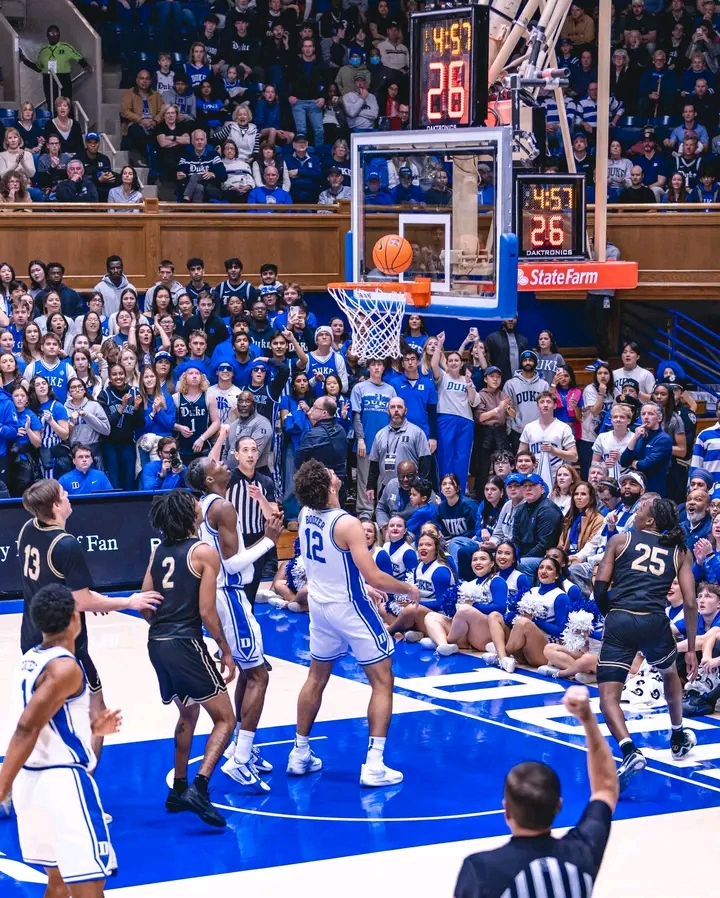
If you thought Duke basketball was just another powerhouse program on the court, think again. There’s a reason fans nationwide tune in whenever the Blue Devils take the floor, and the numbers don’t lie. It isn’t just about wins, losses, or high-profile recruits — it’s about spectacle, storylines, and the way Duke has captured the imagination of a national audience like few programs ever have. By mid-January, the Blue Devils weren’t just dominating the ACC standings; they had become the second-most watched team in men’s college basketball, a position that speaks to influence, star power, and the kind of media attention that transcends the sport itself. Only one team ranks above them in viewership — a hint at just how elite this level of attention really is.
Why Duke’s Viewership Is So High
It’s tempting to think that high TV ratings come automatically when a team is winning. But in college basketball, the factors that drive viewership are more complex. Duke’s ranking as the second-most watched team in men’s college hoops isn’t just a reflection of its 18-1 record. It’s the result of consistent national exposure, marquee matchups, and star athletes who are compelling enough to draw viewers even when the stakes are not championship-level.
According to Nielsen, as of Jan. 18, Duke averaged huge numbers across multiple high-profile games. Their clash against Arkansas on Thanksgiving Day drew 6.81 million viewers on CBS, making it the most-watched regular-season college basketball game in more than three decades. That single statistic is eye-popping and underscores the nationwide curiosity about the Blue Devils — and the broader fascination with what they represent in college basketball.
High-Profile Matchups Fuel Interest
Duke’s schedule has been designed to generate interest as well as wins. Beyond their ACC contests, the Blue Devils have faced several top-tier teams that Nielsen reports as among the highest-rated games of the season:
Arkansas (Ranked #3 in Nielsen ratings) – Thanksgiving Day, 80-71 victory
Kansas (Ranked #6) – Madison Square Garden matchup
Tennessee (Ranked #9) – Preseason exhibition
These games are more than just wins on the stat sheet; they are events that attract casual fans, diehard followers, and media coverage that amplifies viewership. Big-name opponents, iconic venues, and high-stakes narratives all contribute to why the Blue Devils are so consistently watched.
The Star Factor: Cameron Boozer
No discussion of Duke’s national appeal is complete without mentioning freshman sensation Cameron Boozer. Averaging 23.7 points per game, Boozer leads the ACC in scoring, has recorded nine double-doubles, and has scored 30 or more points in four games.
Boozer isn’t just a high-efficiency scorer; he’s a highlight machine. Every crossover, every rim-rocking dunk, and every clutch shot adds to the spectacle that drives viewership. Fans tune in not just to watch Duke win, but to watch Boozer perform at a level that seems destined for the NBA.
Beyond Boozer, the Blue Devils’ roster is filled with talent capable of producing electrifying moments, whether it’s a fast-break alley-oop, a deep three, or a defensive stop that swings momentum. When you combine elite players with national exposure, it’s no wonder the ratings reflect such intense interest.
ACC Rivalries Amplify the Audience
Duke’s position as a national viewership powerhouse is also tied to its conference rivalries. The Blue Devils share long-standing battles with teams like North Carolina, Louisville, and Virginia, games that are inherently story-driven.
North Carolina – Duke’s most iconic rivalry, scheduled for Feb. 7 and March 7, ensures massive interest every season
Louisville – Traditional ACC battles that carry both history and prestige
Virginia Tech and other ACC teams – Consistently competitive matchups that maintain the audience’s engagement
Rivalries in college basketball aren’t just about wins; they’re about narrative. Fans are drawn to the storylines — history, drama, and bragging rights — and Duke has mastered the art of maintaining those narratives.
How Duke Compares to Other Programs in Viewership
According to Nielsen’s mid-January data, the top 10 most-watched teams in men’s college basketball include:
Michigan State – Only program ahead of Duke
Duke – Second-most watched
Arkansas
North Carolina – Only other ACC team in the top 10
Kentucky
Kansas
UCLA
Indiana
Wisconsin
This list highlights Duke’s unique position: the ACC’s flagship program in terms of national viewership, outpacing even storied programs like Kentucky and UCLA. The only team consistently drawing more attention is Michigan State, reflecting both the Spartans’ historic brand and national fanbase.
It’s worth noting that Duke’s viewership isn’t seasonal luck — it’s sustained attention built over decades. Generations of fans have grown up watching Coach K and now watching the new era under his successors, contributing to an audience that remains both loyal and curious about every new chapter.
The Perfect Storm: Winning, Star Power, and National TV
Duke’s ratings success isn’t accidental. It’s the product of three converging factors:
Winning consistently – The Blue Devils sit at 18-1, perfect 7-0 in ACC play, and have high-profile wins that validate national attention.
Star power – Players like Cameron Boozer aren’t just athletes; they’re personalities and highlight-reel creators.
National exposure – CBS, ESPN, and other national broadcasters have ensured that Duke’s games are accessible to millions, elevating curiosity and anticipation.
When these elements align, you don’t just see a program that’s winning games. You see a cultural phenomenon that becomes appointment viewing.
Mid-Season Momentum and What Lies Ahead
As of mid-January, Duke had already faced some of its toughest competition. Their only loss came against Texas Tech on Dec. 20, a reminder that even the best teams encounter challenges. But that solitary blemish hasn’t dulled national interest — if anything, it has heightened it.
Looking ahead, Duke’s schedule remains compelling:
Jan. 26: Host Louisville
Jan. 31: Travel to Virginia Tech
Feb. 7 & Mar. 7: Iconic rivalry matchups with North Carolina
Every game is a potential ratings draw, and the stakes only grow as the season progresses. With each victory, the narrative builds: Who can challenge the Blue Devils? Can they maintain their unbeaten ACC record? Will Boozer continue to dominate? Questions like these keep fans glued to screens.
How Duke Maintains Its Appeal
Maintaining national interest requires more than wins. Duke’s program has built a brand that blends:
Tradition and legacy – From Coach K’s era to the present, Duke represents a certain prestige in college basketball.
Highlight-worthy basketball – Fast-paced, exciting, and skill-heavy play keeps casual viewers engaged.
Media savviness – National broadcasts, social media engagement, and accessible storylines turn games into events.
Recruitment narratives – High-profile freshmen and NBA-bound prospects always generate curiosity, not just among fans, but analysts, scouts, and casual observers.
This combination ensures that Duke isn’t just watched — it’s discussed, debated, and dissected across every platform.
Why Fans Can’t Look Away
Duke basketball’s high Nielsen ratings reflect more than numbers — they reflect human curiosity. Fans want to see:
Can the team maintain its dominance in the ACC?
How will Cameron Boozer and other stars perform under pressure?
What happens in marquee matchups, like the upcoming games against North Carolina or Louisville?
How does Duke handle adversity and testing road environments?
These storylines transcend statistics. They make Duke basketball an event, not just a sport.
The Blue Devils’ Cultural Impact
It’s important to recognize that Duke’s national influence isn’t confined to the court. The program’s appeal stretches into social media trends, highlight reels, recruiting buzz, and college basketball culture at large. Every game, every performance, and every broadcast contributes to a larger narrative that keeps viewers engaged long after the final buzzer.
Programs may have stars, wins, or historic prestige — but few combine all three in a way that consistently draws 6–7 million viewers per marquee game, as Duke has demonstrated.
Looking Ahead: Maintaining the Momentum
Duke’s challenge now is maintaining both performance and attention. Success brings scrutiny, and as the season progresses, every loss or stumble will be magnified. But the Blue Devils have demonstrated that they can handle pressure — both on the court and in the court of public opinion.
Maintaining unbeaten ACC play, high-profile victories, and star performances like those from Boozer will be crucial not only for championships but also for sustaining the national curiosity and media attention that makes Duke basketball a perennial must-watch program.
Final Thought
Duke basketball’s ranking as the second-most watched team in men’s college hoops isn’t accidental. It’s the product of sustained excellence, star power, and an ability to captivate audiences across the country. With marquee matchups, elite players, and a history steeped in prestige, the Blue Devils have created a perfect storm of curiosity, anticipation, and entertainment.
As the season unfolds, one question remains: can Duke maintain this momentum both on the court and in the hearts of millions of viewers — or will another team capture the national spotlight? One thing is clear: when Duke plays, the country is watching.




