


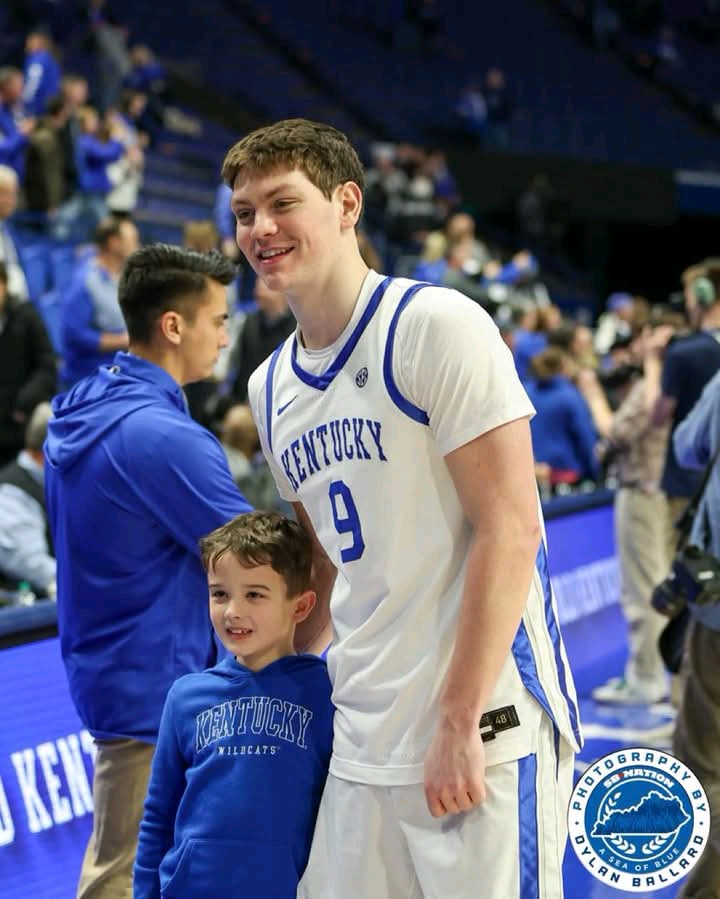
There’s something poetic about college basketball when it gets it right. On a loud night in Fayetteville, under hostile lights and relentless noise, Trent Noah reminded everyone why this sport still runs on heart as much as hype. The kid from Harlan—the one who didn’t fit the old recruiting blueprint—stepped onto the floor and delivered a performance that felt bigger than the box score. Nine points. Seven rebounds. Nineteen gritty minutes. And most importantly, a Kentucky win.
Noah’s story doesn’t start with five-star rankings or viral mixtapes. It starts in eastern Kentucky, where gyms are smaller, crowds are personal, and basketball is stitched into daily life. Harlan County breeds toughness, not shortcuts. Noah carried that identity with him long before he ever put on a Kentucky uniform, even when the road to Lexington wasn’t exactly rolled out for him.
For years, Kentucky fans were conditioned to expect one-and-done phenoms and McDonald’s All-Americans. Under the previous regime, players like Noah—hard-nosed, developmental, blue-collar wings—often fell outside the recruiting lens. He wasn’t the flashiest prospect. He wasn’t built for Instagram hype. But what he did have was feel for the game, defensive instincts, and a motor that never shuts off.
Mark Pope saw something different. Where others saw limitations, Pope saw fit. Fit for his system. Fit for the culture he wanted to build. Fit for a Kentucky team that needed workers as much as scorers. That belief paid dividends in Fayetteville, where Noah didn’t just survive—he mattered.
In nineteen minutes, Noah made every second count. His nine points came within the flow of the offense, timely and unselfish. No forced shots. No hero ball. Just smart basketball. Cuts when defenders slept. Confidence when the ball swung his way. He didn’t look rushed, and he didn’t look overwhelmed, which says everything about his preparation and mindset.
The seven rebounds might have been even louder. Noah crashed the glass like someone who understood what was at stake. Long rebounds. Traffic rebounds. Momentum-stopping rebounds. Against a physical Arkansas team, he battled bigger bodies and came away with possessions that don’t always make highlight reels but win road games in the SEC.
Defense, though, is where Noah quietly made his biggest mark. He stayed disciplined, fought through screens, and made life uncomfortable for Arkansas scorers. No gambling. No freelancing. Just sound positioning and effort. Coaches love that kind of reliability, especially in hostile environments where one mistake can flip a game.
This wasn’t Noah’s first meaningful contribution in a Kentucky uniform, either. Throughout the season, he has answered the call whenever injuries thinned the rotation. While others cycled in and out of availability, Noah stayed ready. His willingness to accept any role—starter, bench spark, defensive stopper—has given Kentucky stability during one of the most injury-riddled stretches in recent program history.
What makes Noah’s rise even more impressive is how he’s grown within Pope’s system. Early in the year, he played cautiously, feeling his way through minutes. Now, he plays with trust. Trust in the offense. Trust in his teammates. Trust from the coaching staff. That evolution doesn’t happen without hours of film study, practice reps, and a relentless desire to improve.
There’s also something symbolic about Noah thriving when Kentucky needs toughness the most. With stars sidelined and rotations constantly shifting, the Wildcats have leaned on players willing to do the dirty work. Noah embodies that mentality. He doesn’t need plays drawn for him to impact the game. He finds his value in the margins—extra possessions, defensive stops, smart decisions.
For fans, Noah represents a connection to Kentucky basketball’s roots. He’s not just playing for the state—he’s playing from it. Every rebound, every loose ball, every hard-earned point feels personal. In a program often defined by national talent, Noah is a reminder that local pride still matters.
The Fayetteville win may end up being remembered for bigger moments or flashier performances, but Noah’s contribution was foundational. Road wins in the SEC are built on composure, effort, and players who don’t flinch when the crowd gets loud. Noah didn’t flinch. He leaned in.
And that’s where the irony hits hardest. The kid who once didn’t fit the mold is now helping define a new one. Under Pope, Kentucky basketball is rediscovering the value of players who grow, grind, and give the program an identity beyond recruiting rankings.
Trent Noah won’t dominate headlines every night. He may never be the face of the program. But nights like Fayetteville prove his importance. When the game tightened, when bodies were sore, and when Kentucky needed someone to simply make winning plays, Noah delivered.
From Harlan to Fayetteville, from overlooked to undeniable, Trent Noah’s journey is still being written. But one thing is clear: Kentucky basketball is better because he’s part of it. And sometimes, the kids who weren’t supposed to be here end up meaning the most.




