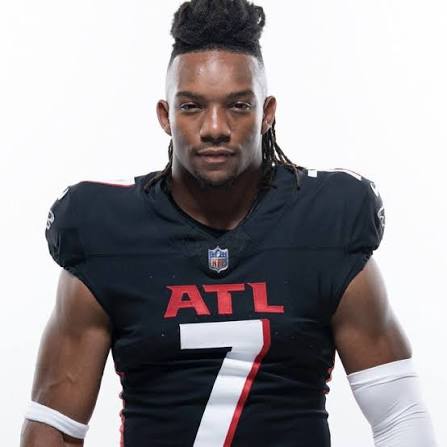
At first glance, it doesn’t quite add up. The Pittsburgh Steelers, a franchise defined by defensive identity, positional discipline, and long-term roster planning, aren’t supposed to be shopping for a running back in the first round — not in today’s NFL, and not with other needs staring them in the face. And yet, one intriguing projection has reintroduced a fascinating question: what happens when rare talent collides with unexpected opportunity? According to a new mock draft, Pittsburgh may be staring directly at that scenario, with an explosive, production-heavy playmaker potentially falling right into its lap.
In her latest 2026 NFL mock draft for NFL.com, analytics expert Cynthia Frelund projects the Steelers to select Notre Dame running back Jeremiyah Love with the No. 21 overall pick. It’s a pick that raises eyebrows, sparks debate, and invites deeper examination — not because Love lacks credentials, but because the Steelers traditionally don’t draft this way. And yet, when elite production, modern versatility, and roster context intersect, rules tend to bend.
A Mock Draft That Forces the Conversation
Frelund’s projection isn’t framed as a reach or a luxury pick. It’s presented as a value play rooted in analytics, roster fit, and offensive upside — the type of decision that feels unconventional until it suddenly makes perfect sense.
“Love’s potential impact in both the pass and run game is very high — like Bijan Robinson levels,” Frelund wrote. “For him to have a successful rookie season (and one that looks something like Bijan’s impressive 2025 campaign), he’ll need a strong O-line that will allow him to adjust to NFL speed and concepts. Pittsburgh had my 10th-best OL this past season.”
That comparison alone demands attention. Bijan Robinson didn’t just enter the NFL as a talented running back — he entered as a position-defining offensive engine. To invoke that name isn’t casual praise. It signals belief in Love’s ceiling, not just his college résumé.
And that résumé is overwhelming.
Jeremiyah Love’s Final College Statement
By the time Jeremiyah Love wrapped up his career at Notre Dame, there was little left for him to prove at the collegiate level.
Love finished his final season with 1,652 yards from scrimmage, including 1,372 rushing yards, while scoring an astonishing 21 total touchdowns — 18 of them on the ground. He wasn’t simply productive; he was dominant, consistent, and game-altering.
What separates Love from many college running backs is how he accumulated those numbers. He wasn’t a volume-only runner thriving on sheer carry totals. He was explosive. He was efficient. He was decisive. And he was dangerous in space.
Notre Dame leaned on Love in every conceivable situation: early downs, goal-line work, passing situations, and late-game clock control. Defenses knew where the ball was going — and still struggled to stop it.
In a draft class loaded with offensive skill players, Love stands out not just as the best running back available, but as one of the most complete offensive prospects overall.
Why Love Is Viewed as the Best RB in the Class
Calling Love “easily the best running back in this year’s class” isn’t hyperbole — it’s consensus.
Scouts rave about his vision, his burst through the hole, and his ability to change direction without losing speed. He possesses elite contact balance, consistently bouncing off initial defenders and turning modest gains into chunk plays. His acceleration allows him to punish poor angles at the second level, and his patience behind the line of scrimmage mirrors traits seen in top NFL backs.
But what truly elevates Love is his three-down capability.
He’s a legitimate pass-catcher out of the backfield, comfortable running routes, tracking the ball, and creating yards after the catch. He’s also a willing and capable pass protector — a trait that often determines how quickly young running backs earn trust at the NFL level.
Those traits align perfectly with the modern NFL, where running backs must do more than just run between the tackles.
Pittsburgh’s Running Back Room: Stable, but Not Settled
On paper, running back doesn’t scream “first-round need” for the Steelers. But dig deeper, and the picture becomes more nuanced.
Kenneth Gainwell is set to hit free agency, leaving uncertainty about his long-term role in Pittsburgh. Kaleb Johnson’s future remains murky, with legitimate doubts surrounding his viability as a long-term contributor. Jaylen Warren remains under contract and has proven himself as a productive, high-energy player — but even his biggest supporters acknowledge he thrives best as part of a rotation rather than as a 20-plus-touch workhorse.
In other words, the Steelers have contributors — not a cornerstone.
That distinction matters.
If Love is available at No. 21, Pittsburgh wouldn’t be drafting for need. They’d be drafting for impact. And that’s when front offices often surprise people.
The Steelers’ Offensive Identity Is Evolving
For decades, the Steelers’ offense has revolved around physicality, ball control, and minimizing mistakes. While that identity hasn’t disappeared, the modern NFL has forced evolution — and Pittsburgh has quietly been moving in that direction.
Adding a dynamic, explosive running back like Love would accelerate that shift.
Love’s ability to create mismatches as a receiver would stress defenses horizontally, opening space for play-action concepts and intermediate passing lanes. His explosiveness would punish light boxes, forcing defenses to respect the run in ways Pittsburgh hasn’t consistently commanded in recent years.
In short, Love wouldn’t just add production — he’d change how defenses prepare for the Steelers.
The Offensive Line Factor
One reason Frelund’s projection holds weight is her emphasis on offensive line play. According to her analytics, Pittsburgh fielded the 10th-best offensive line last season — a crucial detail when evaluating a running back’s transition to the NFL.
Love’s skill set thrives behind competent blocking. Give him a crease, and he’s gone. Allow him time to read leverage, and he’ll exploit it. Pittsburgh’s line isn’t elite, but it’s stable enough to support a rookie back with immediate impact.
That infrastructure matters. Not every team picking in the 20s can offer it.
Why Love Might Not Actually Fall to No. 21
Here’s the tension at the heart of this projection: many around the league are skeptical Love will still be on the board.
Running backs may not dominate the top of drafts like they once did, but elite prospects still rise. Teams searching for offensive identity, young quarterbacks needing support, or immediate playmakers could view Love as too valuable to pass up.
If Love reaches the Steelers’ pick, it likely means teams ahead prioritized quarterbacks, wide receivers, or offensive linemen — pushing him down the board despite his talent.
That possibility is what makes this projection so compelling.
The Value vs. Philosophy Debate
Even if Love is available, Pittsburgh would have to wrestle with philosophy.
Ideally, the Steelers might prefer to address wide receiver or quarterback at No. 21. Those positions traditionally offer greater long-term value and align more closely with modern roster-building trends.
But draft boards don’t operate in a vacuum.
If Love is clearly the best player available — by a significant margin — passing on him becomes harder to justify. Elite talent has a way of bending even the most disciplined draft strategies.
And Love isn’t just talented. He’s explosive. He’s versatile. He’s ready.
Three-Down Backs Still Matter — When They’re Special
The NFL has moved away from drafting running backs early — but not entirely. What it’s moved away from is drafting replaceable running backs early.
Love doesn’t fit that category.
His pass-blocking ability keeps him on the field in high-leverage situations. His receiving skills allow coordinators to disguise formations. His explosiveness creates game-breaking moments without needing perfect circumstances.
Those traits are rare — and valuable.
A Pick Fans Would Debate, But Understand
If the Steelers selected Love at No. 21, the reaction would be mixed — at first.
Some would argue positional value. Others would point to roster priorities. But once Love touched the ball, those debates would fade quickly.
Pittsburgh’s offense has lacked consistent explosiveness. Love provides it instantly. He doesn’t need development time to contribute. He doesn’t require a niche role. He fits everywhere.
And for a franchise that prides itself on stability, drafting a player who can immediately elevate the offense while offering long-term upside isn’t reckless — it’s calculated.
Final Verdict: Unlikely, But Fascinating
Are the Steelers expected to take a running back in the first round? No.
Would they be justified if Jeremiyah Love somehow falls to them? Absolutely.
Elite prospects don’t always align with pre-draft expectations. When they fall, smart teams adapt. Love represents the kind of talent that forces adaptation — the kind that changes games, shapes schemes, and redefines offensive ceilings.
If Pittsburgh finds itself on the clock with Love still available, the decision won’t be about tradition or trends.