


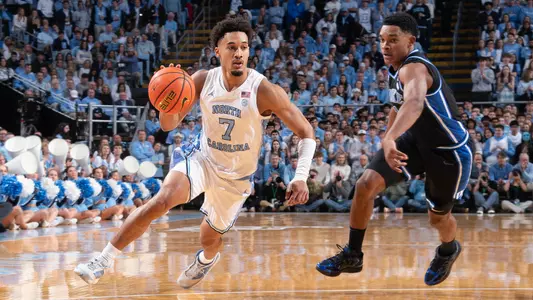
For nearly 38 minutes inside the Dean E. Smith Center, the story felt stubbornly familiar. Duke controlled the tempo, silenced runs before they could ignite, and looked every bit like the composed, top-five team built to survive hostile territory. North Carolina chased, clawed, and countered—but never quite caught up. Then, in the sliver of time that college basketball reserves for immortality, everything flipped. One possession. One read. One shot that turned tension into bedlam and etched a new chapter into the sport’s fiercest rivalry. That is the why behind Seth Trimble’s near buzzer-beater—and why this UNC win over Duke will live far beyond the box score.
A rivalry that never needs help—yet always finds a new angle
UNC–Duke doesn’t require marketing or mythology. It arrives fully formed, carrying decades of grudges, legends, and moments that refuse to fade. Every meeting promises theater, but the best ones find a way to surprise even the most jaded fans. This was one of those nights. Not because North Carolina led wire to wire—it didn’t. Not because the Tar Heels dominated—they couldn’t. It was unforgettable because UNC endured, waited, and trusted that persistence would finally force a crack. When it did, Trimble was ready.
The long chase: 38 minutes of pressure
The Tar Heels trailed for nearly the entire game, staring at deficits that never ballooned beyond reach but never quite vanished either. Duke’s discipline on both ends was suffocating: smart shot selection, calm execution, and timely answers whenever UNC threatened momentum. For the Blue Devils, it looked like the kind of road performance that wins championships—quiet the crowd, control the pace, and lean on poise.
UNC, meanwhile, leaned on resolve. There was no panic, no wholesale overhaul midstream. The Tar Heels stayed attached defensively, trusted rotations, and refused to let Duke dictate every decision. Each stop felt like a small victory. Each basket felt like permission to keep believing.
Caleb Wilson sets the tone
If Trimble authored the ending, Caleb Wilson wrote the middle chapters that made it possible. His 23 points were not just numbers; they were lifelines. When UNC needed a steadying presence, Wilson delivered with composure—attacking mismatches, finishing through contact, and knocking down shots that kept the Tar Heels close enough to dream. He absorbed pressure and returned it with confidence, the kind that seeps into teammates and tells a gym full of fans that the night isn’t over.
Wilson’s impact also went beyond scoring. He commanded attention, drawing defenders and creating the spacing UNC needed late. Duke had to account for him, and that subtle gravity mattered when the final possession came down to one clean look.
Defense as belief
UNC’s comeback didn’t start with a miracle; it started with stops. Over the final stretch, the Tar Heels tightened their grip—closing out harder, switching smarter, and forcing Duke into tougher looks. The energy inside the Smith Center rose with each defensive stand, the sound swelling like a wave that refused to break.
This is the hidden “why” behind Trimble’s shot: defense bought time. Defense built belief. Defense turned desperation into opportunity. Without those possessions, there is no final chance, no chaos, no history.
The moment that mattered
With the clock bleeding down and UNC still behind, the Tar Heels had one final chance to rewrite the night. The ball found Seth Trimble—steady, composed, unafraid. There was no hesitation that screamed panic, no rushed motion that betrayed nerves. Just balance, rhythm, and release.
The shot fell with less than a second remaining. Pandemonium followed.
At first glance, it looked like a true buzzer-beater—the kind that ends games and sends fans into instant celebration. The horn hadn’t sounded yet, though. 0.4 seconds remained. Enough time, technically, for one more play. Enough time to pause joy and test nerves.
Chaos, twice
The court flooded. Then it cleared. Then it flooded again.
UNC fans stormed Roy Williams Court in an explosion of relief and disbelief, only to retreat briefly when officials reset the game for one final Duke attempt. When that last chance came and went, the celebration resumed—louder, freer, and somehow more cathartic. Two storms for one shot. Two releases for weeks of tension.
It was messy. It was emotional. It was perfect.
Why Trimble’s shot hit different
UNC has known big shots. The program’s history is a catalog of iconic moments. What separates Trimble’s near buzzer-beater is context. This wasn’t a game the Tar Heels controlled. It wasn’t a slow build to inevitability. It was survival—minute after minute—until opportunity finally knocked.
Trimble didn’t just make a shot. He validated belief. He rewarded patience. He turned a night of frustration into a memory that will replay for years whenever the rivalry needs reminding of its magic.
And then there’s the timing. UNC’s first lead of the game arrived at the last possible second. That detail alone elevates the moment from dramatic to legendary.
Duke’s side of the heartbreak
For Duke, the loss stings precisely because of how well the Blue Devils played for so long. They executed, they led, and they controlled. In rivalry games, however, control is fragile. One missed rotation, one contested shot that finds nylon, and a night slips away.
Duke had answers most of the evening. They just didn’t have one for the final question. That’s the cruelty of college basketball—and the reason fans keep coming back.
Coaching, composure, and trust
Moments like this don’t happen by accident. UNC’s staff trusted its players to stay the course. There were no rash gambles, no abandonment of identity. The Tar Heels trusted their defense, trusted their leaders, and trusted that the right look would appear.
Trimble’s confidence was not accidental. It was cultivated. Players shoot freely in moments like this when they know the staff believes in them and teammates will live with the result. That trust showed in the calm release and the immediate eruption that followed.
A Smith Center night for the ages
The Smith Center has hosted legends, championships, and unforgettable nights. This one joins that lineage not because of dominance, but because of defiance. The building shook not from expectation, but from release—the roar of a crowd that waited all night for a reason to explode.
For students and longtime fans alike, this game will be remembered as a reminder of why the rivalry still matters in an era of constant change. Because even when trends shift, the essentials remain: heart, timing, and a gym ready to erupt.
The ripple effects
Beyond the emotion, the win carries weight. It bolsters UNC’s résumé, strengthens confidence, and reinforces the idea that no game is over until it is truly over. For Duke, it’s a lesson in margins—a reminder that closing on the road against a rival requires perfection.
For the ACC and college basketball at large, it’s a gift: a moment that will loop on highlights and fuel debates, rankings, and what-ifs.
Why this game will be talked about all season
Some wins fade into the schedule. This one won’t. It has everything: rivalry stakes, a comeback forged through patience, a shot that beat time itself, and chaos that demanded a reset before joy could fully arrive.
Years from now, fans won’t just remember the score. They’ll remember where they were when Trimble rose. They’ll remember the pause when 0.4 seconds lingered. They’ll remember the second court storming and the feeling that only this rivalry can produce.
The final word
UNC didn’t lead for 38 minutes, but it led when it mattered most. Seth Trimble didn’t rush history—he waited for it. And when the moment arrived, he delivered a shot that turned frustration into folklore.
That is why this finish was wild. That is why it was unforgettable. And that is why the UNC–Duke rivalry remains college basketball’s gold standard—because even after decades of classics, it still finds new ways to leave us breathless.




