


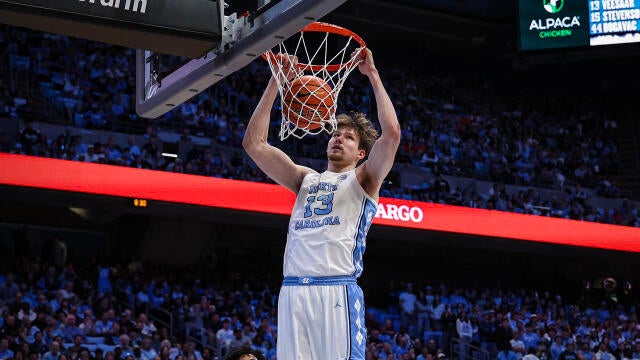
For a few breathless seconds, it felt like the internet stopped scrolling and started screaming. Phones buzzed, timelines refreshed, and rivalry jokes flew faster than the replay of the shot itself. One corner three, 0.4 seconds on the clock, and suddenly Duke–Carolina wasn’t just a game anymore—it was a full-blown social media earthquake. From stunned disbelief to pure Tar Heel euphoria, Seth Trimble’s buzzer-beating dagger didn’t just flip the scoreboard; it detonated across X, Instagram, and every group chat that has ever argued about this rivalry. And as UNC celebrated a win that felt ripped straight from March, the online reactions were just as wild as the finish itself.
A finish built for the internet age
Some games are remembered for years because of what happened on the court. Others endure because of how they made people feel. This one managed both—and then multiplied the impact through the megaphone of social media. The moment Trimble’s shot dropped, the response was instantaneous. Highlight clips looped within seconds. Reaction memes appeared almost as fast. Screenshots of disbelief and joy flooded feeds, capturing the raw emotion that only Duke–Carolina can summon.
This wasn’t just a win; it was a moment designed for virality. The late-night timing, the razor-thin margin, the rivalry’s built-in audience—everything aligned. And once the final horn sounded for good, the internet did what it does best: it turned chaos into community.
How the night unfolded before the madness
Lost amid the online frenzy was the reality that Duke had controlled much of the game. The Blue Devils entered the Smith Center as the No. 4 team in the country and played like it for long stretches. Their execution was sharp, their rebounding relentless, and their composure steady even as the crowd searched for a spark.
Duke surged late in the first half, outscoring UNC 11–2 to open a commanding 41–29 lead at the break. The numbers told a familiar story: dominance on the glass, control in the paint, and second-chance points that punished every Tar Heel mistake. Social media reflected that tone early, with neutral observers praising Duke’s balance and questioning whether UNC had enough firepower beyond Caleb Wilson.
Caleb Wilson keeps UNC breathing
If the Tar Heels were going to make the night interesting, it was always going to start with Caleb Wilson. The freshman played with the poise of a veteran, finishing with 23 points on 8-of-12 shooting. Every time Duke threatened to stretch the lead beyond reach, Wilson answered—sometimes with a smooth jumper, sometimes with a strong finish through contact.
On social media, praise for Wilson came early and often. Fans and analysts alike called out his fearlessness, with many labeling him the best freshman in the ACC in real time. Even as Duke maintained control, Wilson’s performance kept UNC within striking distance and kept hope alive online.
The slow shift in momentum
The second half didn’t explode immediately. Instead, it simmered. UNC tightened defensively, contested rebounds more aggressively, and began to chip away possession by possession. Duke still looked comfortable, but the margin shrank just enough to make every mistake feel heavier.
Social media began to sense it. Posts shifted from certainty to caution. Duke fans urged calm. UNC fans clung to belief. Neutral observers leaned in, knowing the rivalry has a habit of delivering drama when least expected.
Henri Veesaar’s quiet impact
While Wilson carried the scoring load, Henri Veesaar did the kind of work that doesn’t always trend—until it matters most. His 13 points and 11 rebounds marked his 13th double-double of the season, but the timing of his plays mattered more than the totals. A key rebound here. A putback there. A defensive stand that denied Duke an easy answer.
As the game tightened, Veesaar’s name began appearing more frequently online. Clips of his late-game hustle circulated, paired with captions about toughness and winning plays. In rivalry games, those details often decide everything.
The final sequence that broke the internet
With seconds remaining, Duke still held the edge. The Blue Devils had done nearly everything right for 39 minutes and change. Then came the possession that will live forever in Carolina lore.
The ball found Seth Trimble in the corner. No hesitation. Clean release. The shot dropped with 0.4 seconds remaining.
For a moment, it looked like the perfect buzzer-beater. The court flooded. Fans screamed. Phones shook. Then reality intervened: time remained. The celebration paused. The court cleared. Tension returned.
When Duke’s final attempt failed and the horn sounded again, the eruption resumed—louder, freer, and somehow more cathartic than before.
Social media reacts in real time
The reaction was immediate and overwhelming. “Seth Trimble is forever a Tar Heel,” one post declared, quickly racking up thousands of likes. Another read, “They’ll play that shot for years to come,” paired with a looping replay of the corner three.
UNC fans reveled in the chaos. Duke fans processed heartbreak in real time. Neutral observers simply marveled at yet another chapter in the sport’s most reliable rivalry. Memes poured in. GIFs multiplied. Group chats exploded with capital letters and exclamation points.
Even seasoned college basketball voices joined the fray. Longtime reporters highlighted the improbability of UNC leading for the first time at the final second. Analysts praised the resilience it took to stay composed after trailing nearly the entire night.
Stephen A. Smith and the rivalry spotlight
When Stephen A. Smith weighs in, the moment has officially crossed into national consciousness. His reaction framed the game as yet another reminder that Duke–Carolina remains unmatched.
Calling it the “absolute best rivalry in sports,” Smith pointed to the shared history, the balance between programs, and the inevitability of drama whenever they meet. His post echoed what fans already felt: this wasn’t just another regular-season game—it was proof that the rivalry still owns the biggest moments.
Franklin Street and the real-world eruption
While the internet buzzed, Chapel Hill lived it. Franklin Street became a madhouse as fans poured out to celebrate. Videos of packed sidewalks, chants echoing into the night, and spontaneous celebrations spread quickly online, blurring the line between digital reaction and real-world joy.
Former Tar Heels joined the celebration too. Theo Pinson and Ryan Switzer shared their excitement, adding another layer of connection between generations of UNC athletes and fans. Even Roy Williams was spotted hyped up, a reminder that once a Tar Heel, always a Tar Heel.
Duke’s heartbreak, magnified online
For Duke, the loss was as cruel as it gets—and social media amplified every emotion. Some fans expressed disbelief. Others dissected the final defensive possession frame by frame. Many simply logged off, choosing silence over analysis.
It was Duke’s first ACC loss and just the second defeat of the season, dropping the Blue Devils to 21–2 overall and 10–1 in conference play. Rationally, it changed little about their long-term outlook. Emotionally, it hurt plenty—especially knowing the lead had held for nearly the entire night.
Why this moment resonated so deeply
What made this finish resonate wasn’t just the shot—it was the buildup. UNC trailed for almost 38 minutes. Duke controlled the game. The Tar Heels needed near perfection down the stretch just to have a chance. That context turned Trimble’s shot from a highlight into a symbol.
Online, fans latched onto that narrative. Posts emphasized patience, belief, and the refusal to quit. In an era of instant gratification, the story of enduring pressure until the final second struck a chord.
The power of shared experience
Social media didn’t just react—it connected. Fans who had never met shared screenshots, jokes, and memories. Alumni reconnected. Students documented their first great rivalry win. Older fans reminisced about where this moment might rank among past classics.
For one night, the internet became a digital version of the Smith Center: loud, emotional, and united by a shared gasp when the ball dropped through the net.
What it means for UNC moving forward
Beyond the likes and retweets, the win mattered. UNC improved to 19–4 overall and 7–3 in ACC play, adding a marquee victory to its résumé. More importantly, it reinforced belief. This group now knows it can withstand long stretches of adversity and still deliver when the moment demands it.
That confidence doesn’t fade easily. Neither does a shot like Trimble’s.
Why Duke–Carolina never disappoints
Every rivalry promises drama. Few deliver it consistently. Duke–Carolina does, year after year, era after era. Coaches change. Players rotate. The moments remain unforgettable.
This game joined a long list of classics because it followed the rivalry’s oldest script: tension, swings, heartbreak, and a finish that leaves fans breathless.
The final scroll
By the time timelines finally slowed and phones dimmed, one thing was clear: this wasn’t just a game people watched—it was a moment they experienced together. Seth Trimble’s buzzer-beating three didn’t just stun Duke. It united, divided, shocked, and delighted an entire college basketball universe at once.
And long after the memes fade and the posts sink into archives, one truth will linger—whenever UNC and Duke meet, all it takes is one second for everything to explode.




