


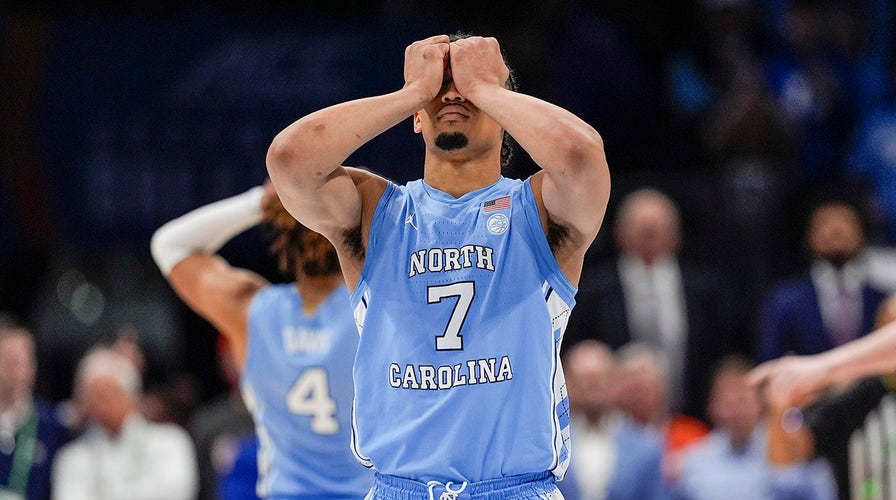
For three hours inside the Dean E. Smith Center, nothing felt predictable — not the momentum, not the emotions, not even the outcome itself. North Carolina and Duke delivered another rivalry classic, but this one unfolded in a way that statistics alone will never explain. The Tar Heels didn’t simply outscore the Blue Devils; they outlasted them, outthought them, and, in the most important moments, out-connected them. Long after the final buzzer echoed through Chapel Hill, one question lingered: How did UNC actually win this game? The answer lives in the details — the moments between the highlights — and those observations reveal why this victory felt bigger than the scoreboard.
The Smith Center Didn’t Just Host the Game — It Shaped It
There has been a lingering narrative around the Dean E. Smith Center in recent years: that it lacks the intimidation and electricity of other elite college basketball venues. Saturday night put that idea to rest.
From the opening tip, the environment was relentless. Not just loud, but layered — sustained noise, sudden eruptions, and a rhythm that clearly affected Duke’s communication on both ends of the floor. Early possessions were rushed. Defensive switches were late. Even free throws felt heavier than usual.
UNC didn’t need a dominant opening run to seize control. The crowd did some of that work for them, disrupting Duke’s comfort before either team had settled into its offense.
This wasn’t nostalgia fueling the energy.
It was urgency.
UNC’s Poise Under Pressure Was the First Real Difference
This game was chaotic — and UNC embraced that chaos without letting it consume them.
There were stretches where Duke looked ready to take control: quick scoring bursts, defensive pressure forcing turnovers, and moments where the Tar Heels appeared vulnerable. In past seasons, those moments often led to unraveling.
This time, they didn’t.
UNC responded to pressure by slowing down. Instead of forcing shots, they trusted the next pass. Instead of panicking defensively, they tightened rotations. Instead of responding emotionally, they stayed composed.
That poise — especially in a rivalry game where emotion usually dictates decision-making — set the foundation for everything that followed.
The Tar Heels Won the Margins, Not Just the Moments
Rivalry games are often remembered for singular moments: a big three, a late stop, a dramatic finish. But this win was built in the margins.
Loose balls mattered.
Box-outs mattered.
Secondary assists mattered.
UNC consistently won the “in-between” plays — the ones that don’t always show up in the box score but decide games like this. Duke had the flashier individual moments, but UNC accumulated advantages possession by possession.
By the time the game reached its decisive stretch, those small edges added up.
Defense Was the Silent Turning Point
While the offensive highlights will dominate replays, UNC’s defense quietly flipped the game.
During a crucial second-half stretch, the Tar Heels locked in defensively, forcing Duke into late-clock situations and contested jumpers. Passing lanes closed. Help defense arrived earlier. Closeouts were sharper.
UNC didn’t need steals or blocks to swing momentum.
They needed discipline.
And they delivered it.
That defensive commitment didn’t eliminate Duke’s scoring — it made it harder, slower, and more uncomfortable. In rivalry games, discomfort often decides outcomes.
Leadership Showed Up Without Needing the Spotlight
One of the most telling aspects of UNC’s performance was how leadership manifested itself.
There were no theatrical huddles. No visible panic. No forced heroics.
Instead, leadership showed up in subtle ways: a senior calming the offense after a turnover, a veteran choosing the extra pass over a contested shot, a player sprinting back on defense instead of arguing a call.
Those moments don’t trend on social media — but they win games.
UNC’s leaders understood the moment and trusted the collective.
Duke Had Talent. UNC Had Continuity.
There was no denying Duke’s talent level.
Their length caused problems. Their athleticism created mismatches. Their guards flashed NBA-level shot-making ability. On paper, Duke had every tool necessary to take control of the game.
What they didn’t have — at least on this night — was UNC’s connectivity.
The Tar Heels played like a group that trusted one another implicitly. Defensive rotations were instinctive. Offensive reads were immediate. Players moved with confidence that help would arrive.
Talent can swing games.
Continuity sustains them.
UNC leaned on the latter.
Emotional Control Was a Quiet Breakthrough
UNC–Duke games are emotional by nature. Technical fouls, rushed shots, and frustration have turned many rivalry matchups into momentum swings driven by emotion rather than execution.
UNC refused to let that happen.
After questionable calls.
After Duke scoring runs.
After moments that could have tilted the game emotionally.
The Tar Heels stayed steady.
That emotional maturity might be the most encouraging sign for UNC moving forward — especially with postseason basketball approaching.
The Smith Center Moment Was Earned, Not Given
When the final buzzer sounded, the celebration wasn’t just about beating Duke.
It was about validation.
For the players, it validated growth.
For the coaching staff, it validated belief.
For the fans, it validated patience — and reminded everyone that the Smith Center still belongs among college basketball’s most meaningful stages.
The energy wasn’t borrowed from history.
It was created in real time.
This Win Meant More Than One Night
Rivalry wins always matter, but some carry added weight because of what they reveal.
This game revealed that UNC can:
Handle adversity without unraveling
Win without perfect execution
Trust defense when shots aren’t falling
Maintain emotional control in chaos
Those qualities don’t just win rivalry games.
They travel.
Why This Felt Like a Turning Point
Every season has a game that clarifies a team’s identity.
For UNC, this may have been that game.
Not because they beat Duke — but because of how they did it. The Tar Heels didn’t rely on one hot shooter. They didn’t play mistake-free basketball. They didn’t dominate wire-to-wire.
They trusted each other.
That belief — tested in the most emotionally charged environment possible — may prove to be the most valuable takeaway of all.
Final Thought: This Wasn’t Just a Win — It Was a Statement
UNC didn’t just beat Duke.
They showed resilience.
They showed maturity.
They showed connection.
And in a rivalry where emotion often overshadows execution, North Carolina proved that composure can be just as powerful as talent.
As the season moves forward, this game will be remembered not just for the score — but for what it revealed about who the Tar Heels are becoming.
And sometimes, that matters even more than the rivalry itself.




