


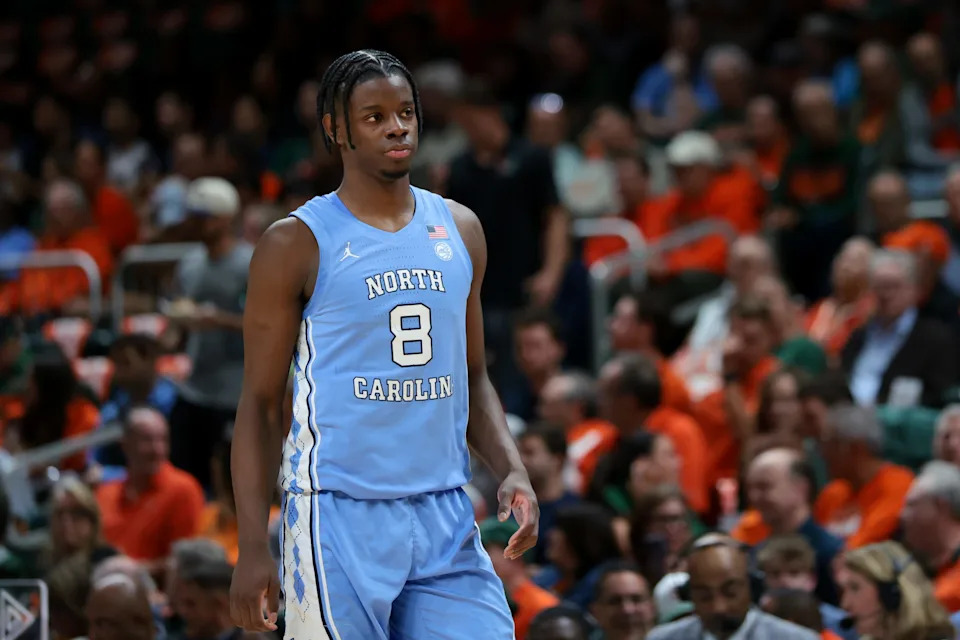
North Carolina’s five-game surge through ACC play came to a halt Tuesday night in Coral Gables, but if anything, this loss may serve as the spark the Tar Heels need for the battles ahead.
Coming off an emotional and physically draining victory over archrival Duke, UNC faced a quick turnaround against a confident and surging Miami squad. The Hurricanes protected their home court with authority, handing the Tar Heels a 75-66 defeat in a game where North Carolina never once held the lead. The loss drops UNC to 19-5 overall and 7-4 in ACC play—a setback, yes, but far from a defining one.
With a demanding schedule still looming, this was a valuable Quad 1 opportunity. Instead of capitalizing, the Tar Heels struggled to find rhythm, energy, and consistency. Still, adversity often reveals what a team is made of. Here are the key takeaways from a challenging night in South Florida.
MIAMI OWNED THE PAINT — AND THAT CAN’T HAPPEN AGAIN
The stat sheet tells the story clearly: Miami dominated inside.
The Hurricanes outscored North Carolina 46-28 in the paint and controlled the glass with a 41-35 rebounding edge. Those numbers don’t just reflect missed shots or unlucky bounces—they represent physicality, positioning, and presence. Miami dictated the tone in the most important area of the floor, turning second-chance opportunities into momentum and limiting UNC’s ability to generate extra possessions.
For a program built on toughness and interior excellence, that disparity is concerning.
Caleb Wilson’s limited effectiveness due to a wrist issue certainly factored in, but even beyond that, UNC struggled to establish consistent post production. Henri Veesaar found himself battling Miami’s physical frontcourt all night and was unable to impose his will offensively. The Hurricanes’ bigs played with confidence, finishing through contact and controlling space.
If North Carolina expects to compete for an ACC title and make noise in March, reclaiming dominance in the paint must be a priority. Championship teams defend the rim, rebound relentlessly, and punish opponents inside. This performance will serve as a reminder of that standard.
CALEB WILSON’S HEALTH IS NOW A MAJOR STORYLINE
Freshman standout Caleb Wilson entered the matchup riding high after a sensational performance against Duke. But against Miami, he appeared out of rhythm—and potentially limited.
Wilson finished with 12 points in 26 minutes, but his impact felt muted. Early in the second half, he exited the game and eventually headed to the locker room with trainers, raising immediate concern. When he returned to the bench and later re-entered the game, tape wrapped around his left wrist signaled something wasn’t quite right.
The encouraging news? He came back and competed.
The bigger question now is sustainability. How serious is the injury? Will it affect his shooting touch or defensive activity moving forward? With the ACC race tightening and postseason positioning on the line, UNC cannot afford to lose or significantly limit one of its most dynamic contributors.
Wilson’s toughness in returning to the floor speaks volumes. Now the program—and fans—await updates, hoping it’s nothing that lingers.
NOT A TRAP GAME — JUST A TOUGH ROAD REALITY
Let’s be clear: this wasn’t a classic trap game.
Miami isn’t a struggling opponent sneaking up on anyone. The Hurricanes have quietly built a strong ACC résumé this season and have proven they can compete with anyone on their home floor. Coral Gables has not been friendly territory for North Carolina in recent years, and this matchup was always going to demand focus and energy.
But emotional highs can be draining. Beating Duke is never just another game. The atmosphere, intensity, and pressure that surround that rivalry often take a physical and mental toll. The short turnaround to face a hungry Miami team created a difficult scenario.
UNC looked a step slow at times. Defensive rotations were late. Box-outs were inconsistent. Offensive possessions lacked fluidity. That doesn’t reflect a lack of effort—it reflects the grind of a long season and the challenge of staying sharp game after game.
The key now is response.
THE OPPORTUNITY AHEAD
The Tar Heels still control their destiny in many ways. At 19-5, they remain firmly in the national conversation. One road loss in conference play does not erase the growth and resilience they’ve shown during this five-game ACC stretch.
What defines great teams is not perfection—it’s response.
North Carolina returns home to face Pitt on Saturday, a critical opportunity to reset the tone. Protecting home court is non-negotiable. Reestablishing dominance in the paint must be a point of emphasis. Defensive intensity and rebounding discipline should be immediate corrections.
This loss can either linger—or it can ignite.
The schedule ahead will test depth, toughness, and leadership. Veterans must steady the locker room. Young players must learn quickly. Coaches will dissect film and demand sharper execution. The margin for error in the ACC is thin, and every possession matters.
In February, growth often comes through adversity. Tuesday night in Coral Gables delivered a wake-up call. Now comes the response.
If North Carolina channels this frustration into focus, recommits to physical play inside, and rallies around Wilson’s health and team chemistry, this setback may ultimately strengthen them for the stretch run.
The streak is over. The lesson is learned. The mission remains.
And the Tar Heels still have everything to play for.




