


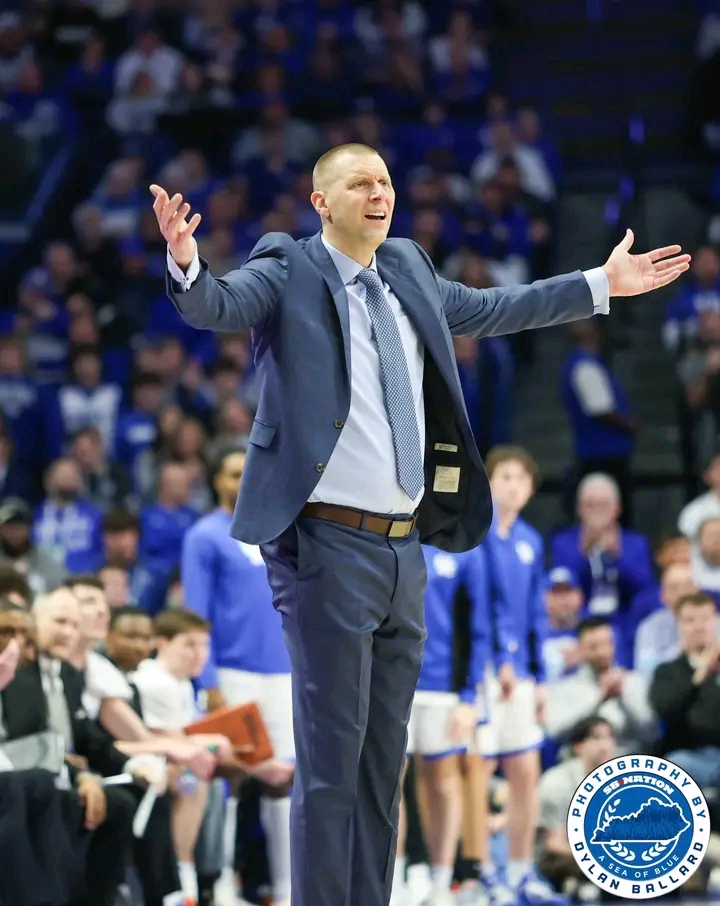
What if Kentucky’s recent surge isn’t the real story? What if the bigger question isn’t how the Wildcats fixed their season — but whether they’re built to sustain it? During a 35-minute conversation that quickly made the rounds across Big Blue Nation, Matt Jones joined The Field of 68’s Rob Dauster and Jeff Goodman to dissect the state of Kentucky basketball. On the surface, it sounded like a routine midseason check-in during a bye week. But beneath the talk of SEC standings and NCAA Tournament goals was something more revealing — a candid look at roster construction, recruiting struggles, NIL realities, and the uncomfortable truth that Kentucky might be at a crossroads.
And if you listened closely, the message was clear: the turnaround is real… but the pressure is just beginning.
The Early Struggles That Sparked Doubt
Kentucky’s season didn’t begin with confidence. It began with questions.
When the Wildcats stumbled early, dropping games they were expected to win and looking disjointed in key moments, the familiar murmurs started circulating. Was the roster built correctly? Was the backcourt strong enough? Did Mark Pope miscalculate in Year Two?
Matt Jones acknowledged that there was a point early in the season when it felt like the year could spiral. Kentucky wasn’t playing with cohesion. The backcourt lacked rhythm. Shot selection felt forced. And defensively, the Wildcats weren’t dictating tempo — they were reacting.
But according to Jones, there was a specific week where things shifted.
The energy changed. The ball movement improved. Players began understanding their roles. The urgency sharpened. What had looked like a team searching for identity suddenly resembled one forming chemistry.
That week didn’t just steady the season — it saved it.
Roster Construction: The Elephant in the Room
Even amid the turnaround, one issue remains impossible to ignore: roster construction.
Jeff Goodman didn’t tiptoe around it. Neither did Dauster. Kentucky’s backcourt, they argued, wasn’t built with ideal balance. There are playmakers, yes. There’s talent, certainly. But complementary pieces? Defensive specialists? Proven depth for March?
That’s where the concern lingers.
Goodman pointed out that roster construction in today’s college basketball landscape is no longer just about recruiting rankings. It’s about fit. It’s about NIL strategy. It’s about anticipating portal movement before it happens.
“Pope should have understood early that the roster construction wasn’t right,” Goodman said. “We can’t leave it up to our assistant coaches — they’ve got too much going on during the season.”
The message was subtle but firm: Kentucky needs infrastructure.
The General Manager Conversation
One of the most revealing segments of the discussion centered around the idea of hiring a general manager — a move that has quietly become essential in modern college basketball.
Goodman referenced Duke’s Rachel Baker, whose background with Nike and the NBA has helped the Blue Devils thrive in the NIL and revenue-sharing era. Alabama and Vanderbilt were also cited as SEC programs adapting effectively.
Kentucky, meanwhile, still appears to be playing catch-up.
The transfer portal opens immediately after the national championship game. That means decisions are often made before teams even finish their postseason runs. If Kentucky waits until the offseason to restructure its recruiting and roster-building approach, it may already be behind.
This isn’t about panic.
It’s about evolution.
And evolution in college basketball now requires business strategy, not just basketball IQ.
What Defines Success This Season?
Matt Jones laid out a practical standard for success — and it wasn’t vague.
Kentucky needs to accomplish at least two of the following:
Finish top three in the SEC.
Make the SEC Tournament championship game.
Reach the second weekend of the NCAA Tournament.
Those benchmarks aren’t unrealistic. They’re measurable. And they reflect where Kentucky believes it belongs.
Right now, the Wildcats are within reach.
But sustaining that momentum will depend on whether the lessons from early-season struggles stick.
Rupp Arena’s Statement Game
One moment from the conversation carried emotional weight: the atmosphere at Rupp Arena during Kentucky’s matchup against North Carolina.
The building wasn’t just loud.
It was re-engaged.
Big Blue Nation, after months of uncertainty and heated debate, showed up in full voice. That game felt like proof that the fanbase still believes — that they’re willing to invest emotionally again.
That matters.
Because at Kentucky, belief fuels performance. And when Rupp is aligned with the team, momentum becomes tangible.
The question now is whether that unity holds through adversity.
Recruiting Concerns Loom Large
If there’s one area that could overshadow everything else, it’s recruiting.
Kentucky currently does not hold a commitment in the 2026 class. Worse, insiders suggest the Wildcats are trending away from several top prospects.
In previous eras, that would have been unthinkable.
Kentucky was the brand. The destination. The sure thing.
Now? It’s competitive. And the competition is organized.
Programs with dedicated NIL structures, general managers, and professional-style roster evaluation teams are moving aggressively. Relationships are cultivated earlier. Financial frameworks are established sooner. Portal targets are identified before they even enter the database.
Kentucky’s name still carries weight. But weight alone doesn’t win recruiting battles in 2026.
Adaptation does.
NIL and the Changing Landscape
The NIL era hasn’t leveled the playing field.
It’s complicated it.
Programs that once relied purely on prestige must now navigate financial negotiations, brand alignment, and strategic delegation.
Kentucky has resources. There’s no doubt about that. But as Goodman emphasized, resources must be deployed intelligently.
Assistant coaches can’t simultaneously scout SEC opponents, prepare game plans, manage player development, and orchestrate complex NIL negotiations.
There has to be specialization.
There has to be structure.
And perhaps most importantly, there has to be urgency.
Mark Pope’s Second-Year Reality
Mark Pope’s second season is proving to be more layered than expected.
He’s shown adaptability. He’s stabilized a rocky start. He’s regained locker room confidence. And he’s reignited fan engagement.
But leadership at Kentucky demands more than short-term correction.
It demands vision.
Pope’s next moves — especially off the court — may define his tenure more than any individual win.
Does he push for a general manager hire immediately? Does he restructure recruiting operations? Does he prioritize portal aggression over high school rankings?
Those decisions will determine whether this turnaround is the beginning of something sustainable — or a temporary surge.
The Portal Clock Is Ticking
One of the most sobering realities discussed was timing.
The transfer portal opens right after the national championship game. That leaves almost no downtime. Teams that are prepared strike immediately. Teams that hesitate scramble.
“By the time some of these kids go in the portal, it’s already done,” Goodman noted.
That statement carries weight.
It suggests that the real work happens long before announcements. Relationships are built quietly. Decisions are influenced early. Strategy wins.
If Kentucky wants to dominate in the portal, preparation must start now — not in April.
Big Blue Nation’s Role
Kentucky’s fanbase is often described as demanding.
But it’s also fiercely loyal.
The renewed energy at Rupp Arena signaled that BBN hasn’t abandoned belief. They want progress. They want transparency. They want evidence that the program is adapting.
If Kentucky finishes strong — top three in the SEC, deep tournament run — momentum will accelerate.
If recruiting improves simultaneously? Confidence will skyrocket.
But if the on-court success masks off-court stagnation, frustration could resurface quickly.
The Crossroads Moment
This isn’t a crisis.
It’s a crossroads.
Kentucky’s turnaround is real. The Wildcats have stabilized their season. They’re competitive. They’re relevant.
But the larger question looms: Is the foundation strong enough for what comes next?
Modern college basketball rewards innovation, delegation, and speed. Tradition alone won’t carry programs forward.
Matt Jones and The Field of 68 didn’t deliver doom. They delivered clarity.
The Wildcats are back in the fight.
Now they must modernize the operation.
Final Thought: Turnaround or Transformation?
Here’s the real takeaway from the conversation:
Kentucky’s season can be salvaged without structural change.
But Kentucky’s future cannot.
Mark Pope has proven he can steady a team. The next challenge is proving he can build a system that thrives in the NIL era.
If he does, this season won’t be remembered for its early struggles.
It will be remembered as the year Kentucky learned how to evolve.
And if he doesn’t?
The recruiting questions won’t just “change everything.”
They’ll define it.




