


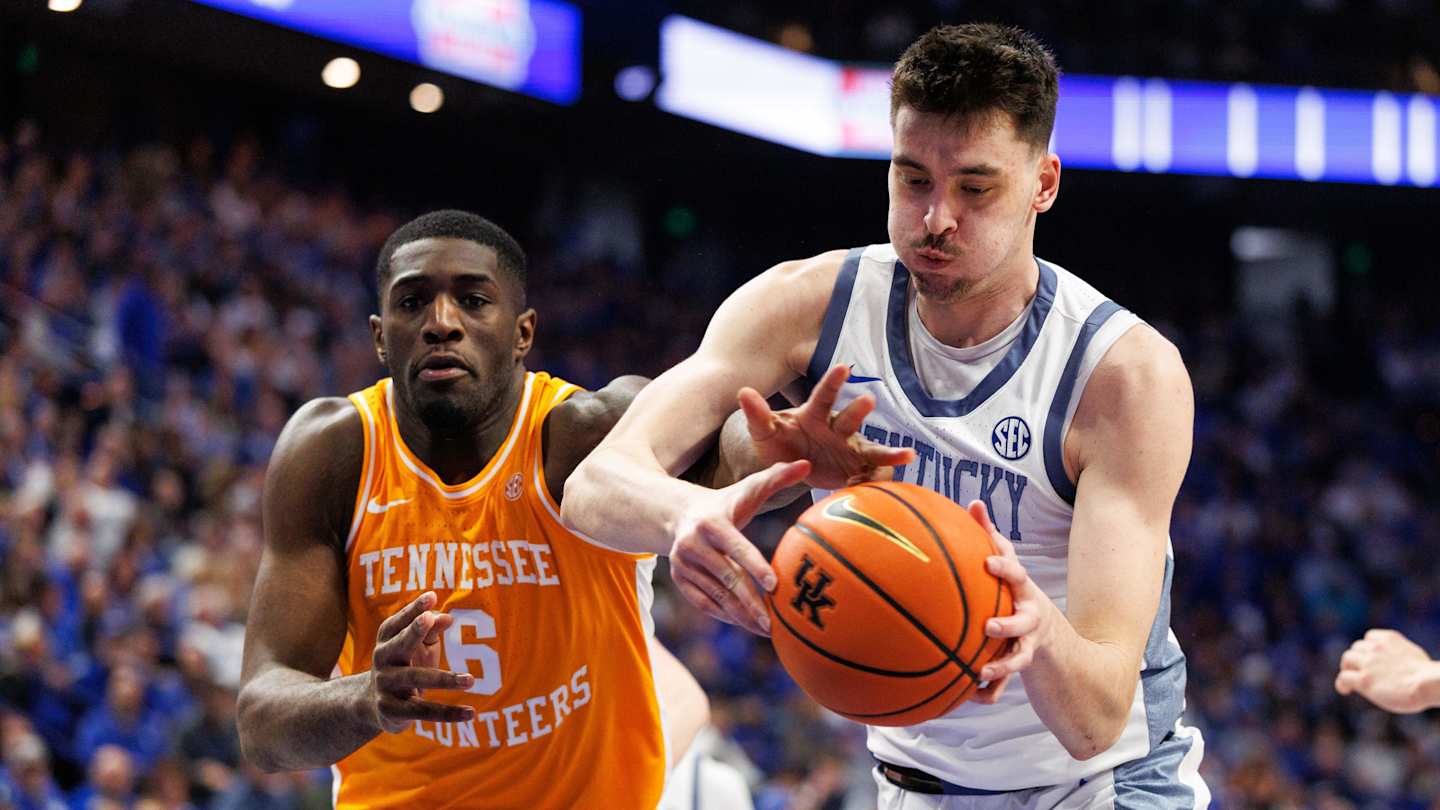
Kentucky basketball has flipped the script on its season.
After stumbling out of the gate in SEC play with an 0-2 start, the Wildcats have responded with grit, growth, and resilience—winning eight of their last nine games and putting themselves in prime position heading into the most demanding stretch of their schedule. It hasn’t been flashy offense or highlight-reel plays alone that have fueled this turnaround. Instead, it’s been toughness, physicality, and a renewed commitment to winning the battle on the boards.
And at the heart of that transformation is a name that may surprise many fans.
While players like Mo Dioubate and Malachi Moreno have earned recognition for their relentless effort and physical presence, it’s Andrija Jelavic who has quietly emerged as Kentucky’s leader in defensive rebounding percentage this season. The 6-foot-11 forward, once benched and fighting for minutes, is now proving to be one of the Wildcats’ most impactful contributors.
In 20 games played, Jelavic is grabbing an impressive 19.7 percent of opponents’ missed shots when he’s on the floor—leading the team in defensive rebounding percentage. That’s not just a solid stat. That’s a statement.
His journey to this point hasn’t been smooth. Earlier in the season, Jelavic found himself out of the rotation. His minutes dwindled, and at one point, he didn’t see the floor for nearly a month. For many young players, that kind of setback can shake confidence. But Jelavic responded the right way—by staying ready.
On January 10 against Mississippi State, he returned to action. Since then, he hasn’t just filled minutes—he’s made them count.
Now starting in consecutive games, Jelavic is showing why patience and persistence matter. His stretch-four ability gives Kentucky spacing on offense, forcing defenders to respect his perimeter shooting. He’s knocked down key shots in multiple games, helping keep the Wildcats’ offense balanced and unpredictable.
But what’s turning heads isn’t just his shooting touch—it’s his physical growth and commitment on the defensive glass.
Head coach Mark Pope has praised Jelavic’s development, particularly in embracing the physical nature of SEC basketball. Speaking on his radio show, Pope highlighted a sequence from the Tennessee game where Jelavic secured a hard-earned defensive rebound after battling through contact—exactly the kind of play Kentucky needs against the conference’s most physical teams.
“He’s just learning the physicality of the game,” Pope said. “Early in the Tennessee game, he had a great first-hit, second-hit rebound on the defensive end. It was really special.”
That moment symbolized something bigger. It wasn’t just about one rebound. It was about growth.
The SEC is unforgiving. Teams like Florida and Georgia pride themselves on crashing the glass and wearing opponents down. Physicality isn’t optional—it’s required. And for Kentucky, answering that challenge is critical as they prepare for a closing stretch that could define their postseason trajectory.
Jelavic’s emergence couldn’t come at a better time.
In games where he logs 15 or more minutes, his impact becomes undeniable. The stat sheet consistently reflects his presence—defensive rebounds secured, possessions extended, and second-chance opportunities denied. Even alongside rugged rebounders like Mo Dioubate, Malachi Moreno, and Brandon Garrison—players known for embracing contact—it’s Jelavic setting the standard in defensive rebounding efficiency.
That says a lot.
Rebounding is about more than height. It’s anticipation. Positioning. Timing. Effort. And perhaps most importantly, willingness to absorb contact. Jelavic is beginning to combine all those elements. What once looked like hesitancy now looks like confidence. What once seemed like inexperience now resembles understanding.
Pope believes there’s even more untapped potential.
“He has a chance to grow into a really, really special player,” Pope said. “He’s got some innate physicality to him—it’s just unleashing it.”
That phrase—unleashing it—perfectly captures where Jelavic stands in his development. The tools have always been there. At 6-foot-11 with mobility and touch, he’s built for modern basketball. Now, he’s adding edge to his game. He’s fighting for position earlier. He’s seeking contact instead of avoiding it. He’s finishing possessions the way championship teams must.
Kentucky’s improvement on the glass reflects a broader cultural shift. After ranking seventh in offensive rebounds and tenth in defensive rebounds during SEC play, the Wildcats are showing signs of embracing the grind. They understand that rebounding isn’t glamorous, but it wins games—especially in March.
Every defensive rebound secured eliminates a second chance for the opponent. It ignites transition opportunities. It shifts momentum. It demoralizes teams that rely on hustle plays to stay competitive.
And increasingly, it’s Jelavic who’s delivering those momentum-swinging plays.
His story is also a reminder of something deeper within team sports: development isn’t linear. Players don’t always break out on schedule. Sometimes, growth happens quietly—behind closed practices, in film sessions, in weight rooms, and in moments of reflection.
Jelavic didn’t force his way back into the lineup. He earned it.
As Kentucky prepares for a stretch run against some of the SEC’s most punishing teams, the Wildcats will need every ounce of toughness they can muster. They’ll need scoring, yes. They’ll need leadership. But they’ll also need rebounding—consistent, physical, possession-ending rebounding.
And if recent performances are any indication, the once-overlooked forward is ready for the challenge.
What began as a surprising stat has evolved into a powerful narrative: Kentucky’s resurgence is fueled not just by stars or scorers, but by players embracing roles, battling for growth, and dominating the little things.
And right now, no one embodies that mindset more than Andrija Jelavic.




