What does a team look like when two pillars are suddenly missing? Does the structure wobble — or does something unexpected rise to meet the weight? An hour before tipoff at the Smith Center, the answer wasn’t clear. There was no dramatic announcement. No frantic reshuffling. Just sweat, focus, and a 6-foot-10 forward grinding through extra reps while two key teammates watched from a distance. What followed wasn’t just a basketball game. It was a glimpse into North Carolina’s depth, resolve, and identity.
When 11th-ranked North Carolina took the floor against Pittsburgh without Caleb Wilson and Henri Veesaar, the challenge was obvious. Remove two significant frontcourt contributors from any ACC contender and the ripple effects can be immediate — rebounding vulnerability, interior scoring strain, defensive mismatches.
But college basketball seasons aren’t defined solely by stars. They’re defined by response.
And UNC responded.
A Telling Pregame Scene at the Smith Center
Jarin Stevenson was sweating more than usual an hour before tipoff.
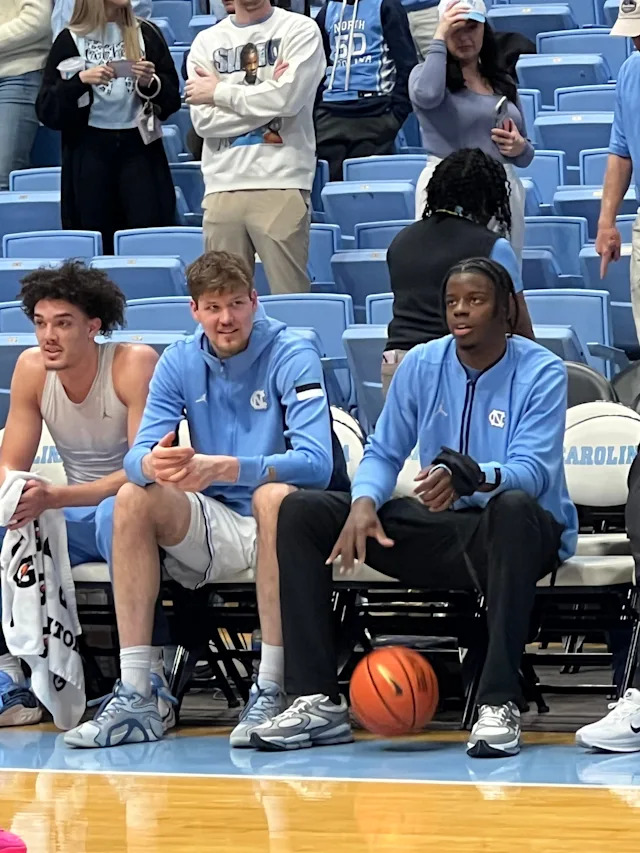
While the Smith Center slowly filled and pregame music echoed through the arena, Stevenson worked through drills on Roy Williams Court with assistant coach Sean May. Zayden High and John Holbrook joined him. Nearby, Caleb Wilson watched from the baseline. Henri Veesaar stood at half court observing.
It wasn’t dramatic. It wasn’t loud.
But it was telling.
North Carolina wasn’t panicking. It was preparing.
With two key post players unavailable, the Tar Heels needed readiness — not reaction.
That quiet pregame sequence symbolized what the night would become: next-man-up basketball.
The Immediate Questions
Without Wilson and Veesaar, several concerns surfaced:
Who protects the rim?
Who controls the glass?
Where does the interior scoring come from?
How does the rotation adjust defensively?
Against a Pittsburgh team capable of grinding games into physical battles, those questions mattered.
In the ACC, there are no easy nights. Depth isn’t luxury — it’s necessity.
And North Carolina’s depth was about to be tested.
Jarin Stevenson Steps Forward
Stevenson’s expanded role became the focal point early.
At 6-foot-10, he brings versatility more than brute force. He can stretch the floor, defend multiple positions, and move fluidly in transition. What he lacks in pure physical dominance, he compensates for with length and timing.
Against Pitt, that versatility mattered.
Stevenson didn’t try to replicate Wilson or Veesaar. He didn’t force post-ups or overcompensate. Instead, he played within the system:
Rotating quickly on help defense
Contesting without fouling
Crashing the defensive glass
Running the floor consistently
Sometimes, stepping up isn’t about scoring 20 points.
Sometimes, it’s about stability.
And Stevenson provided it.
Adjusting the Offensive Blueprint
Without two interior threats, UNC subtly adjusted its offensive approach.
Ball movement became crisper. Guards attacked gaps earlier in possessions. Perimeter spacing widened to create driving lanes. The Tar Heels emphasized tempo, seeking early offense before Pitt could settle into half-court defense.
It wasn’t reckless.
It was strategic.
If post dominance wasn’t available, mobility had to compensate.
UNC’s guards played with urgency. Paint touches came off penetration rather than traditional back-to-the-basket sets. Kick-outs led to cleaner perimeter looks.
The offense didn’t look identical — but it didn’t stall either.
Defensive Identity Remains Intact
The most encouraging sign for North Carolina wasn’t scoring.
It was defense.
When teams lose size, defensive rebounding and rim protection often suffer. Pitt attempted to test that vulnerability early, attacking inside and probing for second-chance opportunities.
UNC responded collectively.
Guards boxed out. Wings collapsed into the paint. Help-side rotations tightened.
Defense became communal.
Instead of relying on individual post dominance, the Tar Heels relied on five-man effort.
That’s often more sustainable in March than one-dimensional interior reliance.
Pittsburgh’s Challenge
To their credit, Pitt didn’t shy away from exploiting the absences.
They attacked mismatches. They forced switches. They attempted to draw fouls on UNC’s thinner frontcourt.
But North Carolina’s discipline prevented the game from unraveling.
When Pitt made small runs, UNC answered — not always with highlight plays, but with controlled possessions and defensive stops.
Momentum never spiraled.
That’s maturity.
Bench Contributions Matter
When starters shift roles, bench players must absorb responsibility.
Zayden High and John Holbrook provided minutes that didn’t necessarily dominate headlines but stabilized rotations. They absorbed contact. They used fouls wisely. They maintained defensive structure.
In games like this, depth isn’t measured in points — it’s measured in minutes survived without collapse.
UNC’s reserves did exactly that.
The Mental Factor
Perhaps the most impressive element wasn’t tactical — it was psychological.
North Carolina didn’t look rattled.
There was no visible hesitation. No forced hero-ball possessions. No frantic defensive scrambling.
Instead, there was poise.
Coming into the game ranked No. 11, expectations are constant. Add in missing players, and external doubt creeps in.
But inside the Smith Center, belief felt steady.
That belief translated to execution.
Sean May’s Influence
Assistant coach Sean May’s pregame involvement wasn’t symbolic — it was strategic.
A former UNC standout with championship pedigree, May understands post play and preparation. His direct engagement with Stevenson, High, and Holbrook before tipoff underscored intentionality.
Preparation meets opportunity.
When coaches anticipate gaps and address them early, players respond with clarity rather than confusion.
The Tar Heels looked prepared, not surprised.
The Bigger Picture: Depth Wins in February
February basketball isn’t about perfection. It’s about resilience.
Injuries are inevitable. Fatigue accumulates. Adjustments become constant.
Teams that survive adversity often thrive when March arrives.
UNC’s response against Pitt wasn’t flashy.
It was foundational.
They demonstrated:
Rotational flexibility
Defensive adaptability
Emotional composure
Collective rebounding effort
Those traits travel.
What This Means Moving Forward
When Caleb Wilson and Henri Veesaar return, UNC gains more than bodies.
They gain confidence built through adversity.
Stevenson’s expanded minutes strengthen his readiness. High and Holbrook gain meaningful experience. Guards develop comfort attacking interior gaps without relying on post scoring.
Adversity, when navigated successfully, deepens roster strength.
The Tar Heels didn’t just survive without two contributors — they grew.
Final Thoughts: Identity Over Absence
The curiosity entering Saturday centered on what UNC would lack.
The answer revealed what they possess.
Depth.
Discipline.
Preparation.
Belief.
The Tar Heels proved that missing pieces don’t automatically mean missing performance.
And perhaps that’s the most important takeaway of all.
In the long arc of a season, nights like this matter more than blowouts.
They reveal character.
They test structure.
They demand response.
And North Carolina delivered one.
Not because everything went perfectly.
But because everyone stepped forward.
That’s how contenders respond.
And that’s what UNC basketball showed against Pitt.