


The Pittsburgh Steelers are once again staring at a familiar and uncomfortable reality: they need a quarterback, and the obvious answers are anything but convincing. After cycling through short-term solutions and bridge veterans in recent seasons, the franchise still finds itself searching for stability at the most important position in sports. Now, with free agency looming and the draft offering little reassurance, one potential option is already drawing comparisons that should make the front office pause.
The warning? Don’t fall for “Justin Fields 2.0.”
That label, recently attached to Malik Willis in some NFL circles, isn’t meant as a compliment. It’s a caution sign — a reminder of how quickly optimism can turn into stagnation when upside doesn’t translate into sustained production.
A Franchise Stuck in the Middle
Since Ben Roethlisberger retired after the 2021 season, the Steelers have been navigating uncertain waters. For nearly two decades, quarterback stability was never a question in Pittsburgh. The team built around a franchise signal-caller who delivered two Super Bowl titles and perennial playoff contention. Even in down years, there was clarity under center.
That clarity is gone.
The Steelers have managed to remain competitive — often hovering above .500 and staying relevant deep into the regular season — but they’ve lacked the explosive ceiling necessary to make meaningful postseason noise. The formula has been consistent: strong defense, conservative offense, flashes of promise, and ultimately, limitations at quarterback.
The 2024 season was another example. The Steelers opted for a bridge-quarterback approach, pairing experience with mobility in hopes of rediscovering offensive consistency. Instead, they got mediocrity. There were moments of excitement, but nothing resembling a long-term solution.
Now, the search begins again.
Enter Malik Willis
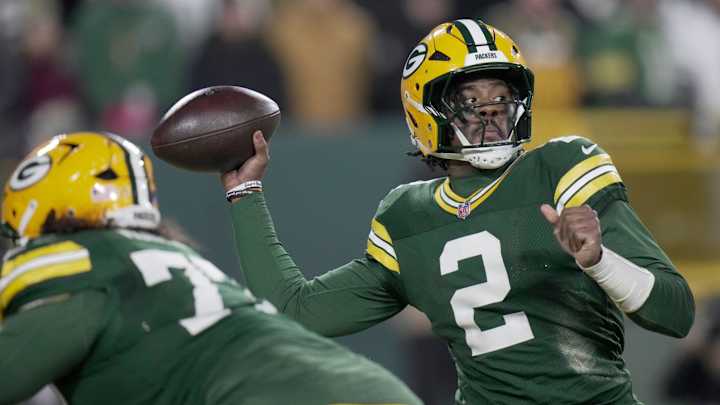
Malik Willis has emerged as one of the more intriguing names in what many analysts consider a historically thin quarterback free-agent market. After limited but promising appearances backing up Jordan Love in Green Bay, Willis has generated interest from quarterback-needy teams — including Pittsburgh.
On paper, the appeal is understandable. Willis is young. He’s athletic. He possesses arm strength and mobility that fit today’s evolving NFL offenses. In limited opportunities, he’s flashed playmaking ability. And in a year when the draft class lacks consensus elite talent and the veteran market feels underwhelming, “intriguing upside” can quickly become “best available option.”
But that’s where the warning comes in.
Mark Kaboly of The Pat McAfee Show recently voiced skepticism, describing Willis as “Justin Fields 2.0.” The comparison isn’t about identical skill sets; it’s about trajectory. It’s about betting on potential again, only to discover that potential alone doesn’t elevate an offense.
The Justin Fields Parallel
When the Steelers brought in Justin Fields for the 2024 season, the move carried hope. Fields had shown flashes in Chicago — dynamic runs, big throws, highlight-reel plays. The thought was simple: perhaps a change of scenery and a more stable organization could unlock his consistency.
Instead, Pittsburgh saw what other teams had already experienced: inconsistency in the passing game, difficulty processing defenses quickly, and stretches where explosive athleticism couldn’t mask fundamental limitations.
Fields wasn’t a disaster. He also wasn’t transformative.
And that’s the danger.
The Steelers don’t necessarily need a quarterback who will collapse the system. They need one who elevates it. They need someone capable of winning games in January when defenses tighten and margin for error disappears.
The fear is that Willis could follow a similar path — exciting traits, inconsistent results.
The Reality of the Market
Here’s the complicating factor: what better options truly exist?
The upcoming draft class lacks the star power of recent years. There’s no clear generational prospect commanding universal praise. Evaluators are split. Some see developmental potential. Others see long-term backups.
Free agency isn’t much more reassuring. The top names are either aging veterans past their peak, career backups with limited starting experience, or reclamation projects who haven’t solidified themselves elsewhere.
In that context, Willis becomes more attractive by default.
If the Steelers decide to pursue him, it won’t necessarily be because they believe he’s a franchise savior. It may simply be because the alternatives are equally uncertain.
That’s the uncomfortable truth of the 2026 quarterback landscape.
Cap Space and Competitive Windows
One of the underlying themes in Pittsburgh’s quarterback search is financial flexibility. The Steelers have traditionally managed the salary cap carefully, avoiding reckless long-term commitments. After years of allocating significant resources to defense, the organization must balance roster retention with offensive reinvention.
Signing a quarterback like Willis could offer cost-controlled flexibility. He wouldn’t command top-tier money. That would allow Pittsburgh to strengthen other areas — offensive line depth, receiver upgrades, defensive reinforcements.
But cost efficiency only matters if the quarterback is capable of maximizing those surrounding pieces.
A mid-tier quarterback on a modest deal is still limiting if he cannot execute in critical moments.
Scheme Fit and Development
One argument in favor of Willis centers on development. Unlike Fields when he arrived in Pittsburgh, Willis has spent recent seasons observing a stable system in Green Bay. Learning behind Jordan Love, operating within a structured offense, and refining mechanics away from the spotlight could theoretically position him for growth.
The Steelers’ offensive philosophy would also play a role. If Pittsburgh leans into mobility, play-action, and simplified reads — emphasizing athleticism over pure pocket processing — Willis might thrive in a tailored system.
But that requires patience and coaching precision.
And patience is difficult when fan expectations are high and playoff drought narratives grow louder.
The Psychological Factor
Quarterback decisions don’t happen in a vacuum. They carry emotional weight. Front offices remember past risks. Coaches remember missed evaluations. Fan bases remember false hope.
Calling someone “Justin Fields 2.0” taps into that memory.
It’s not simply about performance metrics. It’s about the feeling of déjà vu — investing in traits over proven production, convincing yourself that this time will be different.
The Steelers must determine whether that comparison is fair or reactionary.
Is Willis truly a repetition of a past mistake? Or is he a distinct player whose development arc has yet to fully unfold?
The Steelers’ Identity Crisis
Pittsburgh has long prided itself on stability and toughness. Defense-first football. Methodical offense. Complementary play.
But modern NFL success increasingly demands quarterback dynamism.
Look across the AFC. Elite quarterbacks dominate headlines and playoff brackets. Patrick Mahomes. Josh Allen. Joe Burrow. Lamar Jackson.
The Steelers don’t need an MVP candidate overnight. But they do need someone capable of competing with that tier when games matter most.
That’s the benchmark.
The question becomes whether Malik Willis — or any available option — realistically moves the Steelers closer to that standard.
A Risk Either Way
There’s risk in signing Willis.
There’s also risk in passing on him.
If Pittsburgh avoids him and he flourishes elsewhere, criticism will be swift. If they sign him and he plateaus, frustration will intensify.
The quarterback market rarely offers certainty. It offers calculated bets.
And in this cycle, every bet feels volatile.
The Long-Term Strategy
One potential path involves pairing a short-term signing like Willis with a developmental draft pick. That hedges risk. It acknowledges uncertainty while building for the future.
Another option is patience — enduring another transitional season while preserving cap space for a stronger quarterback class in future drafts.
But patience can clash with competitive urgency. The Steelers’ roster isn’t rebuilding. The defense remains formidable. Playmakers exist. Wasting prime years waiting for clarity isn’t ideal.
That tension defines Pittsburgh’s dilemma.
Final Thoughts: Warning or Opportunity?
The phrase “Justin Fields 2.0” is powerful because it encapsulates fear of repetition. It warns against mistaking athletic promise for quarterback progression.
But labels can oversimplify.
Malik Willis is not Justin Fields. He has his own path, his own development arc, his own strengths and weaknesses.
The Steelers must decide whether the comparison reflects genuine scouting concerns or emotional residue from recent experience.
Ultimately, this decision will shape more than one season. It will influence the direction of the franchise’s next chapter.
In a year with limited options, Pittsburgh may not find perfection.
But they must avoid settling for familiarity disguised as hope.
If Willis is more than “Justin Fields 2.0,” the Steelers could uncover unexpected stability.
If he isn’t, the cycle continues.
And in the NFL, cycles at quarterback are the one thing franchises can least afford.




