


Before we go any further, be sure to check out the full episode of the Coast To Coast Podcast linked below, where the hosts break down everything surrounding North Carolina’s recent ups and downs in detail. ⬇️
https://www.youtube.com/live/KTr3b-7AcVg?si=dzkclDys00JwW7zR
Because if you’ve watched this North Carolina team over the past few weeks, you’ve probably asked yourself the same question the podcast tackles head-on: What is really driving this roller coaster?
Is it inconsistency? Is it injuries? Is it youth? Is it rotations? Or is it something deeper — something psychological that shows up in big moments and disappears just as quickly?
The Tar Heels have looked unstoppable at times. They’ve also looked vulnerable in games they seemingly had under control. One week, they dominate. The next, they stall. And through it all, the conversation around UNC basketball has only grown louder.
This isn’t just about wins and losses. It’s about identity.
The Highs: When UNC Looks Like a Contender
Let’s start with the obvious.
When North Carolina is clicking, they look like one of the most complete teams in the ACC. The ball moves. The defense rotates with urgency. The guards push tempo. The frontcourt protects the rim and controls the glass.
In those moments, you see the blueprint of what this team can be in March.
The Tar Heels have shown the ability to:
Score in transition
Create second-chance opportunities
Improve at the free-throw line after a midseason slump
Close games with composure
There are stretches where UNC plays with rhythm and confidence that feels sustainable.
But then come the dips.
The Lows: Where the Roller Coaster Dives
The frustrating part for fans isn’t that UNC loses games. It’s how the momentum swings.
There have been matchups where:
Offensive possessions stagnate
Perimeter defense breaks down
Physical teams dictate tempo
Energy levels fluctuate from half to half
The loss at Miami (FL) was a perfect example. The Tar Heels climbed emotionally after a huge win, only to crater days later on the road. That kind of swing fuels the roller coaster narrative.
And it’s exactly what the Coast To Coast Podcast dissected — not just the “what,” but the “why.”
Is It Youth or Rotation Instability?
One of the central themes discussed is lineup continuity.
Injuries and late scratches have forced adjustments. Caleb Wilson missing time. Henri Veesaar battling illness and lower-body concerns. Rotations shifting just before tip-off.
That instability can affect chemistry.
Basketball rhythm isn’t just about skill — it’s about trust. It’s about knowing where your teammate will be without looking. It’s about anticipating defensive rotations instinctively.
When key pieces are in and out, even experienced teams can wobble.
Yet interestingly, UNC’s recent short-handed performance showed the other side of that coin: depth.
Players like Jarin Stevenson, Seth Trimble, and Luka Bogavac stepped into bigger roles and delivered. That suggests the foundation is strong — even if the consistency hasn’t been.
Free Throws: A Small Detail With Big Impact
Another major driver of UNC’s volatility? Free-throw shooting.
Earlier in the season, North Carolina endured a long stretch of sub-70% performances at the stripe. In tight ACC games, that margin matters.
Recently, though, the Tar Heels have shown improvement — shooting near 80% over the last handful of contests.
That kind of shift changes close-game outcomes.
When a team that once left points at the line suddenly converts consistently, the entire psychological balance changes. Late-game possessions feel calmer. Coaches trust their guards more. Opponents feel pressure to match.
Small improvements create big momentum swings.
Defense: The True Indicator
If you want to understand UNC’s roller coaster, watch their defensive intensity.
When the Tar Heels defend with edge:
They generate fast-break opportunities.
They limit second chances.
They control pace.
When that defensive energy dips:
Opponents dictate tempo.
Foul trouble increases.
Offensive droughts feel longer.
Defense travels. Effort travels. And in games where UNC has looked flat, the defensive engagement has often mirrored it.
That’s not schematic. That’s emotional.
The Psychological Factor
Here’s where the conversation gets interesting.
Is this team responding to external pressure?
North Carolina basketball carries weight. Expectations. History. Tradition. Every game is magnified. Every loss feels louder.
When UNC wins big, the praise escalates quickly. When they stumble, criticism follows just as fast.
Young players feel that.
Momentum isn’t just physical — it’s mental. The Coast To Coast Podcast highlighted how emotional highs can sometimes drain a team before the next tip-off. That Miami loss after a Duke high? A classic emotional hangover.
Learning to regulate that emotional swing is part of maturation.
Leadership and Bench Energy
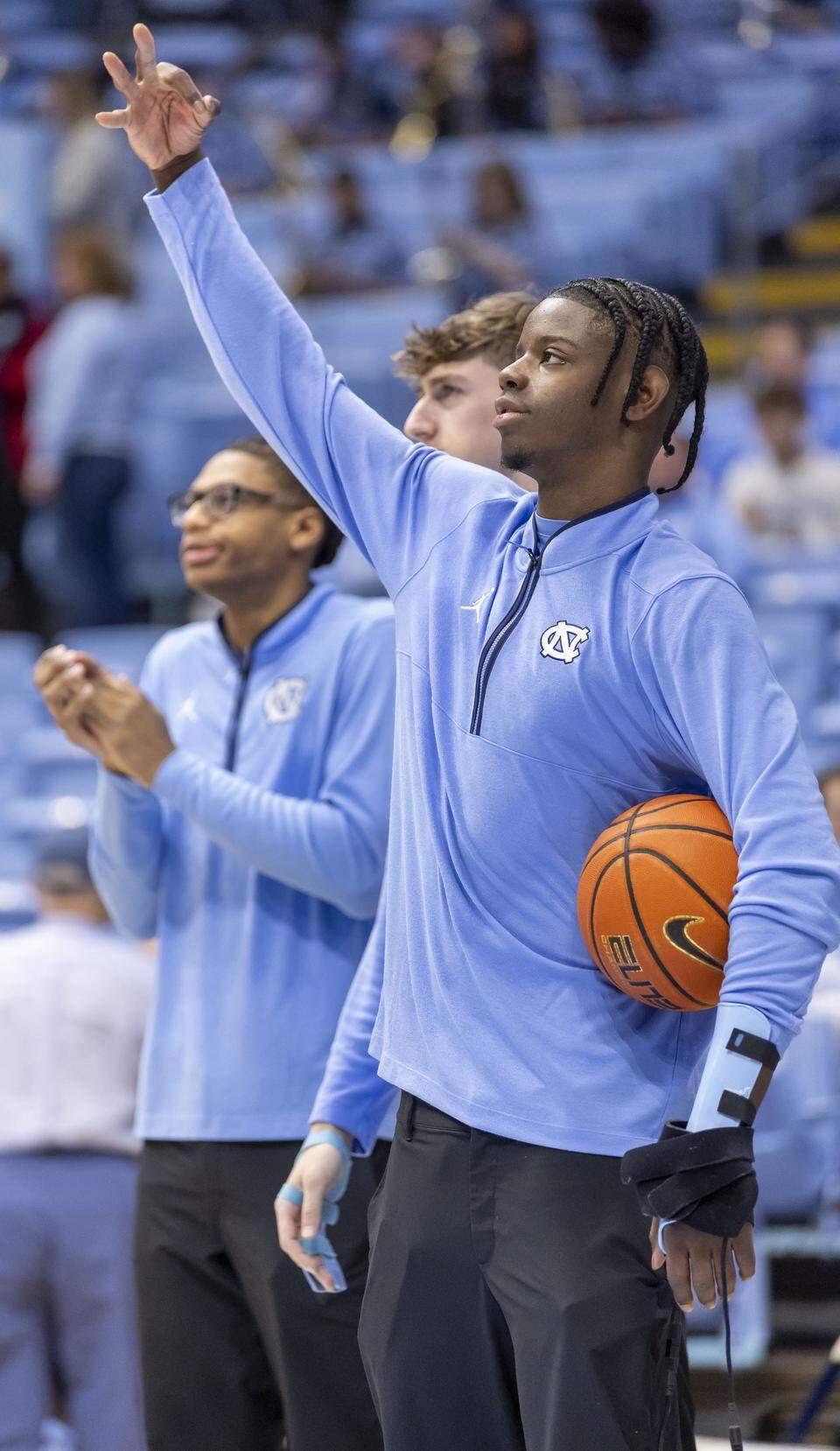
One positive sign: engagement from injured players.
When Wilson and Veesaar missed time, they weren’t detached. They were animated. Vocal. Invested.
That matters more than fans sometimes realize.
Teams fracture when stars disconnect. UNC has not shown that.
Instead, there’s visible unity — something that could stabilize the roller coaster down the stretch.
The ACC Landscape
Part of UNC’s volatility also stems from the conference itself.
The ACC has become unpredictable. Road games are physical. Middle-tier teams are dangerous. There are no guaranteed wins.
That parity magnifies inconsistency.
A team can look elite one week and average the next because matchups dictate style. Physical frontcourts expose certain weaknesses. Quick guard play tests perimeter defense.
UNC’s adaptability remains the key question.
What Must Change?
To smooth out the ride before postseason play, UNC must:
Establish a consistent defensive identity.
Maintain improved free-throw shooting.
Solidify a rotation — health permitting.
Manage emotional highs and lows better between games.
None of these are drastic overhauls. They’re refinements.
That’s the encouraging part.
Why the Roller Coaster Isn’t All Bad
Here’s the twist: sometimes a roller coaster season builds resilience.
Teams that face adversity in February often handle March better.
Learning to win without key players.
Learning to respond after emotional losses.
Learning to survive close games.
These lessons matter.
North Carolina’s fluctuations may actually be shaping them for postseason toughness.
The Big Question Moving Forward
So what’s really driving UNC basketball’s roller coaster right now?
It’s a blend of:
Rotational instability due to injuries
Emotional momentum swings
Defensive engagement inconsistencies
Gradual improvement in key areas like free throws
The pressure of expectations
But here’s the bigger takeaway: the ceiling hasn’t changed.
When healthy and locked in, UNC looks like a team capable of making noise in the ACC Tournament — and potentially beyond.
The floor, however, depends on focus.
Final Thoughts
As discussed in the Coast To Coast Podcast (don’t forget to watch the full episode above), North Carolina’s story isn’t about chaos. It’s about evolution.
The Tar Heels are navigating the growing pains of refinement.
The highs show what they can be.
The lows show what still needs work.
And somewhere between those extremes lies the version of UNC that could define March.
The roller coaster isn’t over.
But if this team learns from the dips as much as it celebrates the climbs, the final stretch of the season might be less about turbulence — and more about timing.
And for a program with Carolina’s history, timing is everything.




