


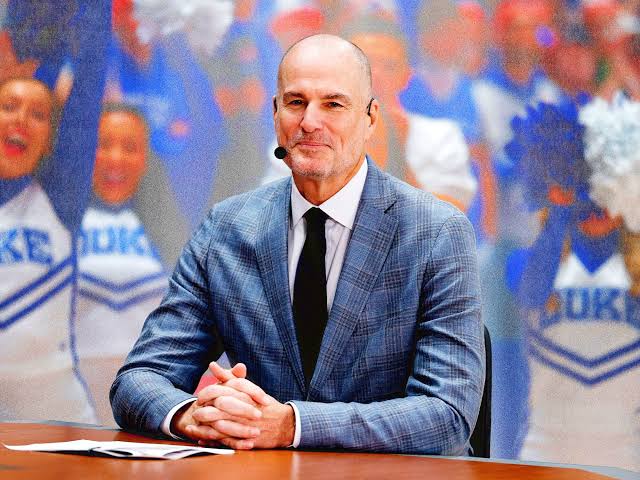
The NCAA deserves to be under fire for chaos of its own making in college basketball, and few voices carry enough credibility to say it as clearly as Jay Bilas. When Bilas speaks, the sport listens. For decades, he has stood at the forefront of college basketball analysis, dissecting the game with a sharp legal mind and an insider’s understanding of how the system truly works.
In the pantheon of college basketball media personalities, perhaps only Dick Vitale rivals Bilas in name recognition. But when it comes to policy, governance, and the legal framework surrounding amateur athletics, Bilas occupies a lane almost entirely his own. That is precisely why his recent criticism of the NCAA has struck such a nerve.
Speaking on ESPN’s Pardon the Interruption, Bilas did not mince words. He pointed directly at what he views as the NCAA’s inconsistent and principle-less handling of eligibility rulings. In a season already defined by transfer portal chaos, NIL disputes, and legal challenges, eligibility confusion has only added fuel to the fire.
At the center of the controversy are multiple international players who previously played professionally overseas but were still granted NCAA eligibility. One prominent example is James Nnaji, now at Baylor University. Nnaji was the 31st overall pick in the 2023 NBA Draft after spending five seasons playing professionally with FC Barcelona — all before the age of 21. Despite that professional background, the NCAA granted him four years of collegiate eligibility.
Similar cases further highlight the inconsistencies. Thierry Darlan, now playing for Santa Clara University, previously competed for the now-defunct NBA G League Ignite — a professional pathway specifically created as an alternative to college basketball. London Johnson, currently at University of Louisville, followed a similar professional route. Yet both were deemed eligible.
Then comes the contrasting case of Charles Bediako from University of Alabama. Bediako played at Alabama from 2021 to 2023 before declaring for the 2023 NBA Draft. After going undrafted, he spent three seasons in the G League and even signed a two-way NBA contract. When he attempted to return to the college ranks, however, the NCAA ruled him ineligible.
Bediako briefly played in five games under a temporary restraining order against the NCAA, but a judge ultimately ruled in favor of the governing body, ending his comeback attempt. The contrast between his case and others like Nnaji’s has left fans, analysts, and administrators scratching their heads.
Bilas’ frustration stems from what he sees as the absence of any clear guiding principle. “There’s no age limit in college sports,” he argued. “We have similarly situated players that are treated differently.” That inconsistency, he suggests, is the root of the problem.
The NCAA appears to be making decisions on a case-by-case basis, carving out exceptions without establishing transparent standards. When international players who earned professional salaries are allowed to compete, but former college players who tested the draft waters are denied re-entry, the optics become difficult to defend.
Bilas proposed a potential solution: If the NCAA wants college athletics to be reserved for traditional undergraduate students, then it should implement a defined eligibility window — perhaps six years after high school graduation. Such a rule would at least provide clarity and a consistent framework.
Instead, what exists now is a patchwork system riddled with exemptions and legal battles. Each new ruling invites scrutiny. Each exception creates precedent. And every controversial denial sparks accusations of selective enforcement.
The broader concern is what happens if this instability spreads further. College basketball has already been reshaped by NIL collectives, transfer freedom, and legal challenges to amateurism. If eligibility standards continue to fluctuate without clear structure, the competitive balance of the sport could be further destabilized.
Even more alarming is the potential ripple effect into college football. The financial stakes there are exponentially higher. Imagine a playoff-contending football program losing or gaining a veteran player based on an ambiguous eligibility interpretation. The fallout would dwarf the current basketball disputes.
At its core, this controversy underscores a governance crisis. The NCAA has long operated with significant authority over collegiate athletics, but that authority is increasingly being challenged in courtrooms and public opinion. Without transparent, principle-based rules, its credibility continues to erode.
Bilas’ critique is not merely commentary — it is a warning. When respected voices within the sport question the legitimacy of the system, it signals deeper institutional problems. The NCAA can either reform its eligibility structure proactively or continue reacting defensively to each new legal challenge.
For now, the chaos remains self-inflicted. And until the NCAA establishes clear, consistent standards rooted in defined principles, it will continue to find itself under fire — not from rogue actors or rebellious athletes, but from the very inconsistencies of its own making.




