


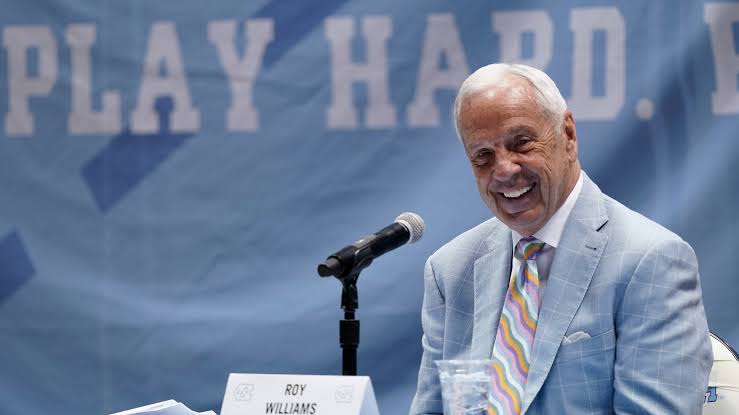
There is something deeply important in this story that every Carolina fan needs to hear — not just because it’s about banners, trophies, or Hall of Fame speeches, but because it reveals the heart behind them. When a legend like Roy Williams walks back onto the campus of University of North Carolina at Chapel Hill, it isn’t just a visit. It’s a reckoning. It’s reflection. It’s full circle. And what he chose to share this time — about retirement, regret, redemption, and resilience — carries more weight than any championship ring ever could.
For decades, Williams represented excellence in college basketball. His voice echoed through the Dean Dome. His teams cut down nets. His sideline intensity became a signature of Tar Heel pride. But when he sat down recently and began to speak candidly about the journey — from earning $2,700 as a young assistant to making $2 million as one of the sport’s most respected figures — the story became less about success and more about purpose.
And that’s what makes this moment unforgettable.
Humble Beginnings in Chapel Hill
Long before the national championships and national acclaim, Williams was just a young coach with a dream and a modest paycheck. In the early days of his career, he earned just $2,700 — a figure that feels almost mythical in today’s era of multi-million-dollar contracts and NIL deals.
At the time, Williams wasn’t chasing wealth. He was chasing growth. He was learning under the iconic Dean Smith, absorbing not just basketball strategy but life philosophy. Smith didn’t just teach plays — he taught principles. Team over self. Discipline over ego. Integrity above all.
Williams has often credited Smith not only as a mentor but as a moral compass. And in many ways, the values instilled during those early Chapel Hill years shaped everything that followed.
The Kansas Years: Building a Legacy
Before returning home, Williams spent 15 years building a powerhouse at University of Kansas. At Kansas, he established himself as one of the brightest minds in the game, leading the Jayhawks to multiple Final Fours and cementing his reputation nationally.
Yet even during his most successful seasons in Lawrence, something tugged at him — the unfinished chapter in Chapel Hill.
When the opportunity arose in 2003 to return to UNC as head coach, Williams didn’t hesitate. It wasn’t just a job. It was home.
The Return That Changed Everything
Coming back to Chapel Hill was more than a professional move — it was an emotional one. UNC fans remember the electricity of that announcement. The prodigal son had returned.
Under Williams, the Tar Heels quickly reestablished their dominance. National championships followed in 2005, 2009, and 2017. Those teams embodied toughness, speed, and unselfishness — trademarks of Williams’ philosophy.
The 2005 title marked redemption after early tournament heartbreaks. The 2009 championship showcased one of the most dominant teams in modern college basketball. And the 2017 triumph was perhaps the most poetic — redemption after the devastating 2016 buzzer-beater loss in the title game.
That 2017 team didn’t crumble under heartbreak. They responded. And that resilience mirrored the coach himself.
From $2,700 to $2 Million
The financial growth across Williams’ career tells one story. The personal growth tells another.
When he referenced the journey from a $2,700 salary to earning millions annually, it wasn’t boastful. It was reflective. It symbolized decades of commitment, long nights on recruiting trails, film study sessions that stretched past midnight, and emotional investment in young athletes.
In today’s era, where coaching contracts dominate headlines, Williams’ journey reminds fans that greatness often begins quietly.
The Weight of Retirement
Williams’ retirement in 2021 shocked the college basketball world. Though he had hinted at reflection in prior seasons, few expected the announcement when it came.
During his recent visit to UNC, Williams spoke candidly about the missteps and emotional fatigue that contributed to his decision. He admitted that coaching demands evolve. The modern landscape — transfer portals, NIL negotiations, year-round scrutiny — differs dramatically from the one he entered decades ago.
More than tactics, it was energy that concerned him. Williams has always coached with emotional intensity. He didn’t want to continue unless he could give players his absolute best.
And so he stepped away — not because he failed, but because he believed it was time.
Facing the Academic Fraud Allegations
One of the most difficult chapters during Williams’ tenure involved allegations of academic fraud tied to the university. Though investigations spanned years and involved multiple layers of the institution, the scrutiny placed immense pressure on the basketball program.
Williams has maintained that he was unaware of improper academic arrangements. But the weight of public perception lingered.
In his recent remarks, he described those years as exhausting yet unifying. According to Williams, adversity forced the team to bond more tightly. Criticism created cohesion. Outside doubt strengthened inside resolve.
“It made us stronger together,” he emphasized.
For fans, those words resonate. Championships are celebrated loudly. Endurance is often remembered quietly.
What UNC Means to Roy Williams
The University of North Carolina is not merely a workplace for Williams. It is identity.
The Carolina blue. The banners. The rafters. The echoes of Dean Smith’s leadership. It is generational.
Williams’ career arc — from assistant to head coach to Hall of Famer — reads like a script. But living it required sacrifice. It required conviction. And it required belief in something larger than self.
UNC fans understand that connection deeply. The program isn’t transactional. It’s relational.
A Hall of Fame Career
Inducted into the Naismith Memorial Basketball Hall of Fame, Williams’ résumé speaks loudly:
Three NCAA national championships
Nine Final Four appearances
Over 900 career wins
A coaching tree that stretches across the sport
Yet during his return visit, Williams appeared less interested in statistics than in gratitude.
He thanked former players. He thanked assistant coaches. He thanked fans.
Legacy, to him, isn’t numeric.
The Modern Game vs. The Old Guard
Williams’ reflections also highlighted how dramatically college basketball has changed. NIL collectives, social media branding, and instant transfers were unimaginable when he began coaching.
While he never criticized the evolution outright, he acknowledged that adapting continuously becomes harder over time. His love for teaching fundamentals remained constant, but the structure around the sport shifted.
For many UNC fans, that honesty felt refreshing.
Lessons Beyond the Court
Perhaps the most powerful takeaway from Williams’ visit wasn’t about titles or controversy. It was about perspective.
He spoke about gratitude for the opportunity to coach. He emphasized relationships with former players who now bring their own children to Chapel Hill games. He reflected on growth — both his own and the program’s.
Williams’ story isn’t just about winning. It’s about stewardship.
Full Circle in Chapel Hill
Walking across campus once more, Williams represented something rare: a career completed on his own terms.
From a $2,700 assistant to a $2 million Hall of Fame head coach.
From student of Dean Smith to successor of a dynasty.
From heartbreak to redemption.
From scrutiny to solidarity.
Full circle.
For UNC fans, that arc reinforces what they’ve always believed: Carolina basketball isn’t just about talent. It’s about tradition. It’s about continuity.
And Roy Williams embodies that continuity.
Why This Moment Matters
This return wasn’t about nostalgia alone. It was about closure and clarity.
Williams didn’t sugarcoat mistakes. He didn’t avoid difficult topics. He acknowledged the toll, the lessons, and the gratitude.
For a fan base that values authenticity, that transparency matters.
College basketball moves fast. Coaches rise and fall. Programs shift.
But legends endure.
The Legacy Lives On
Even in retirement, Williams’ influence remains embedded in UNC basketball. The principles he carried from Dean Smith continue to shape the culture. Players who wore Carolina blue under his leadership carry that philosophy into professional leagues, coaching careers, and community roles.
His story reminds fans that greatness is cumulative. It builds year by year, practice by practice.
And sometimes, it begins with $2,700 and a belief.
Final Reflection
When Roy Williams returned to UNC and opened up about his journey, he didn’t just revisit a campus. He revisited a lifetime.
He reminded fans that championships are milestones — not definitions. That adversity can strengthen unity. That stepping away can require as much courage as stepping forward.
From modest beginnings to Hall of Fame glory, his career stands as a testament to loyalty, resilience, and love for the game.
And for Carolina faithful, hearing him tell that story — honestly, humbly, completely — felt like one more gift from a coach who already gave them everything.




