


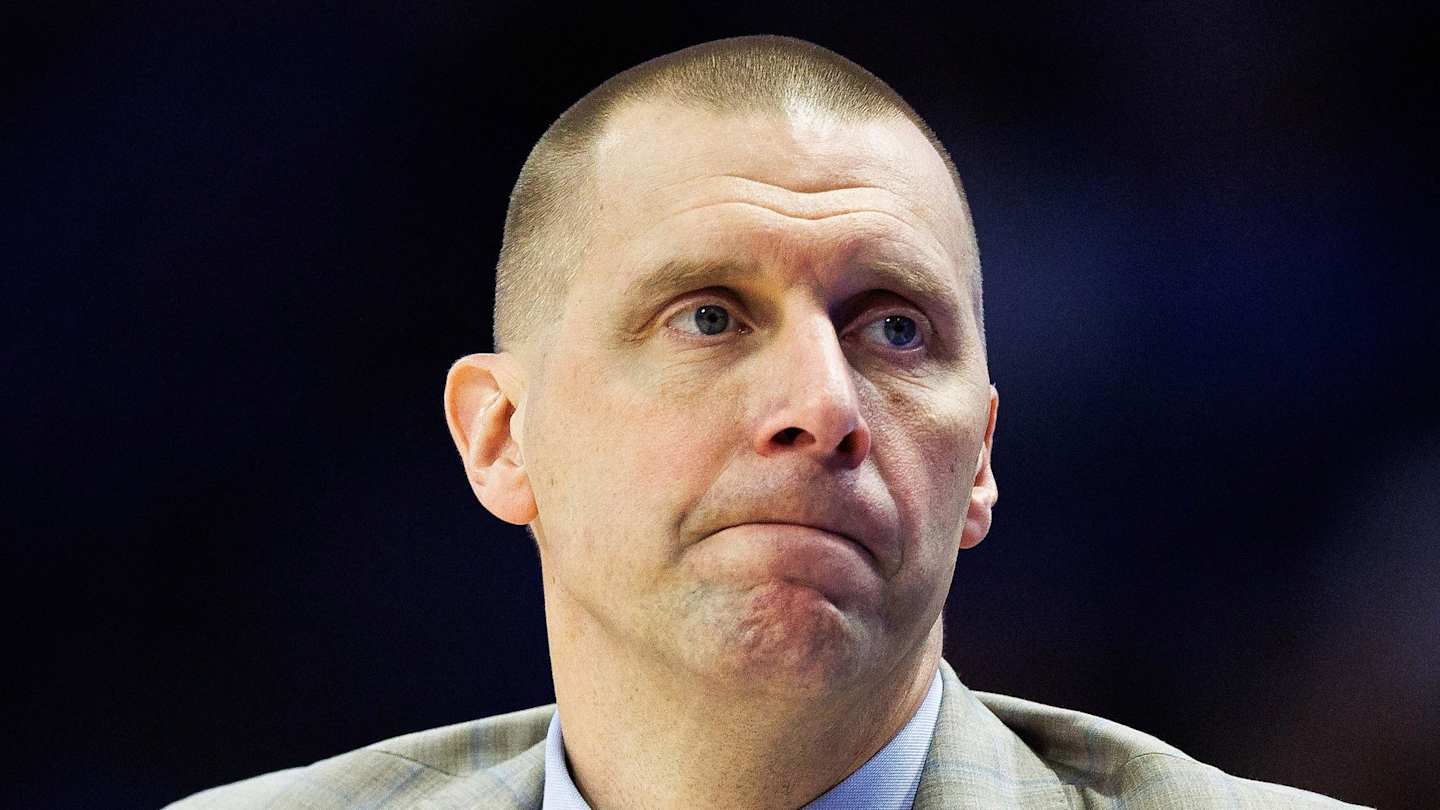
The 2025 season for the Kentucky Wildcats men’s basketball has become a study in contradiction. On some nights, this team looks capable of making a deep March run. On others, it looks disconnected, uncertain, and overwhelmed. That tension — between potential and inconsistency — defines not just this season, but perhaps the early era of Mark Pope in Lexington.
The résumé tells two completely different stories.
Kentucky owns five Quad 1 wins. The Wildcats marched into hostile territory and beat the Tennessee Volunteers men’s basketball and the Arkansas Razorbacks men’s basketball on the road. They dismantled the St. John’s Red Storm men’s basketball, handing them their worst loss of the season. When Kentucky plays with rhythm and confidence, the offense flows, the ball pops around the perimeter, and the team looks dangerous enough to beat anyone in the country.
But the other side of the ledger is just as loud.
The Wildcats have been blown out by the Michigan State Spartans men’s basketball, the Gonzaga Bulldogs men’s basketball, the Alabama Crimson Tide men’s basketball, and the Vanderbilt Commodores men’s basketball — all by at least 15 points, two by more than 20. In those games, Kentucky didn’t just lose. It unraveled.
That duality is dragging down what could have been a defining season.
A TEAM WITHOUT RHYTHM
You can see it in the numbers. Over a recent three-game stretch, Kentucky totaled just 39 assists against 41 turnovers. That stat alone explains the inconsistency. When this team shares the ball and trusts the pass, it generates open looks and forces defenses to rotate. When it doesn’t, the offense stagnates into isolation drives and contested jumpers.
Elite offense isn’t just about moving the ball — it’s about timing. The best point guards don’t pass when a teammate looks open; they pass before he becomes open. They anticipate rotations, read help defenders, and throw teammates into space. It’s the basketball version of a quarterback throwing a receiver open.
Last year’s team found that rhythm at times. This year’s team has searched for it all season and still hasn’t sustained it. With only a handful of games remaining, time is running out.
STUCK BETWEEN TWO IDENTITIES
The biggest criticism of Pope when he arrived was that his teams weren’t physical enough for the SEC grind. To his credit, he tried to address that. He emphasized toughness, rebounding, and defensive resistance. But in trying to evolve, Kentucky may have lost clarity.
The Wildcats still aren’t imposing physically. At the same time, they’ve drifted away from the free-flowing, spacing-heavy offensive identity that defined Pope’s most successful teams. Instead of crisp off-ball movement and quick decision-making, too many possessions devolve into one-on-one creation.
Too often the plan becomes simple: hand the ball to Otega Oweh or Denzel Aberdeen and hope they can manufacture something off the bounce. There are limited post touches. Off-ball screens rarely bend the defense. Even inbound plays sometimes look improvised rather than intentional.
The result? An offense caught in between — not physical enough to bully opponents, not fluid enough to out-execute them.
AN UNEXPECTED MIRROR
Perhaps the strangest twist is stylistic. At times, this Kentucky team resembles something closer to a John Calipari squad — heavy on individual creation, dependent on talent winning matchups, prone to offensive droughts. Meanwhile, Calipari’s Arkansas group has shown more spacing and flow than many expected.
That’s not necessarily an indictment. Styles evolve. Coaches adapt. But identity matters. Programs at this level cannot afford to drift.
Right now, Kentucky feels like a team searching for itself.
GOOD ENOUGH TO BEAT ANYONE — FLAWED ENOUGH TO LOSE TO ANYONE
The Wildcats’ ceiling is undeniable. When they defend with energy, push in transition, and trust the extra pass, they look like a legitimate contender. Confidence spreads quickly. Shots fall. The bench comes alive.
But when adversity hits — a scoring drought, an early deficit, a physical opponent — the cracks widen. Possessions become hurried. Communication slips. Body language changes. Instead of leaning into structure, the team leans into isolation.
Players say they need better focus. The coach says everyone is fighting. Both can be true. Effort isn’t always the issue. Clarity might be.
Championship teams know exactly who they are. They don’t reinvent themselves in February. They refine. Kentucky, however, still appears to be choosing between two versions of itself.
THE PATH FORWARD
The solution isn’t complicated, even if execution is.
Kentucky must fully commit to an identity — and live with the results. If that means embracing pace, spacing, and skill over brute force, then double down on it. If it means becoming more deliberate and defensive-minded, then structure every possession around that goal. But hovering in the middle guarantees volatility.
There is still time to define this season. The talent is there. The résumé proves the Wildcats can beat elite teams. What’s missing is consistency born from conviction.
At some point, you stop tweaking and start believing.
Kentucky doesn’t need to be two teams. It needs to be one — fully, confidently, and unapologetically.
Because in March, uncertainty doesn’t survive.




