


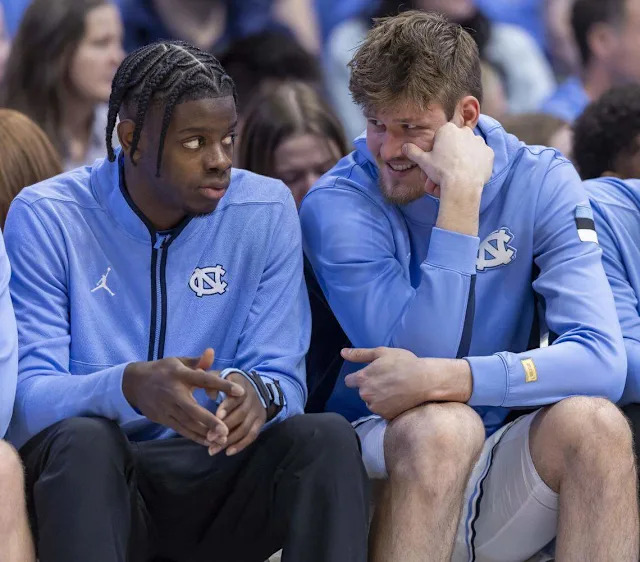
College athletics has transformed more in the last decade than in the previous fifty years combined. Landmark legal battles like O’Bannon v. NCAA, NCAA v. Alston, and House v. NCAA shattered the NCAA’s long-standing amateurism model and ushered in an era of unrestricted NIL compensation and transfer freedom. The result is effectively free agency in college sports — a reality that demands aggressive, unified, and forward-thinking leadership.
For the North Carolina Tar Heels men’s basketball and the broader UNC athletic department, this shift could not have come at a worse time. The university entered the NIL era still recovering from years of reputational damage tied to academic scandal allegations — a storm that placed Chapel Hill at the center of a national debate about athlete compensation and academic integrity.
Much of that firestorm traced back to the fallout surrounding Mary Willingham, whose claims about academic misconduct became a national headline and were reportedly leveraged during the O’Bannon litigation. Though her credibility later unraveled, the reputational damage lingered. The narrative that UNC’s academic prestige masked systemic issues proved difficult to shake.
Under Athletic Director Bubba Cunningham, the department responded by doubling down on the so-called “Carolina Way” — emphasizing tradition, education, and long-term development. That approach has kept Olympic sports thriving and competitive nationally. But revenue sports — football and men’s basketball — operate in a different economic ecosystem now, and tradition alone does not close NIL gaps.
The most troubling issue isn’t win-loss records. It’s fragmentation. UNC’s athletic leadership structure — trustees, administrators, boosters, and athletic department officials — appears divided by competing visions. In a moment demanding cohesion, Carolina has projected discord.
Nowhere was that division clearer than in what became known as the Belichick experiment. The hiring process reportedly saw trustee John Preyer sidelining Cunningham’s authority, igniting tensions that spilled into public view. Lawsuits followed. Governance questions surfaced. The UNC System intervened. What should have been a bold football move turned into institutional chaos.
The season itself — a 4–8 campaign against a forgiving schedule — only amplified criticism. But the deeper damage was structural. The power struggle exposed fractures between the Board of Trustees and university leadership, including Chancellor Lee Roberts. When leadership factions are fighting each other, long-term strategy becomes secondary to short-term positioning.
Preyer’s resignation quote crystallized the dysfunction. It wasn’t just frustration; it was an emblem of a governance culture that had turned combative and personal. In modern college athletics, instability at the top radiates downward — into recruiting, fundraising, and public perception.
Then came NIL. UNC’s reluctance to fully embrace the new compensation landscape left men’s basketball scrambling. While programs like BYU Cougars men’s basketball reportedly assembled massive NIL packages — including a rumored $7 million deal for freshman phenom AJ Dybantsa — UNC operated with a comparatively modest budget.
Reports that head coach Hubert Davis had to push aggressively for expanded NIL funding illustrate the internal philosophical battle. For years, some within UNC’s orbit believed elite players would choose Chapel Hill primarily for tradition and development. Others recognized that the market had permanently shifted.
That divide — realists versus romantics — reportedly led to heated internal debates. By the time leadership aligned around the necessity of competitive NIL funding, valuable recruiting cycles had already passed. In the NIL era, hesitation equals disadvantage.
The latest flashpoint revolves around the future of the Dean Smith Center. Chancellor Roberts’ camp has explored relocating to Carolina North, while many within the basketball community favor renovating the existing arena. What should be a unified facilities strategy has instead become a public relations tug-of-war.
Complicating matters further is the influence of legendary voices. Figures like Roy Williams and Tyler Hansbrough carry immense credibility among alumni and fans. In Chapel Hill, basketball tradition is not ornamental — it is foundational. Attempting to sideline that constituency risks backlash.
The broader pattern is unmistakable: decisions are not emerging from a coherent strategic framework but from internal contests for control. Whether it’s coaching hires, NIL commitments, or arena planning, the absence of alignment undermines confidence.
UNC’s Olympic sports continue to excel. The brand remains powerful. The alumni base is loyal and resource-rich. But power without unity is wasted leverage. In an era defined by speed, money, and adaptability, institutional infighting is a competitive liability.
The Carolina Way once symbolized stability and principle in a chaotic sports landscape. Ironically, as the rest of college athletics embraced aggressive modernization, UNC attempted to preserve continuity — only to find itself destabilized from within.
The question facing Chapel Hill now is not whether NIL or conference realignment changed the game. They did. The real question is whether UNC’s leadership can present a unified vision before internal fractures become the program’s defining characteristic.
Because in modern college sports, talent follows money, recruits follow stability, and championships follow alignment. And right now, alignment is precisely what UNC athletics appears to lack.




