


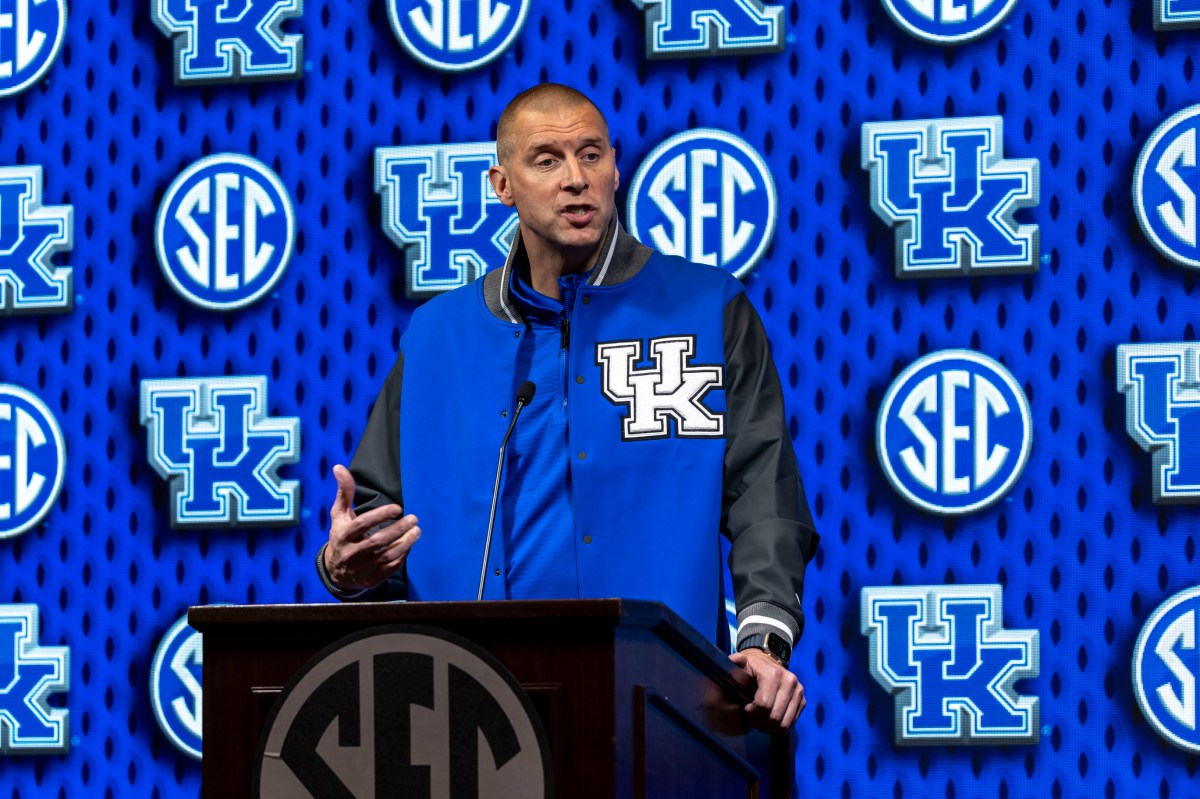
There are losses — and then there are lessons disguised as losses. On a night that began with promise and ended in frustration, one question echoed louder than the final score: is this Kentucky team on the brink of something special, or on the edge of letting it slip away? As March approaches and the margin for error shrinks to almost nothing, Mark Pope didn’t dodge the reality facing his team. Instead, the head coach of the Kentucky Wildcats men’s basketball delivered a message that was both blunt and revealing — if Kentucky wants to make noise in the NCAA Tournament, it must learn how to level up. Every possession. Every night.
A Game That Shifted in Minutes
Kentucky’s 96–85 loss to Texas A&M Aggies men’s basketball at Reed Arena was not simply a defeat in the standings. It was a microcosm of the Wildcats’ season — flashes of brilliance overshadowed by lapses that spiral too quickly.
Early on, Kentucky looked dominant. Crisp ball movement. Confident shooting. Defensive intensity. The Wildcats built a commanding 30–18 lead midway through the first half, silencing the Aggies’ home crowd and asserting control.
Then everything unraveled.
In the span of just a few minutes before halftime, Texas A&M unleashed a 27–3 run that flipped the contest entirely. What had been a comfortable Kentucky cushion evaporated into a 45–33 deficit by the break. The swing wasn’t subtle; it was seismic.
That stretch defined the game — and perhaps underscored the larger concern surrounding this Kentucky squad.
“We Don’t Have a Massive Margin for Error”
After the loss, Pope did not offer excuses. He didn’t blame officiating, fatigue, or hostile environments. Instead, he pointed inward.
“We don’t have a massive margin for error. It’s gotta be every single possession. If we can learn that and grab onto it, we have a chance to be really special. It’s gotta be every single night. We gotta figure it out and we can’t. We have the guys to do it. We can. We just didn’t tonight.”
That quote captures the central tension of Kentucky’s season.
The Wildcats have talent. They have depth. They have scoring options and capable defenders. But the difference between potential and production lies in consistency — something that has eluded them at critical moments.
The Numbers Tell the Story
Kentucky’s overall record now sits at 19–11, including a 10–7 mark in SEC play. That record places them firmly in NCAA Tournament contention, but not in a comfortable position.
The loss to Texas A&M exposed recurring issues:
Defensive lapses during opponent runs
Difficulty responding to momentum swings
Perimeter defense breakdowns
Bench production disparities
The Aggies shot 13-for-28 from three-point range and received 57 points from their bench — staggering figures in a high-stakes conference matchup.
Meanwhile, Kentucky struggled to regain rhythm once the tide turned. The Wildcats’ early offensive flow slowed, possessions grew stagnant, and defensive rotations became less sharp.
In March, those sequences are season-ending.
The Paradox of Talent Without Control
One of the most frustrating aspects of Kentucky’s campaign is how often it begins games looking like a contender. The Wildcats can score in bunches. They can defend with physicality. They can overwhelm teams with pace and athleticism.
But sustaining that level has proven difficult.
Pope’s emphasis on “every single possession” isn’t cliché — it’s diagnosis. In postseason basketball, especially the NCAA Tournament, a four-minute lapse can end a season.
Kentucky’s problem isn’t inability. It’s vulnerability.
Learning to Respond in Real Time
Great teams don’t avoid runs — they absorb them.
When Texas A&M began chipping away at the 12-point deficit, Kentucky needed a stabilizing moment. A defensive stop. A smart timeout. A composed offensive set.
Instead, the Wildcats allowed the run to snowball.
The difference between good and great teams often lies in their ability to respond in real time. Pope knows it. His players likely know it. The challenge now is translating awareness into action.
SEC Reality Check
The SEC has been unforgiving this season. Every road game feels like a tournament test. Depth matters. Physicality matters. Emotional discipline matters.
Kentucky’s 10–7 conference mark reflects competitiveness, but it also highlights missed opportunities.
With the SEC Tournament looming, the Wildcats cannot afford to rely solely on talent. Execution must sharpen. Rotations must tighten. Defensive communication must improve.
Because once postseason play begins, there are no second chances.
The Bench Battle
One of the more glaring contrasts in the Texas A&M game was bench production. The Aggies’ 57 bench points changed the energy of the contest.
Kentucky’s second unit must provide not just rest for starters, but stability.
In tournament play, depth is both weapon and insurance policy. Pope’s staff will likely evaluate rotations carefully in the coming weeks, searching for combinations that prevent scoring droughts and defensive breakdowns.
The Mental Component
Beyond X’s and O’s lies mentality.
Pope’s comments reflect urgency, but not panic. He believes his roster has the tools to be “really special.” That belief is important.
However, belief must be accompanied by discipline.
Kentucky’s margin for error is slim — especially against elite competition. Each possession must carry weight. Each defensive assignment must be honored. Each late-clock shot must be intentional.
Tournament basketball punishes carelessness.
What “Leveling Up” Really Means
When Pope says Kentucky must “level up,” he isn’t asking for reinvention.
He’s asking for refinement.
Leveling up means:
Fewer careless turnovers
Smarter shot selection
Stronger closeouts on shooters
Immediate defensive resets after makes or misses
Emotional steadiness when opponents surge
It’s not about adding new plays to the playbook. It’s about executing existing ones under pressure.
The Path Forward
Kentucky’s remaining regular-season games now take on heightened importance. Each matchup becomes an opportunity to demonstrate growth.
Can they protect leads?
Can they close halves with composure?
Can they turn defensive stops into momentum rather than temporary relief?
If the Wildcats answer those questions positively, their NCAA Tournament outlook could shift dramatically.
Because talent travels in March — but composure wins.
A Familiar Kentucky Crossroads
This isn’t the first time Kentucky has entered March with both promise and questions. The program’s history includes deep tournament runs sparked by late-season surges.
But it also includes early exits caused by inconsistency.
The difference often lies in which version of the team shows up — the explosive one, or the vulnerable one.
Pope’s challenge is ensuring only one version remains.
Urgency Without Desperation
At 19–11 overall, Kentucky remains firmly in the NCAA Tournament field projection. However, seeding could fluctuate based on upcoming performances.
A strong SEC Tournament showing could vault them upward.
Another uneven stretch could leave them in a precarious position.
Urgency now must fuel preparation — not anxiety.
Why This Loss Might Matter
Sometimes the most important games are the ones that expose flaws before it’s too late.
The 27–3 run that flipped the Texas A&M game is painful — but instructive.
If Kentucky internalizes that lesson, tightens its discipline, and embraces Pope’s “every possession” mantra, the loss could become a turning point rather than a warning sign.
March has a way of rewarding teams that learn quickly.
Final Thoughts: A Ceiling Still Untouched
The Wildcats’ ceiling remains high. Few doubt their ability to compete with top programs when locked in.
But the NCAA Tournament does not reward potential. It rewards precision.
Mark Pope’s message is clear: Kentucky cannot drift through possessions hoping talent carries them. The margin is too thin.
Every possession must matter.
Every night must reflect growth.
If the Wildcats truly grasp that urgency, they may yet become the “really special” team Pope believes they can be.
If not, the flashes of brilliance will remain exactly that — flashes.
And in March, flashes are never enough.




